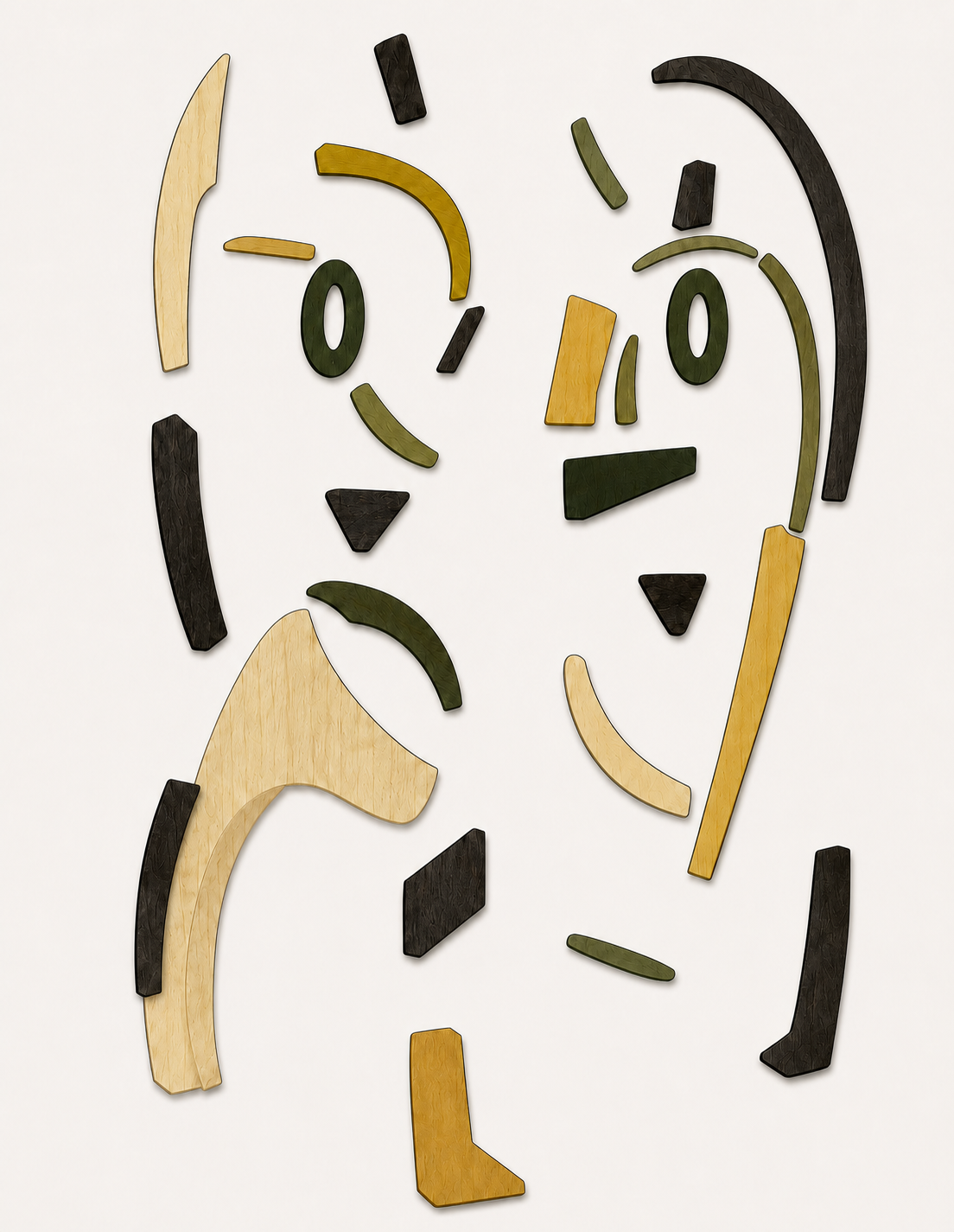
Laughin' & Talkin’: A Study in Translating Line into Space
(Work in Progress: 2026–2027)
Hardwood, acrylic, and ebonized wood, and charred wood
Dimensions TBD
Laughin' & Talkin': A Study in Translating Line Into Space is a wall sculpture I am developing during my 2026 Ranch Studios Artist Residency at the Eames Institute. Based on a 1964 drawing by Romare Bearden, the work emerged through sustained study, material experimentation, and iterative processes of translation—all exploring how the formal relationships within an image can move from one medium to another while creating an entirely new work of art. Rather than reproducing Bearden's drawing, the sculpture asks what can be carried across forms while preserving the spirit of gathering, conversation, joy, and collective presence that gave rise to the original work.
an evolving project
This page follows the making of Laughin' & Talkin' as it develops; tracing the conversations, experiments, and material decisions shaping the sculpture as I refine it for its debut at the Petaluma Arts Center in January 2027.
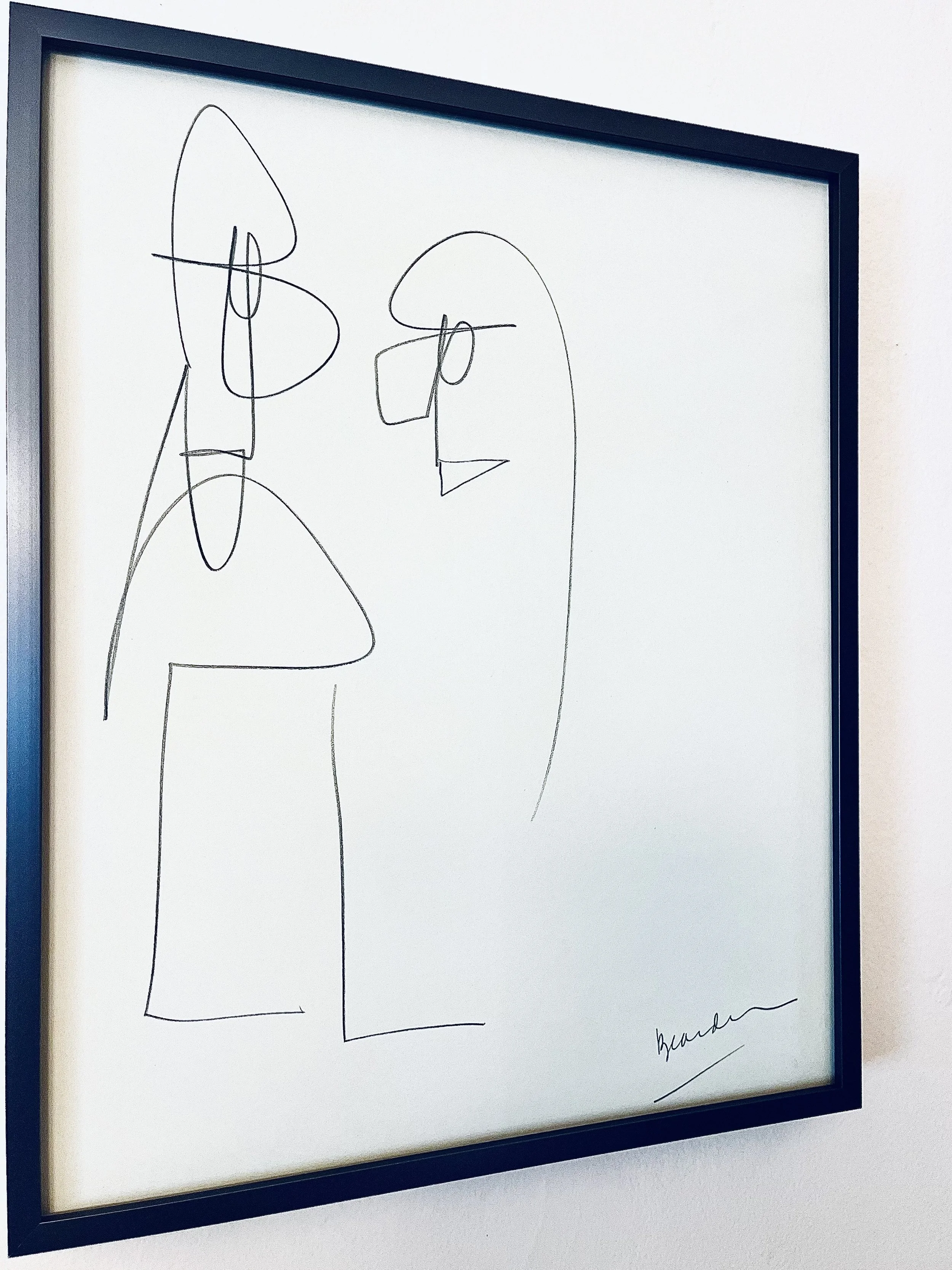
the gifted drawing
Laughin' & Talkin': A Study in Translating Line Into Space began with an unexpected message.
In early 2026, a woman named Andrea Lucas emailed me out of the blue. She had read my cookbook Afro-Vegan, in which I wrote that the artist Romare Bearden had profoundly shaped my creative life.
Her email ended with a simple question:
"I wonder if I can gift you a '60s pencil sketch he did."
The story behind the drawing made the offer all the more extraordinary. Decades earlier, Andrea's father had met Bearden at a gathering hosted by the artist Joyce Cadoo in Harlem. During the evening, Bearden made the drawing and gave it to him. It remained in Andrea's family for more than sixty years, carrying with it not only the marks on the paper but also the memory of the generosity and exchange from which it emerged.
When Andrea decided to entrust the drawing to me, she wasn't simply giving away an artwork. She recognized that some gifts fulfill their purpose not by remaining protected, but by continuing to circulate. By placing the drawing in the hands of another working artist, she allowed it to become the beginning of a new conversation.
Receiving the drawing felt less like acquiring an artwork than receiving encouragement from an artistic ancestor. I was only beginning my studio practice, and the gift arrived as a profound affirmation that I should keep going.
When I began my residency at the Eames Institute's Ranch Studios, I stopped thinking about the drawing as something to admire or preserve. I began thinking of it as an invitation.
That shift changed everything.
I stopped asking, How do I make work about Bearden?
I started asking, What happens if I make work with him?
I wasn't interested in reproducing the drawing. I wanted to understand how it worked from the inside, studying its rhythms, relationships, and remarkable economy of line so deeply that I could translate its energy into another medium. Through repeated life-size redrawings, careful observation, and months of sustained looking, I came to see the drawing less as an image than as a set of instructions for thinking about form, movement, space, amd translation.
The project gradually became an extended conversation across generations. Bearden gave a drawing to Andrea's father. Andrea entrusted that gift to me. My role was to answer that generosity, not by copying the drawing, but by translating its spirit into wood, light, shadow, and form.
In that sense, Laughin' & Talkin' is not simply inspired by a Romare Bearden drawing. It is the newest chapter in a gift that has been passed from one artist and one generation to the next.
"Art is always made from other art, and you just have to find your place."
— Romare Bearden
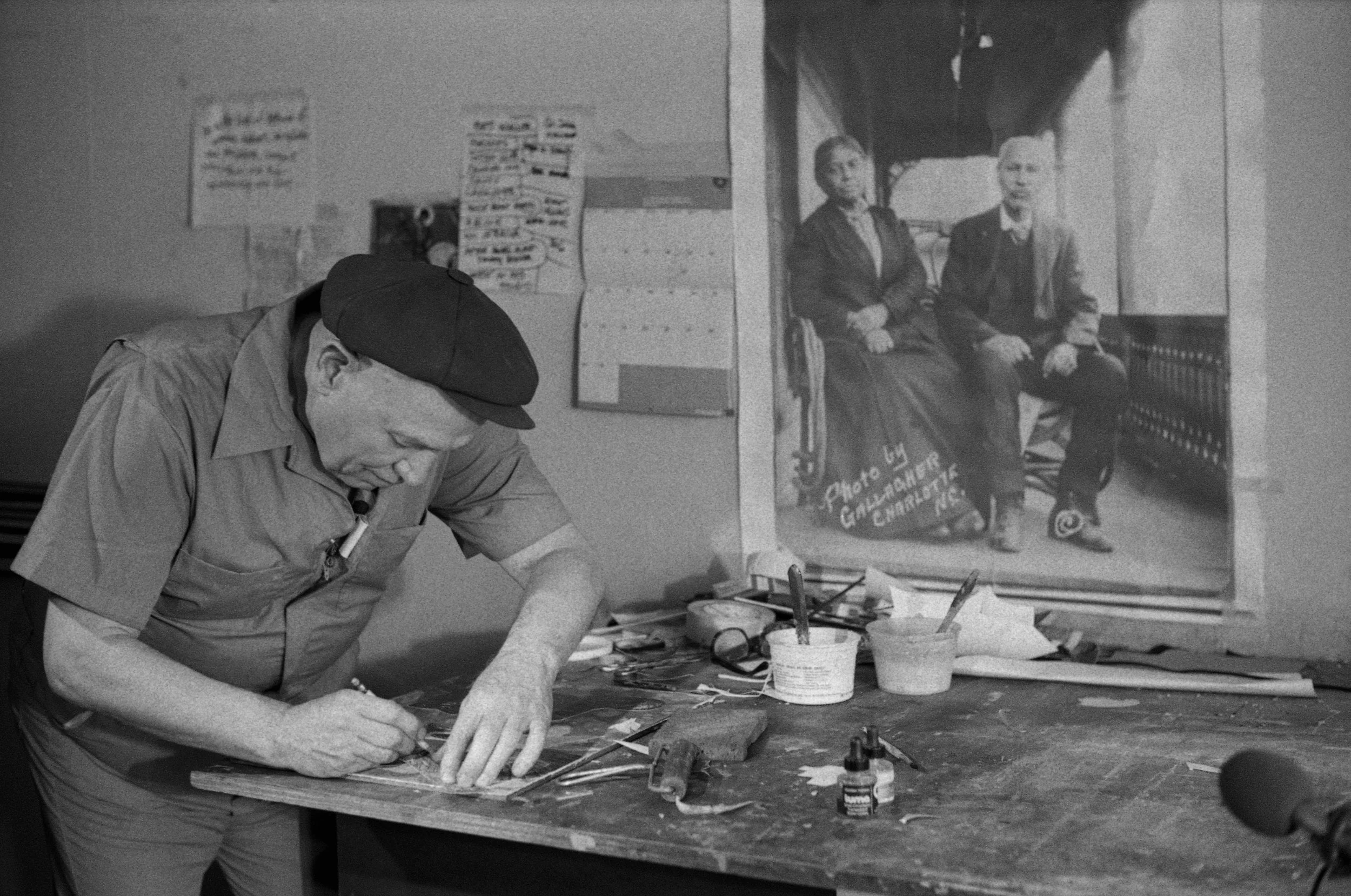
learning from Bearden
Romare Bearden has been one of the most important influences on my work for more than two decades. Long before I began making sculpture, he shaped the way I understood artistic practice itself. As a chef, writer, publisher, and artist, I have returned to his work again and again because he demonstrated that innovation need not emerge from rupture. It can grow from careful study, transformation, and recombination. Rather than pursuing originality for its own sake, Bearden modeled a practice rooted in lineage while making something unmistakably new.
Like many people, I was first captivated by Bearden's extraordinary collages. Over time, however, I became equally interested in the way he moved fluidly across painting, cartoons, music, and literature, drawing from each to enrich the others. His interdisciplinary practice gave me permission to see my own work not as a series of separate pursuits, but as a single creative practice expressed through different forms.
His approach to collage also transformed the way I thought about cooking and recipe writing. In the introduction to Afro-Vegan, I described Bearden as a model for my own approach to the kitchen. Like his compositions, my recipes often begin with familiar forms, staple ingredients, and culinary traditions from across the Black diaspora, then recombine them into something that honors those histories while creating new possibilities.
Throughout his career, Bearden returned to scenes of Black gathering: people making music, sharing meals, telling stories, working, laughing, and caring for one another. These were not incidental subjects but a sustained affirmation that everyday Black life is a site of profound creativity, abundance, memory, and cultural expression. His work does more than represent community. It is structured by it. Like jazz, his compositions move through variation, repetition, and improvisation, allowing relationships themselves to generate meaning.
For years, I learned from Bearden at a distance through books, exhibitions, and the example of his work. By the time Andrea entrusted me with his drawing, I had already spent decades studying the ideas and methods that shaped his practice. Receiving the drawing did not begin that relationship. It transformed a long apprenticeship into a direct conversation.
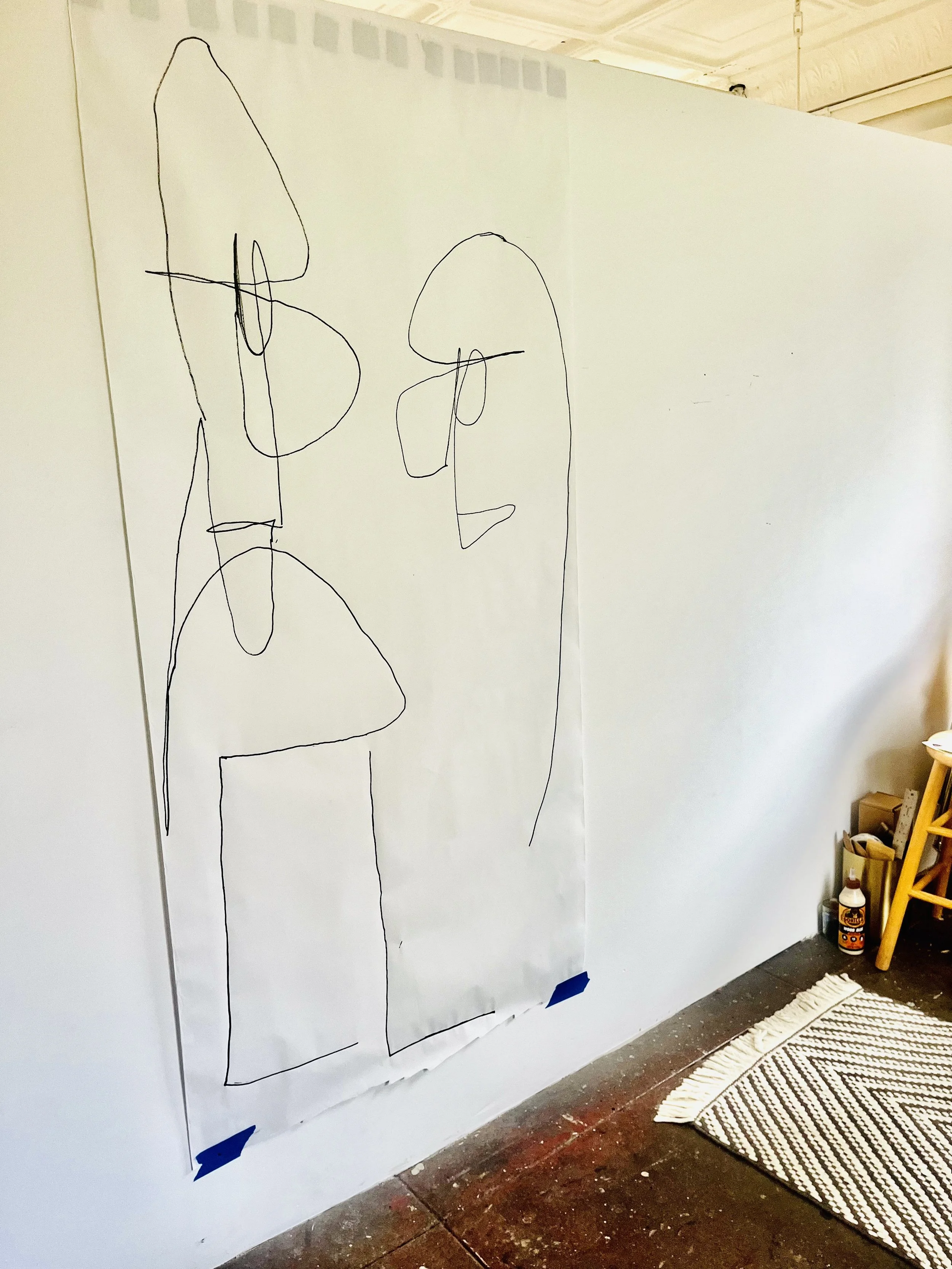
drawing as instruction
When I was invited to Ranch Studios Artist Residency, I began redrawing Romare Bearden's figures at full scale each time I entered the studio. Working at that size forced me to slow down and study the drawing more closely.
Rather than treating Bearden's drawing as an image to reproduce, I approached it as a set of instructions. I wasn't trying to copy it. I wanted to understand the confidence of the line, its rhythm, its economy, and the decisions it carried. With each iteration, I became more attentive to how a curve generated movement, how negative space shaped a figure, and how a seemingly simple line could hold humor, presence, and energy.
Over time, the exercise became a conversation. I realized that the drawing's vitality did not reside in its exact contours but in the relationships it established between bodies, space, and gesture. My attention shifted from preserving every mark to understanding the formal relationships that gave the work its life.
Eventually, one question took over: How do you translate line into space?
The resulting wall sculpture is not a literal translation but a response shaped by sustained observation, material experimentation, and transformation. Fidelity to the original drawing was never the objective. The goal was to discover what could survive the movement from drawing into sculpture.
This approach parallels What the Black Belt Carries. There, a nineteenth-century cotton production map became an instruction for building a sculptural painting rather than an image to replicate. Here, Bearden's drawing became an instruction for constructing space. In both projects, historical and artistic sources serve as generative frameworks, inviting new forms to emerge while carrying forward the ideas embedded within them.
listening with Bearden
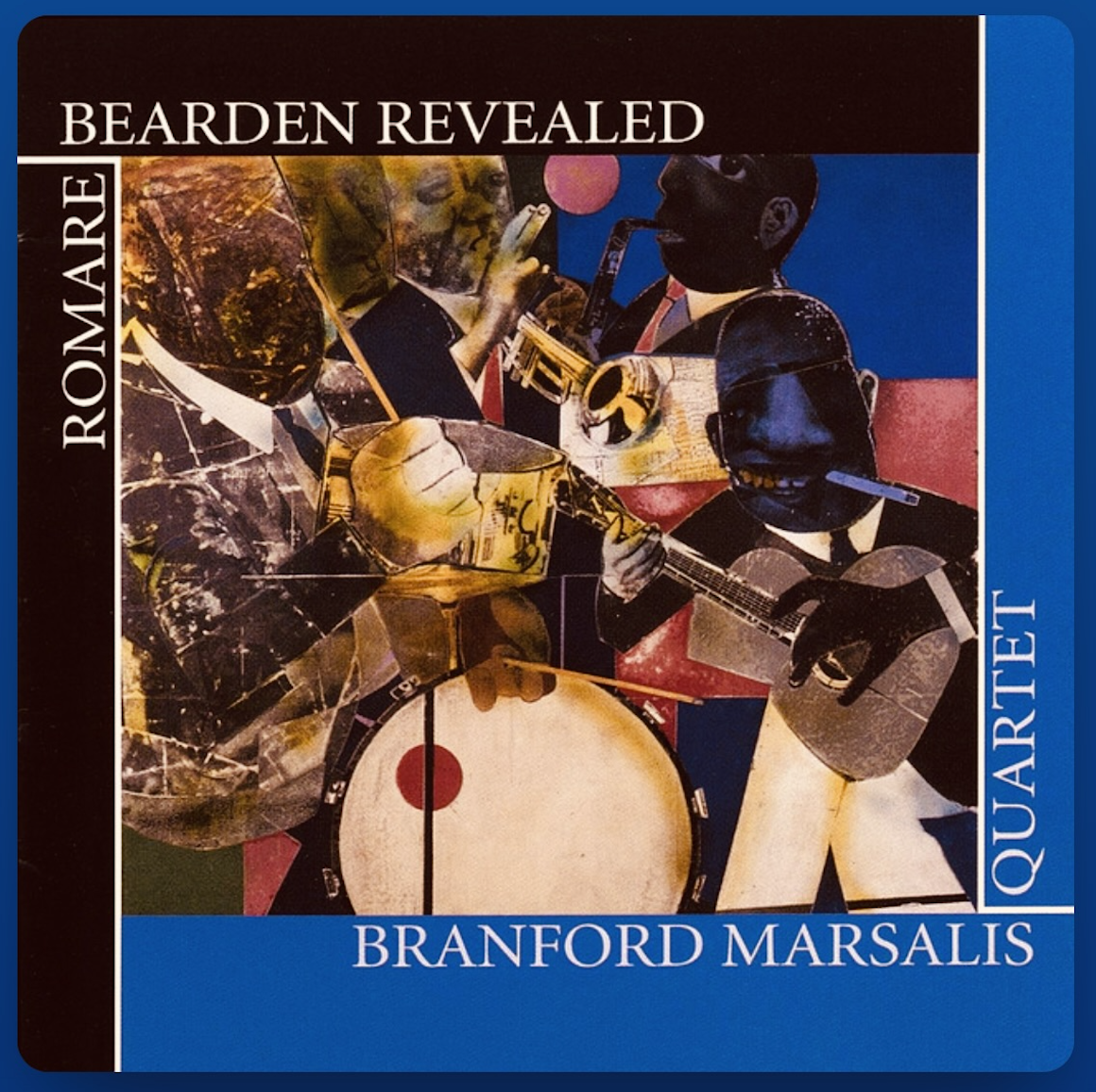
Throughout the residency, I returned again and again to Romare Bearden Revealed, an album by the Branford Marsalis Quartet, while redrawing and carving the figures. I found myself returning most often to the track "Laughin' and Talkin' (With Higg)" because I imagined it evoking the atmosphere of the 1964 Harlem gathering where Romare Bearden sketched the drawing. Whether or not the music belonged to that moment mattered less than the space it created in my studio. It became a way of inhabiting the drawing rather than simply observing it.
Listening to the album day after day slowed my attention and reinforced the improvisational qualities I admired in Bearden's work. Like jazz, the sculpture developed through repetition, variation, and conversation. Each drawing, carving, and revision became another pass through the same ideas, revealing new possibilities with every iteration.
The phrase "Laughin' and Talkin'" came to capture not only the spirit of Bearden's drawing but also the process of making the sculpture itself. It eventually became the work's title. More than a soundtrack, the music became another collaborator in the studio, reminding me that Bearden's work has always been inseparable from the rhythms, improvisation, and communal spirit of Black musical traditions.
building the figures
Once I understood how I wanted to approach the drawing conceptually, I turned to the practical question of construction. How could an expressive line become a durable sculptural form while retaining its sense of movement?
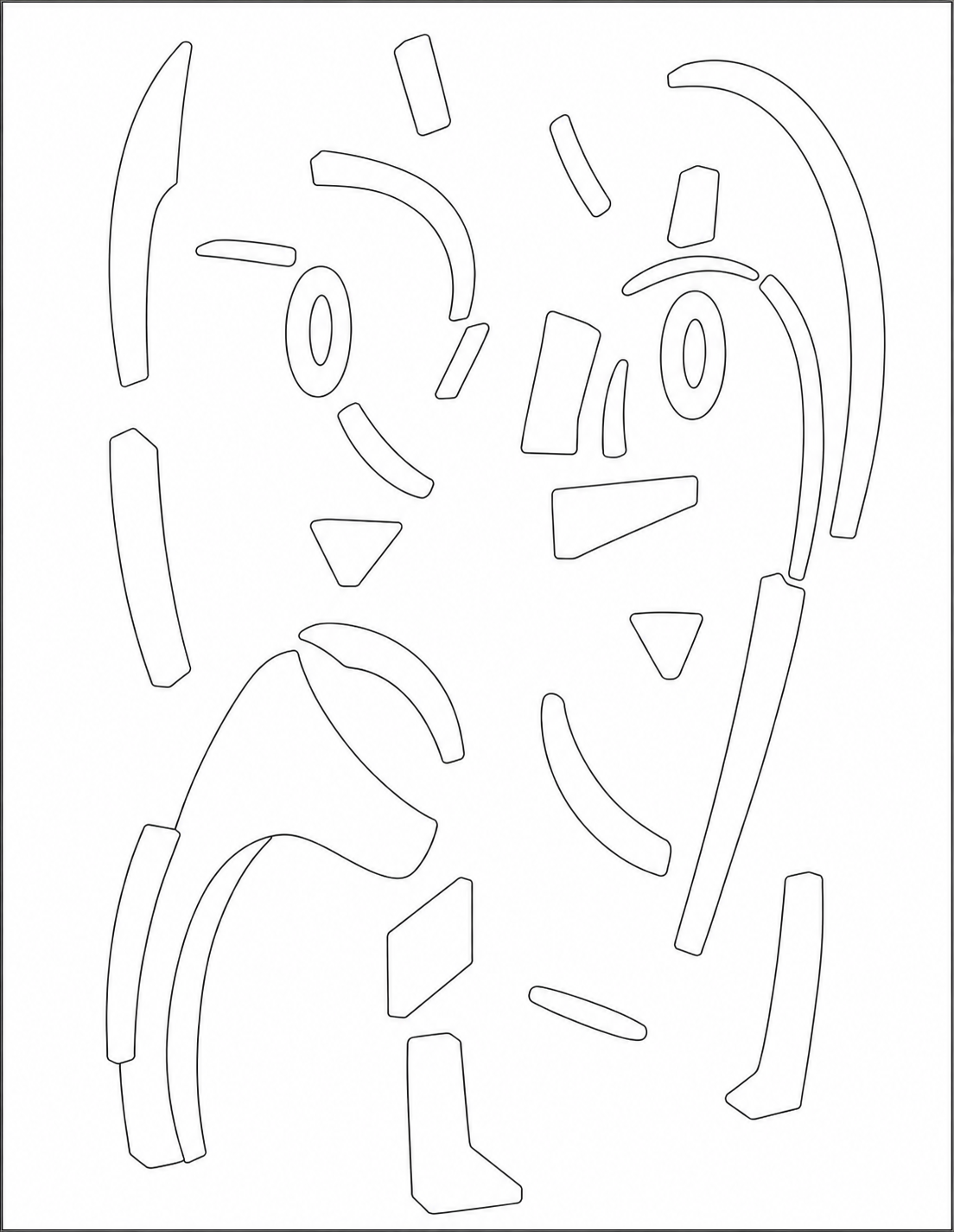
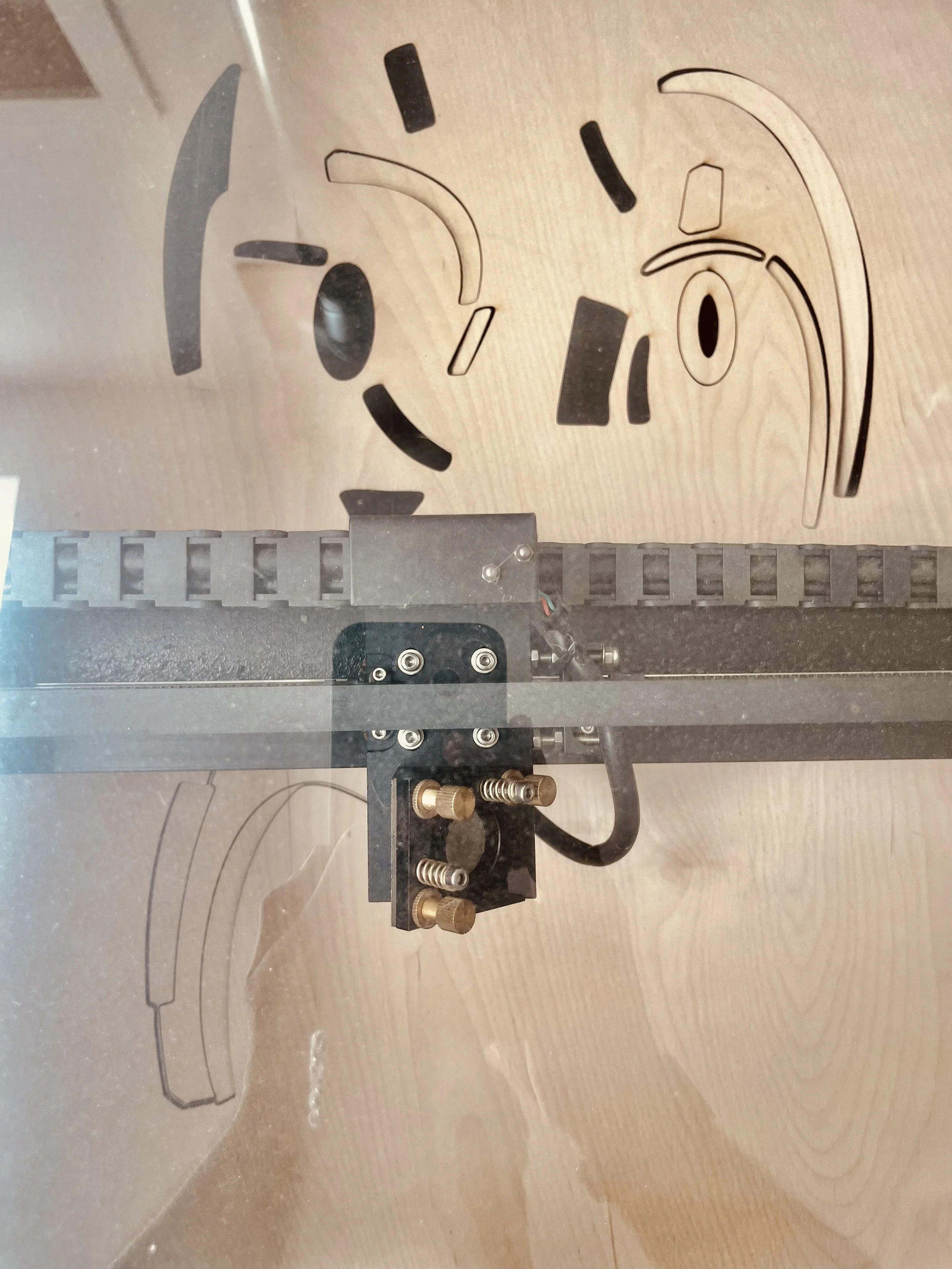
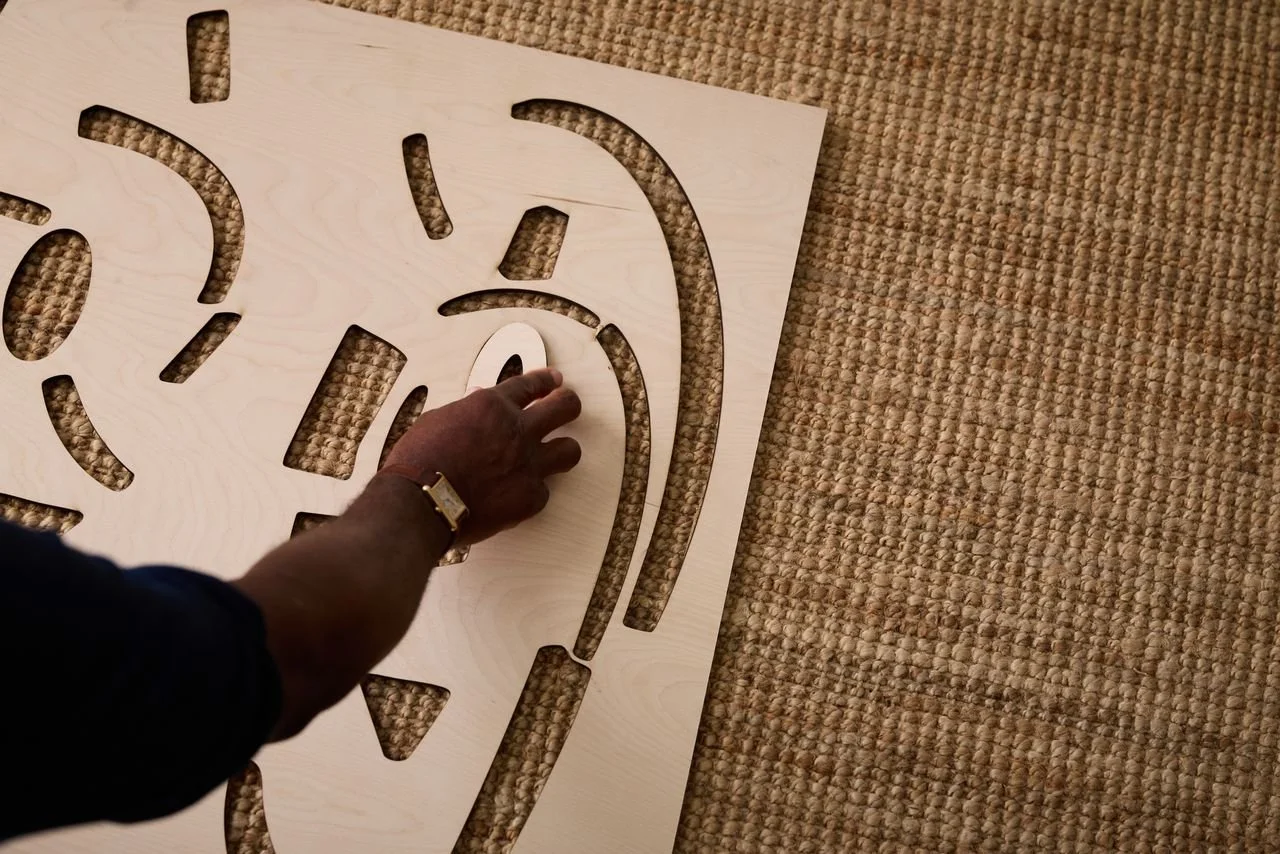
After weeks of redrawing the figures at full scale, I created a digital version that isolated only the marks essential to the composition. Those files became laser-cut templates, allowing each shape to be separated and studied as an individual sculptural element before being translated into wood.
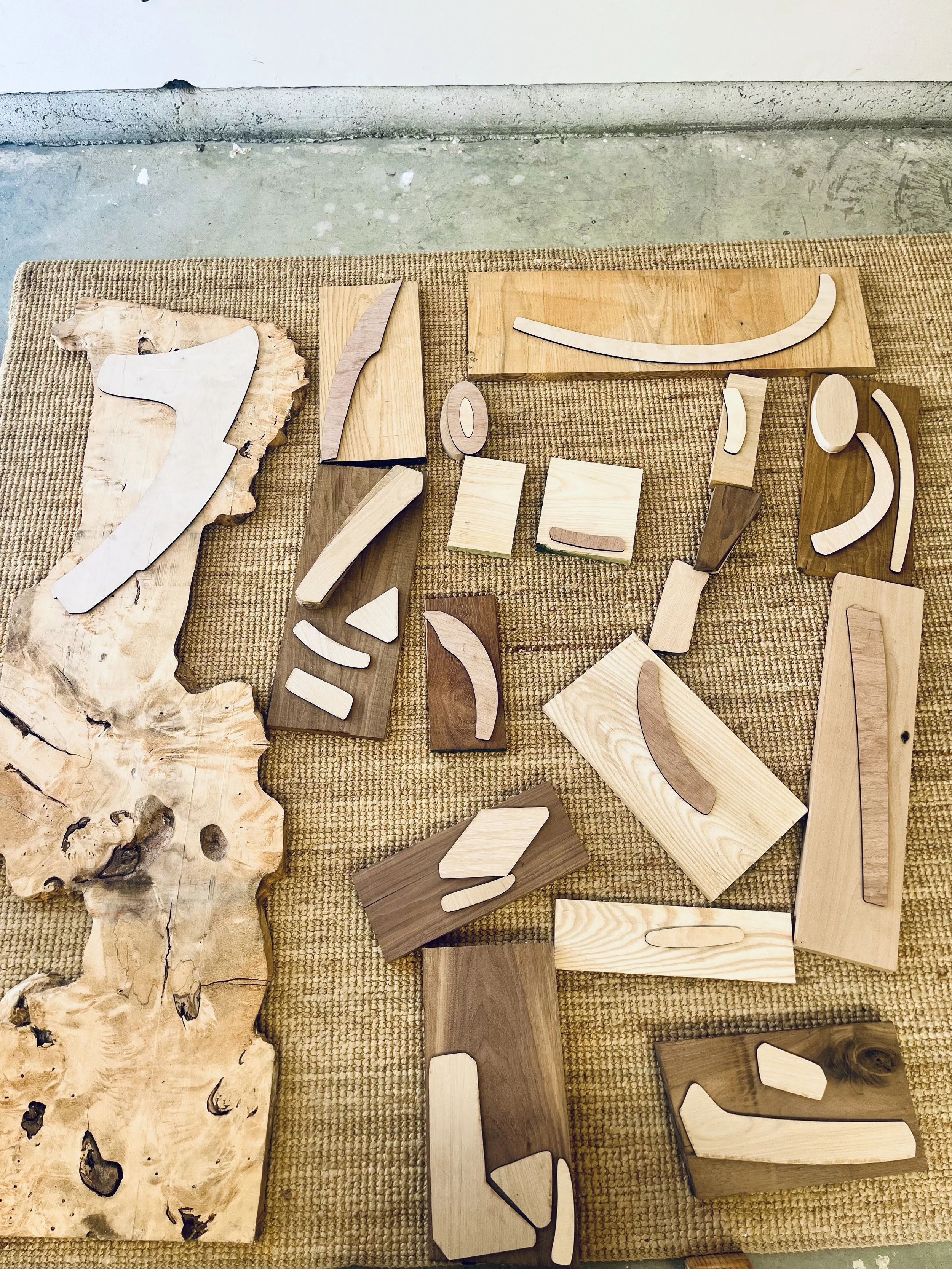
Rather than treating the laser cutter as a substitute for handwork, I used it as a guide. Each template was paired with a carefully selected piece of hardwood whose grain, color, and character could contribute to the final composition. The templates were then traced onto the wood, rough-cut on the bandsaw, and are now being refined on the router before carving, sanding, and surface treatments begin.
Although the sculpture remains in progress, this stage has already clarified the relationship between precision and intuition. The digital files establish the geometry of the drawing, while each piece of wood introduces its own material qualities and subtle variations. As the work continues to develop, every cut and refinement becomes part of a larger process of translating line into sculptural form.