What the Black Belt Carries
(2026)
Sculptural painting incorporating a Van Dyke brown print; accompanied by a single-channel sound installation
47 × 72 × 1.5 in.
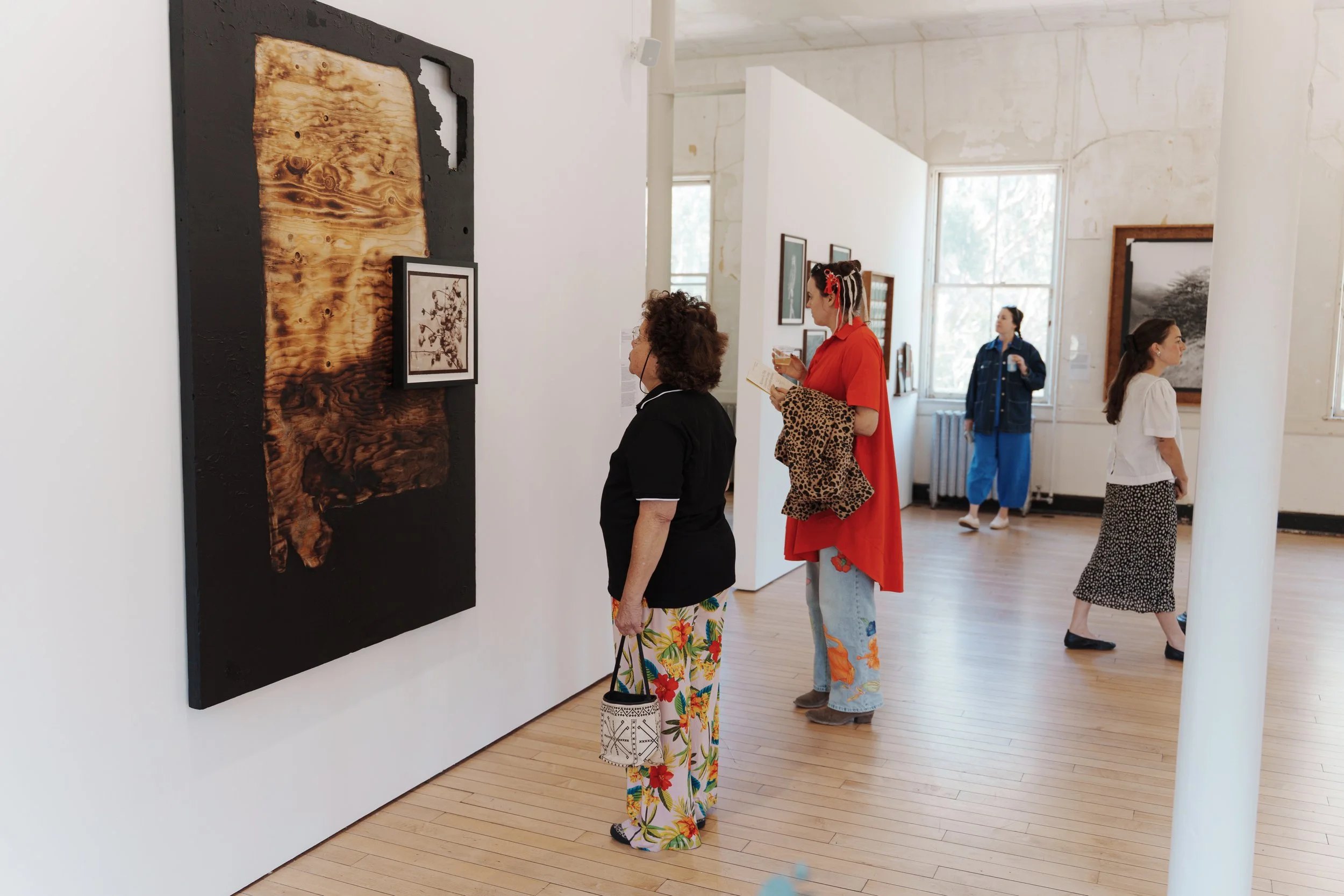
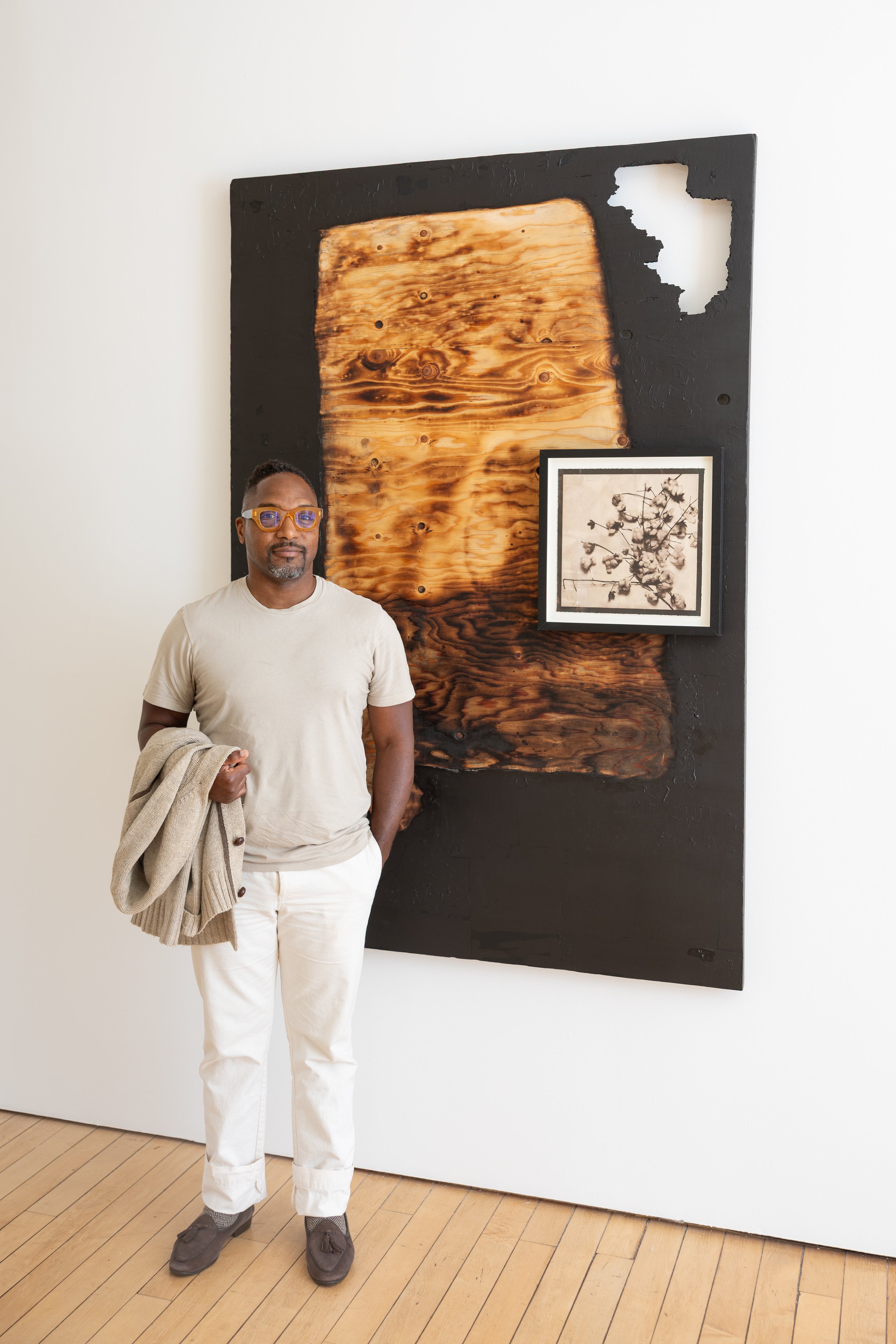
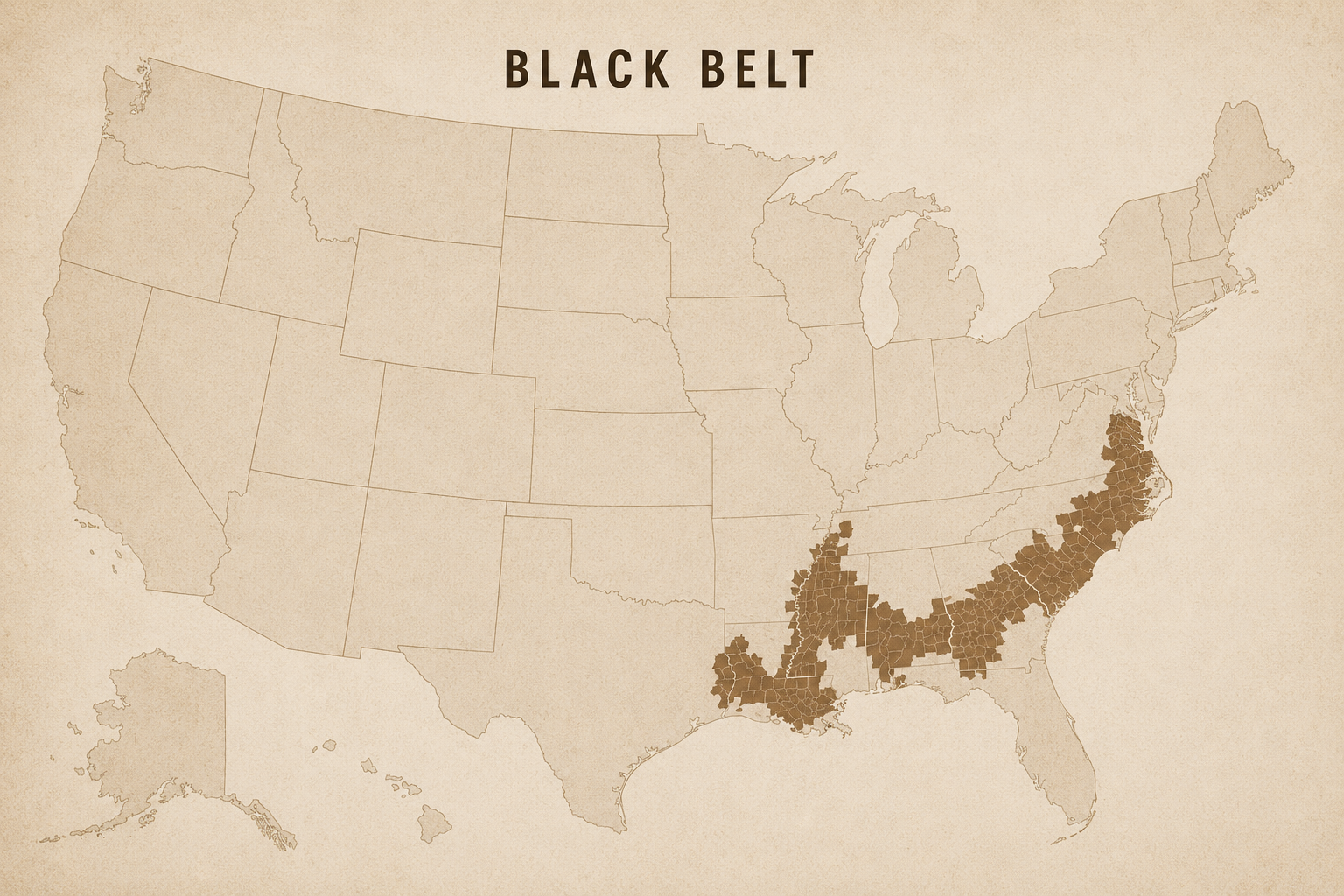
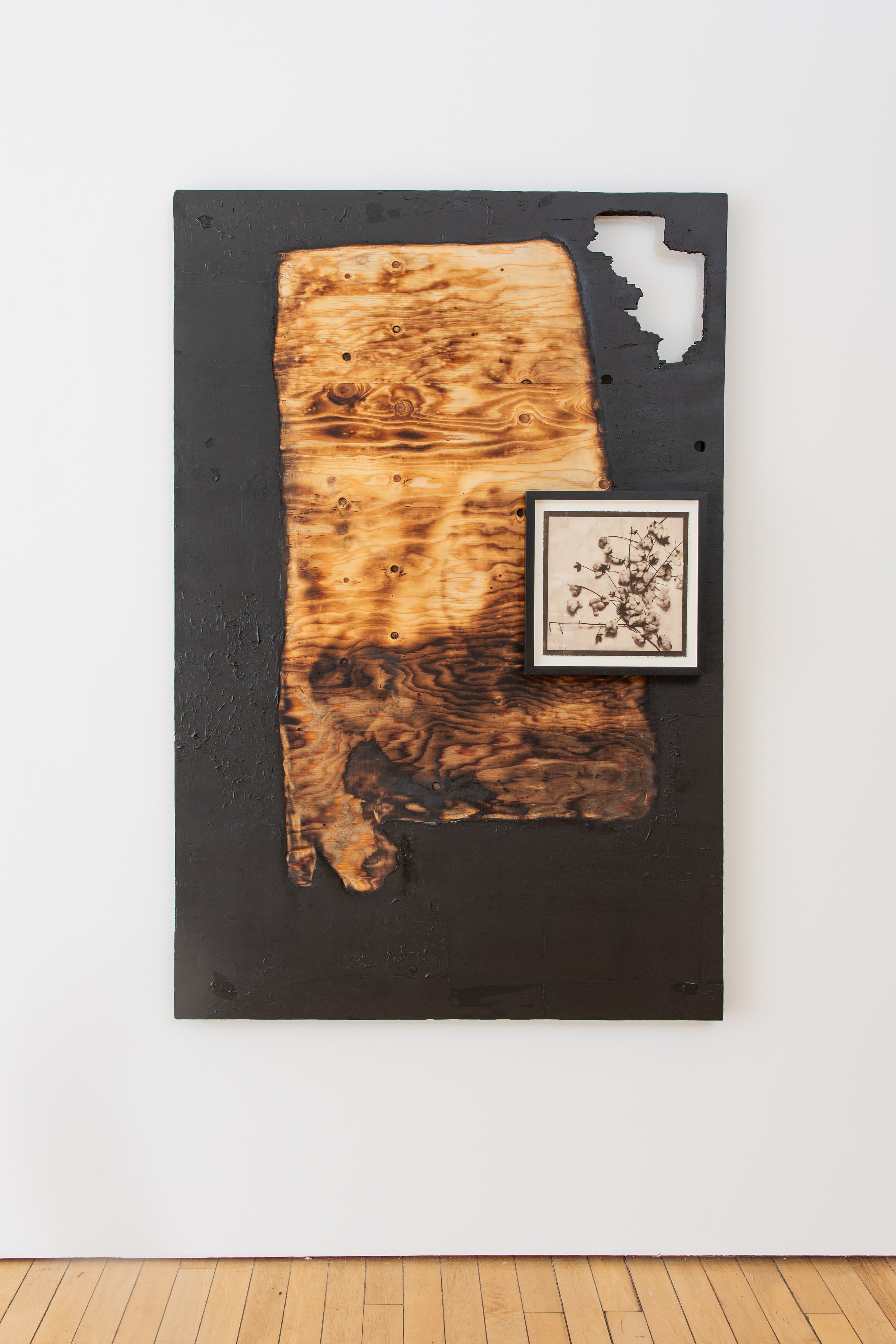
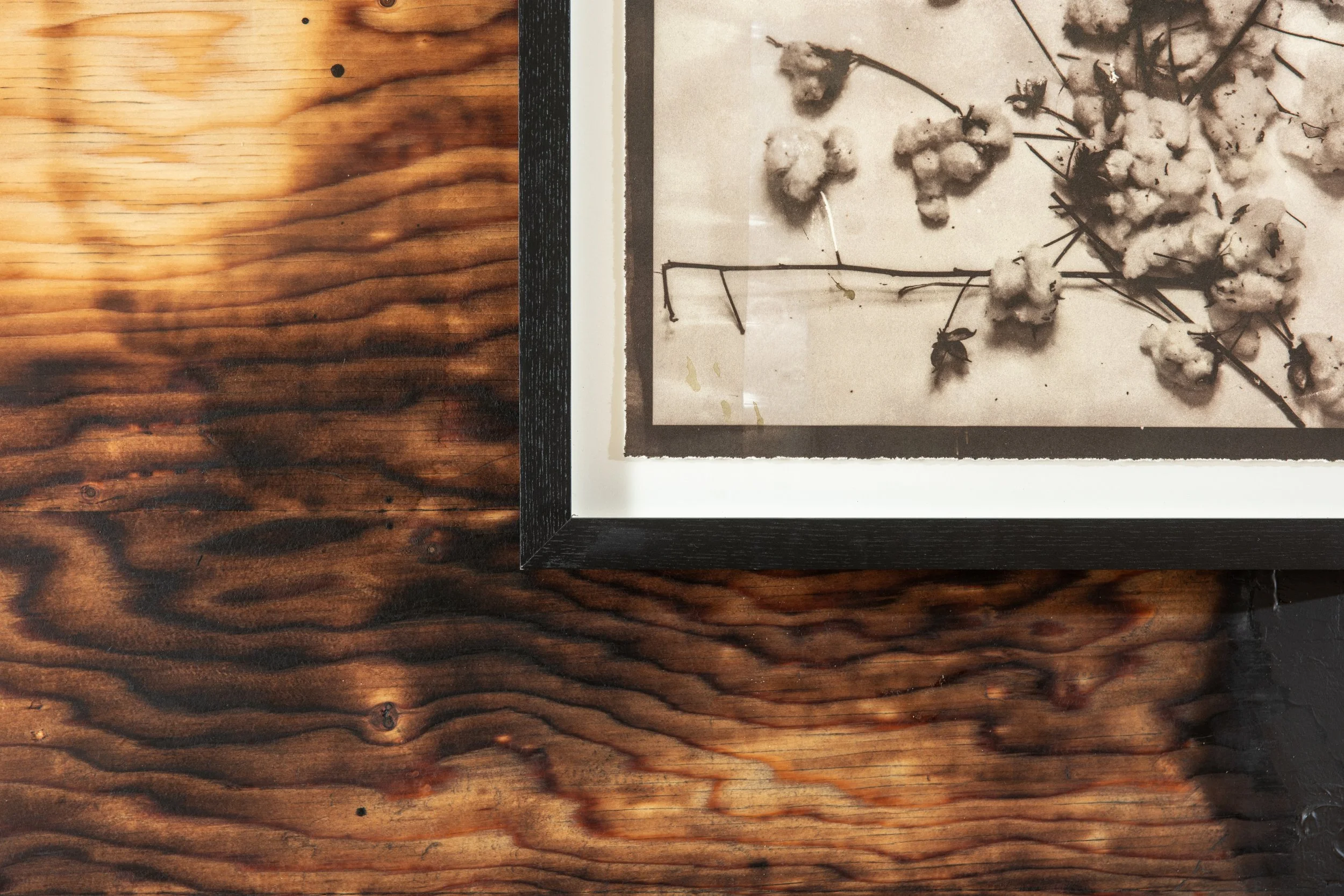
What the Black Belt Carries is a sculptural painting incorporating a Van Dyke brown print that explores the histories and ongoing legacies of the Alabama Black Belt as an entry point into the broader Black Belt region of the American South. Developed during my 2025–26 Graduate Fellowship at Headlands Center for the Arts. Drawing on archival research and nineteenth-century maps, the work translates historical records into sculptural form. It considers the region not only as a site of extraction, but also as a landscape that has continually generated ecological knowledge, cultural production, radical political organizing, and practices of collective care. The work is accompanied by a single-channel sound installation that expands its engagement with memory, landscape, and lived experience.
research, process, and form
This project emerged through an ongoing dialogue between research and making. The sections that follow trace the questions, source materials, artistic influences, and material decisions that shaped the work.
an earlier inquiry
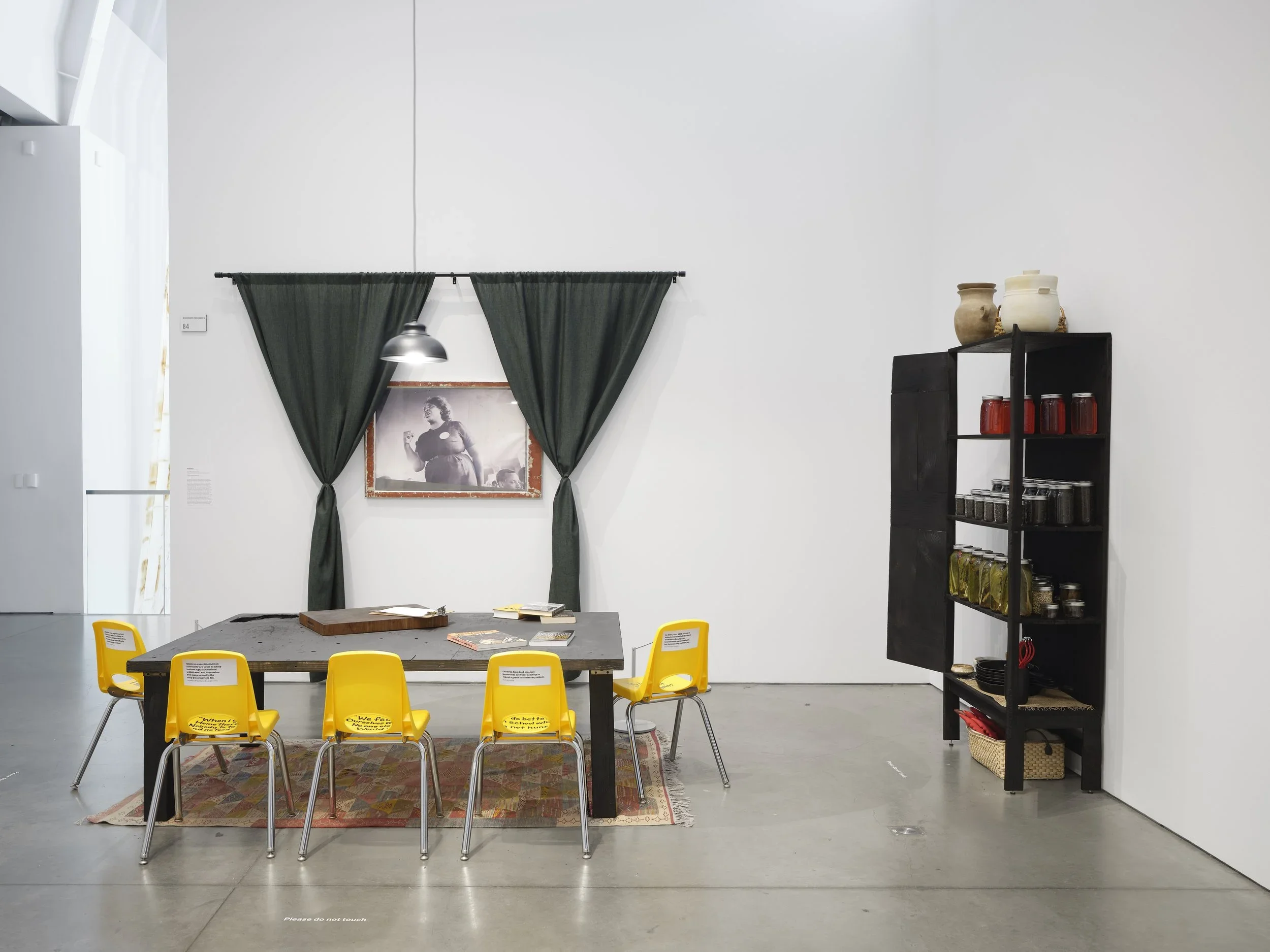
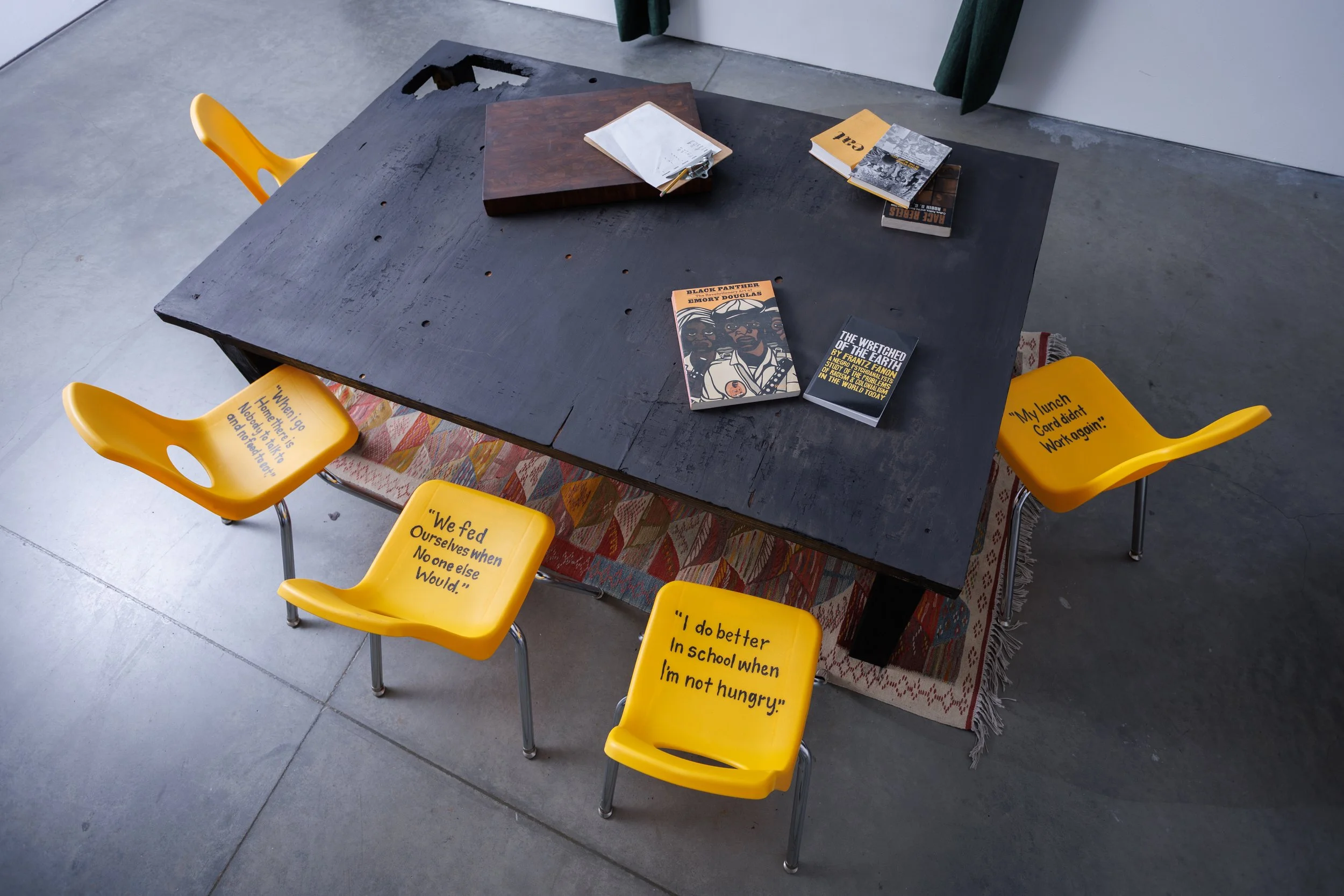
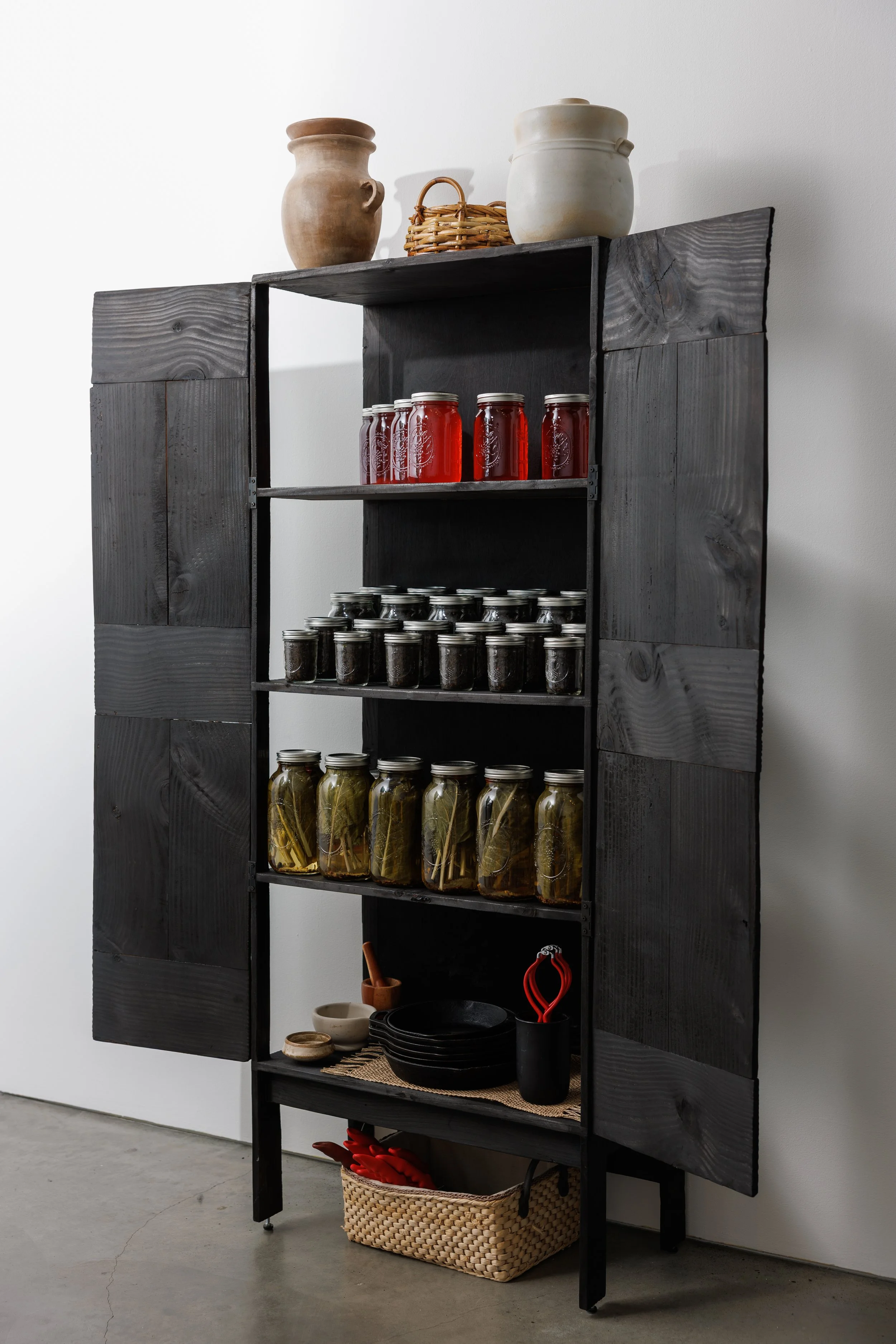
What the Black Belt Carries has its roots in my earlier installation, The Table and the Larder: Feeding the People, Remembering the Future, presented at the Berkeley Art Museum and Pacific Film Archive (BAMPFA) in 2025. While making that work, I found myself asking what sustained the domestic spaces I was exploring. Following that question meant looking beyond the home to the systems that made it possible. Every pantry has an agricultural history. Every table rests upon a landscape. Looking beneath these everyday acts of nourishment expanded my inquiry beyond the domestic interior to the land, labor, and ecological systems that sustain it.
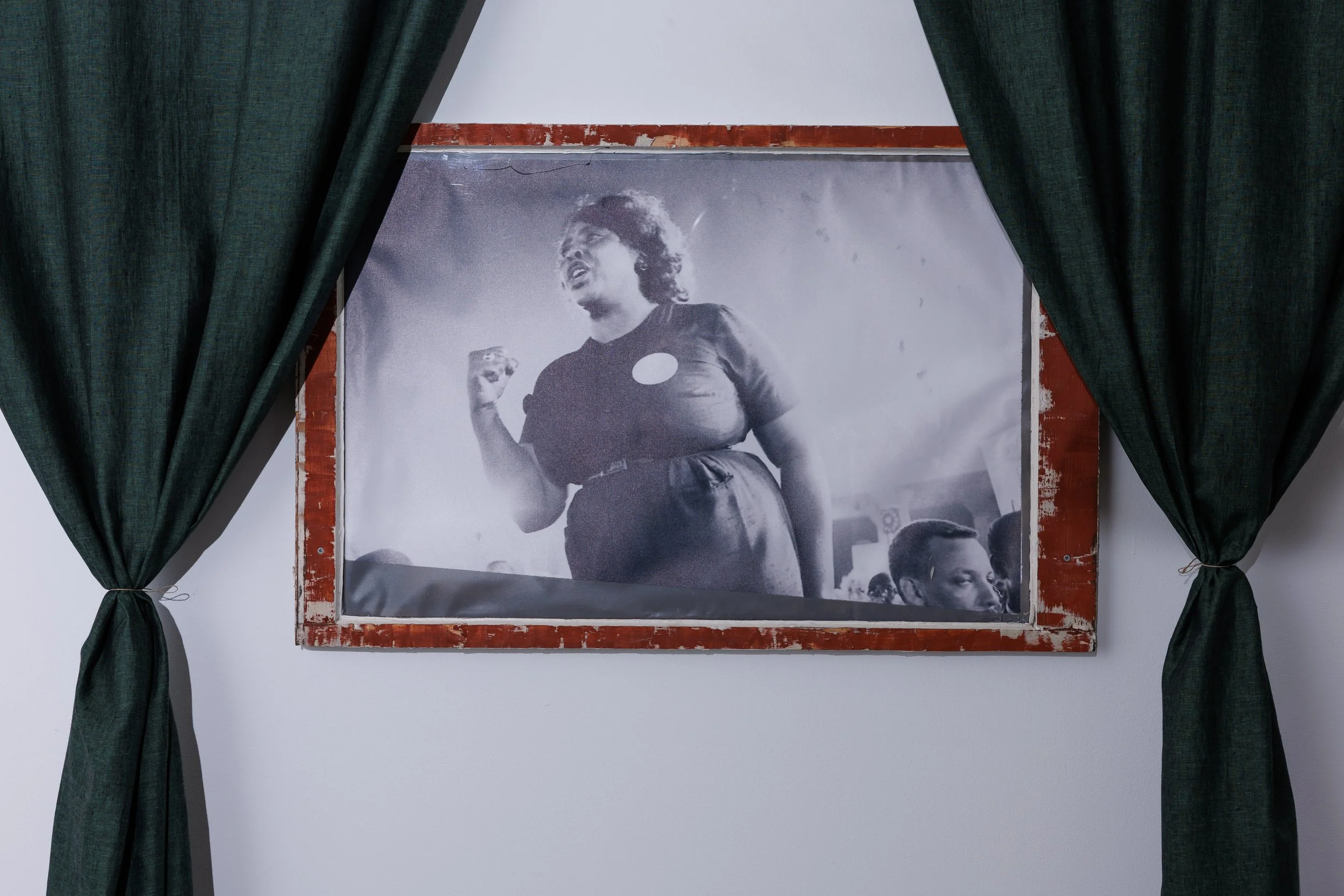
That shift led me to explore the global cotton economy and the ways Black communities transformed landscapes shaped by extraction into places of survival, cultural production, and political possibility. The organizing traditions represented by figures such as Fannie Lou Hamer first drew me to the Black Belt as a broader regional geography.
The Black Belt ultimately became more than the setting for the work. It became the conceptual framework through which its central questions could take material form.
“Every pantry has an agricultural history.
Every table rests upon a landscape.”
the central question
Before there was an object, I began with a question:
How do Black communities transform landscapes shaped by extraction into infrastructures for survival, memory, ecological knowledge, and collective care?
Although What the Black Belt Carries is rooted in the Alabama Black Belt, the project began with a broader inquiry into how landscapes carry history, not only materially, but also ecologically, culturally, and politically, and how sculpture might make those histories physically present without reducing them to illustration.
As that inquiry developed, my focus shifted from asking what history meant to asking how it might generate form. That shift shaped every material decision in the work, from its use of historical maps and photographic processes to its excavated surface and layered black field.
researching the black belt
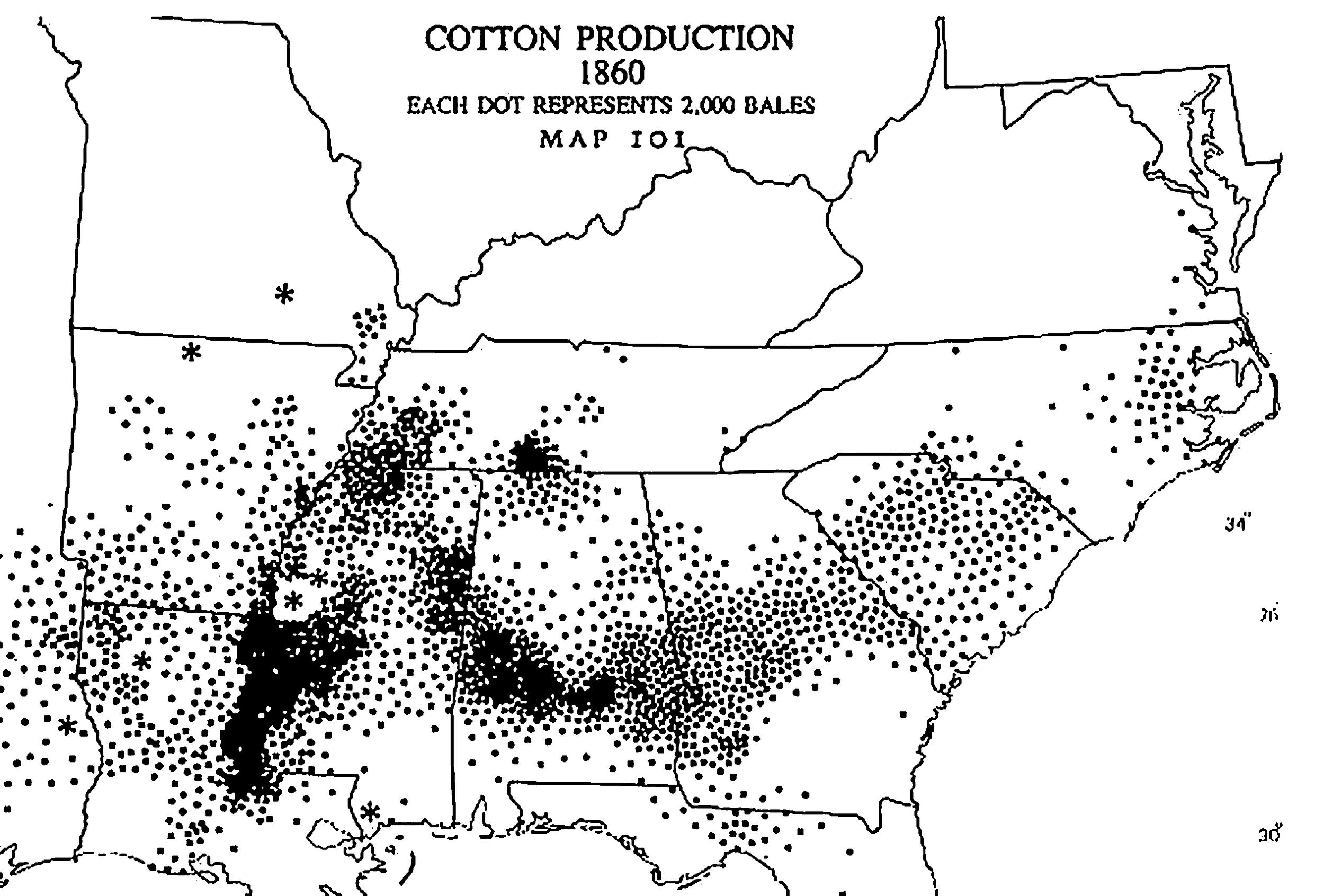
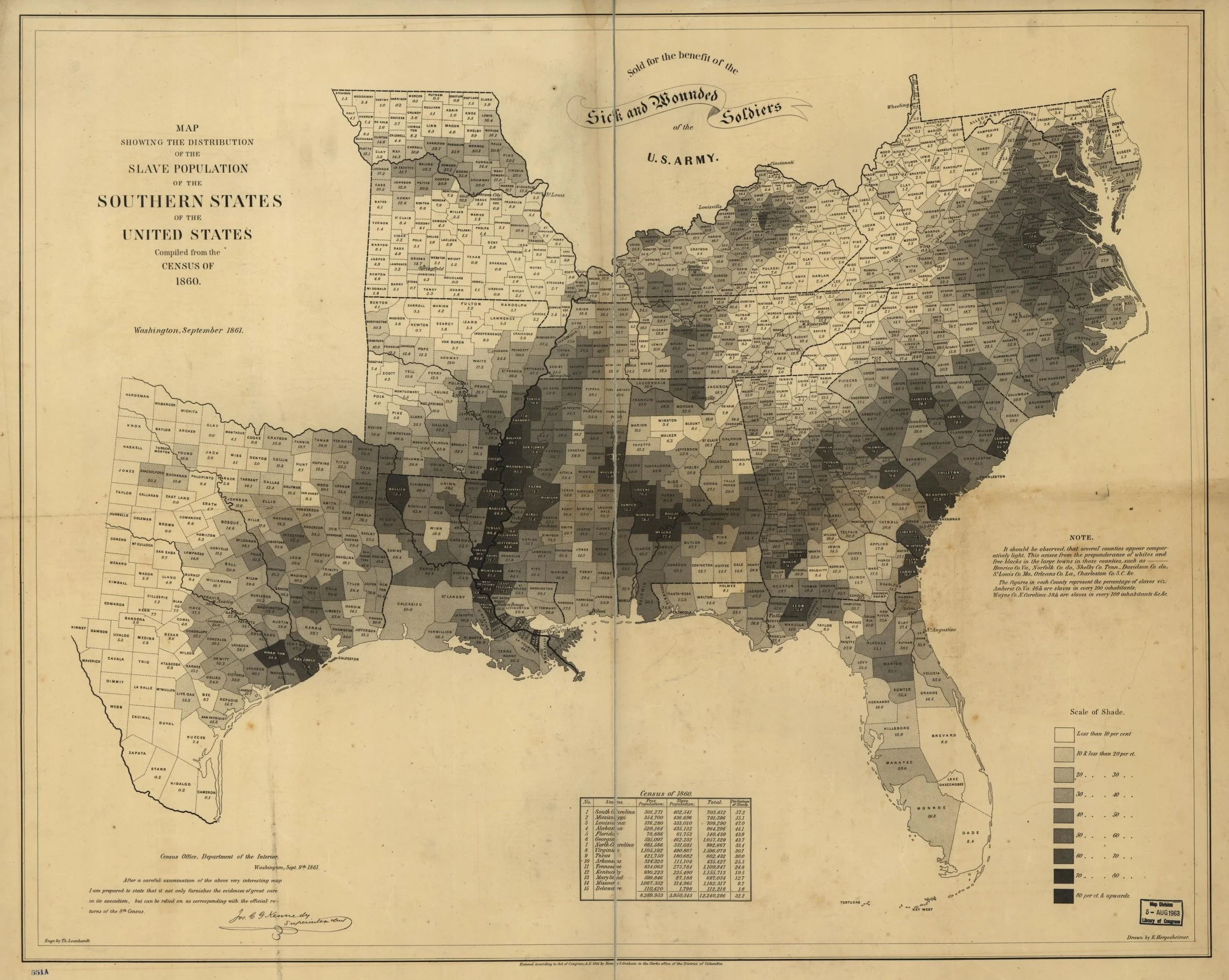
After completing The Table and the Larder, I found myself wanting to look beyond the domestic spaces where Black communities preserved knowledge and care. I began asking a broader question: What landscapes made those traditions necessary, and what histories did they hold? That search led me to a nineteenth-century map charting cotton production across Alabama's Black Belt. The map revealed the immense scale of the global cotton economy and how the region's fertile soils had been transformed into engines of enslavement, extraction, land dispossession, and racial capitalism. But I became less interested in what the map documented than in what it omitted. I wanted to understand what Black communities created within and against those conditions: agricultural knowledge, cultural traditions, systems of mutual aid, practices of care, and traditions of political organizing that enabled people not only to survive, but to build enduring forms of life and freedom.
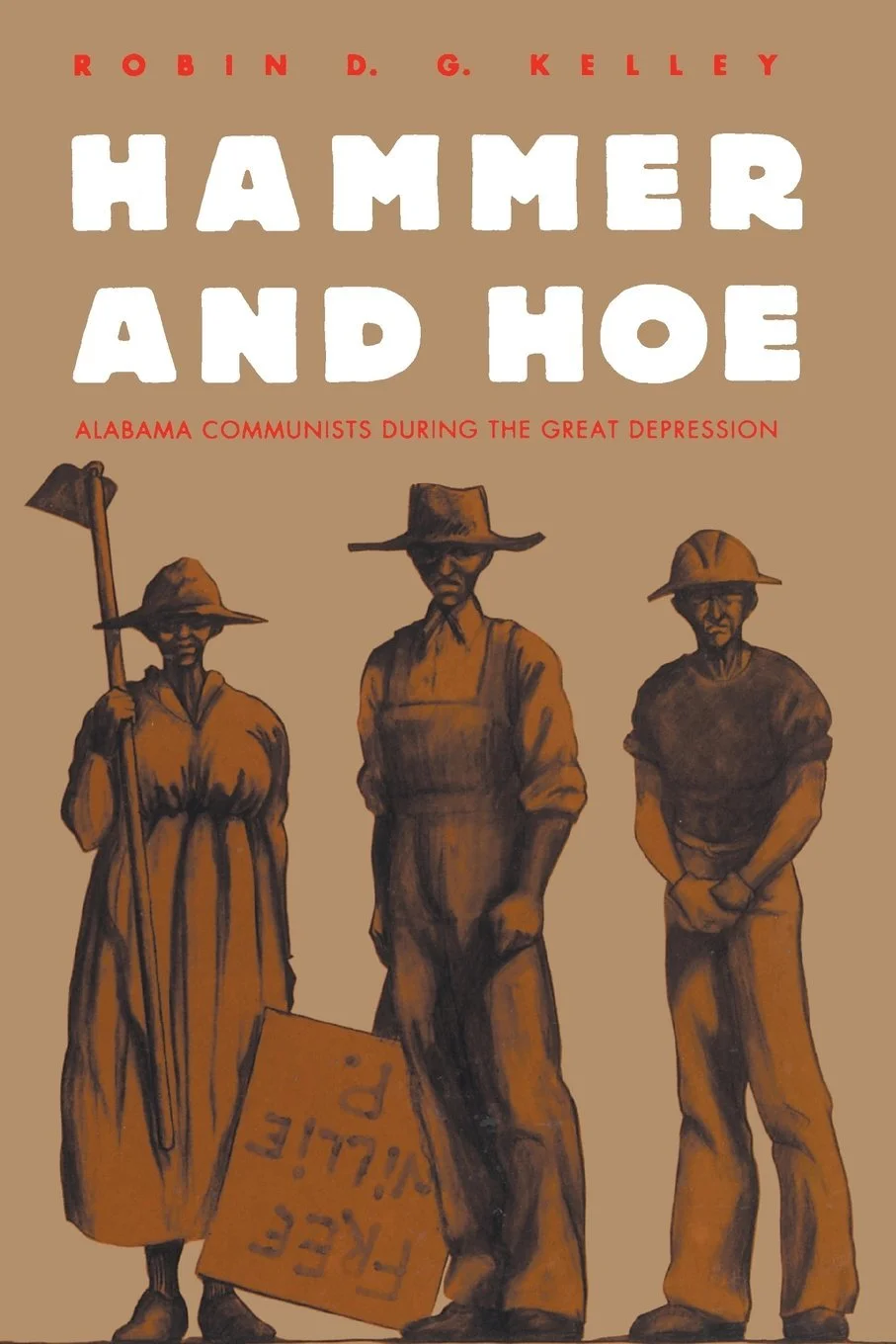
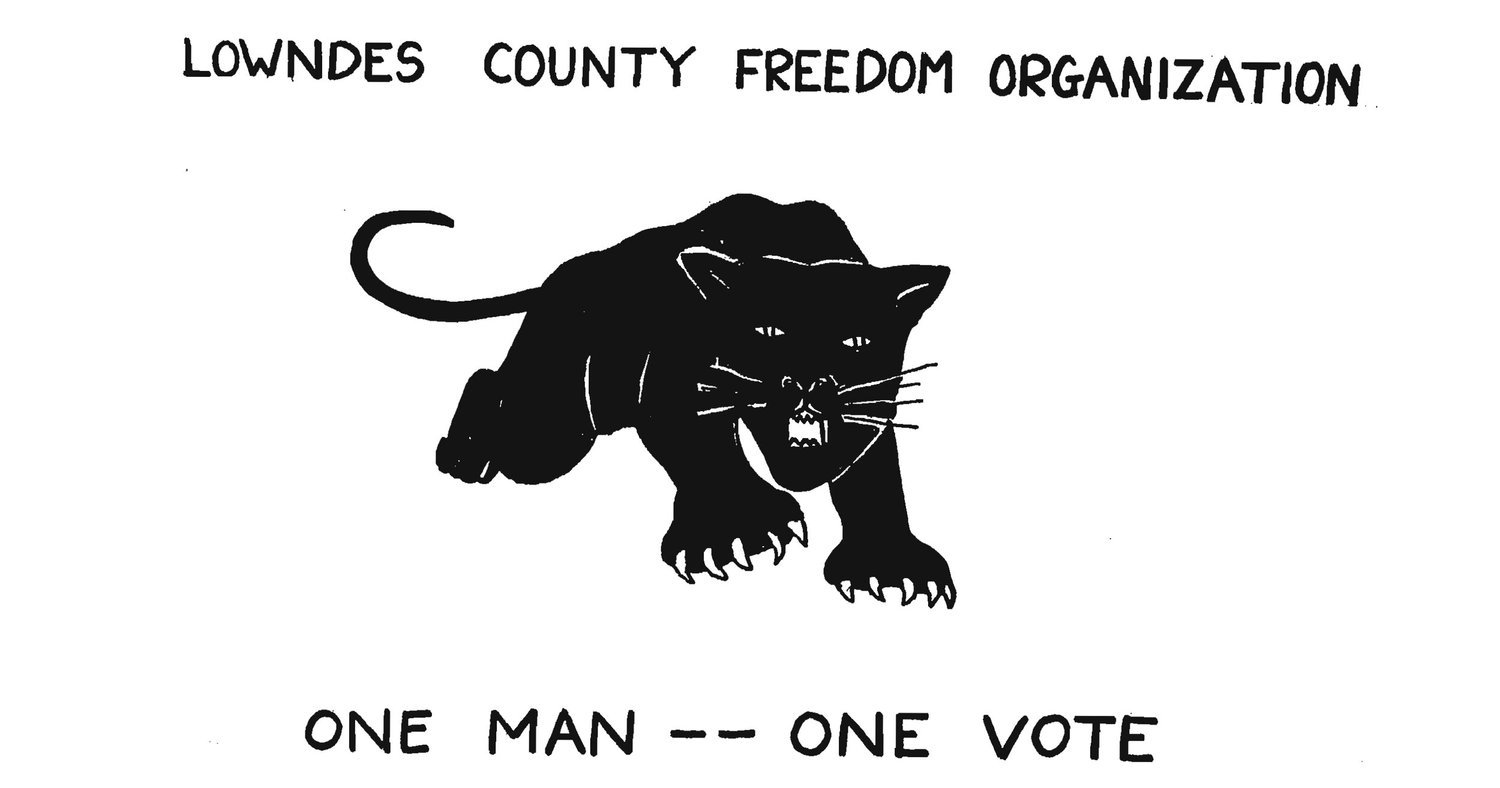
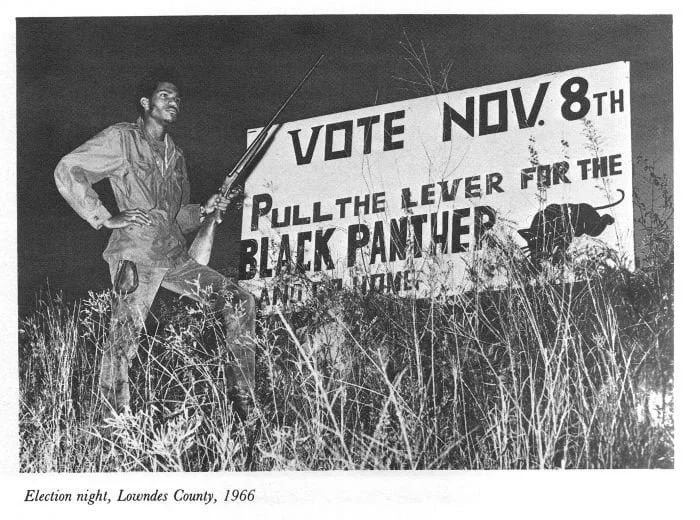
Robin D. G. Kelley's Hammer and Hoe profoundly reshaped my understanding of Alabama by documenting the radical organizing of Black sharecroppers and members of the Communist Party during the Great Depression. The history of the Lowndes County Freedom Organization further demonstrated how, decades later, Black communities transformed the same landscape into a site of grassroots political power, self-determination, and collective action.
These histories reshaped my understanding of the Black Belt itself, shifting the work away from a singular focus on extraction toward a landscape continually remade through Black political imagination, ecological knowledge, cultural production, mutual aid, and collective care.
Rather than understanding Alabama simply as a place marked by extraction, I came to see it as an entry point into the broader Black Belt, a landscape that has continually generated these intertwined histories and practices.
What the Black Belt Carries emerged from that shift in perspective.
translating research into form
As my research deepened, I became interested in asking how history might generate form. I began treating archival materials not as images to reproduce, but as sets of instructions for making. My challenge became developing a sculptural language that could emerge from research without simply illustrating it.
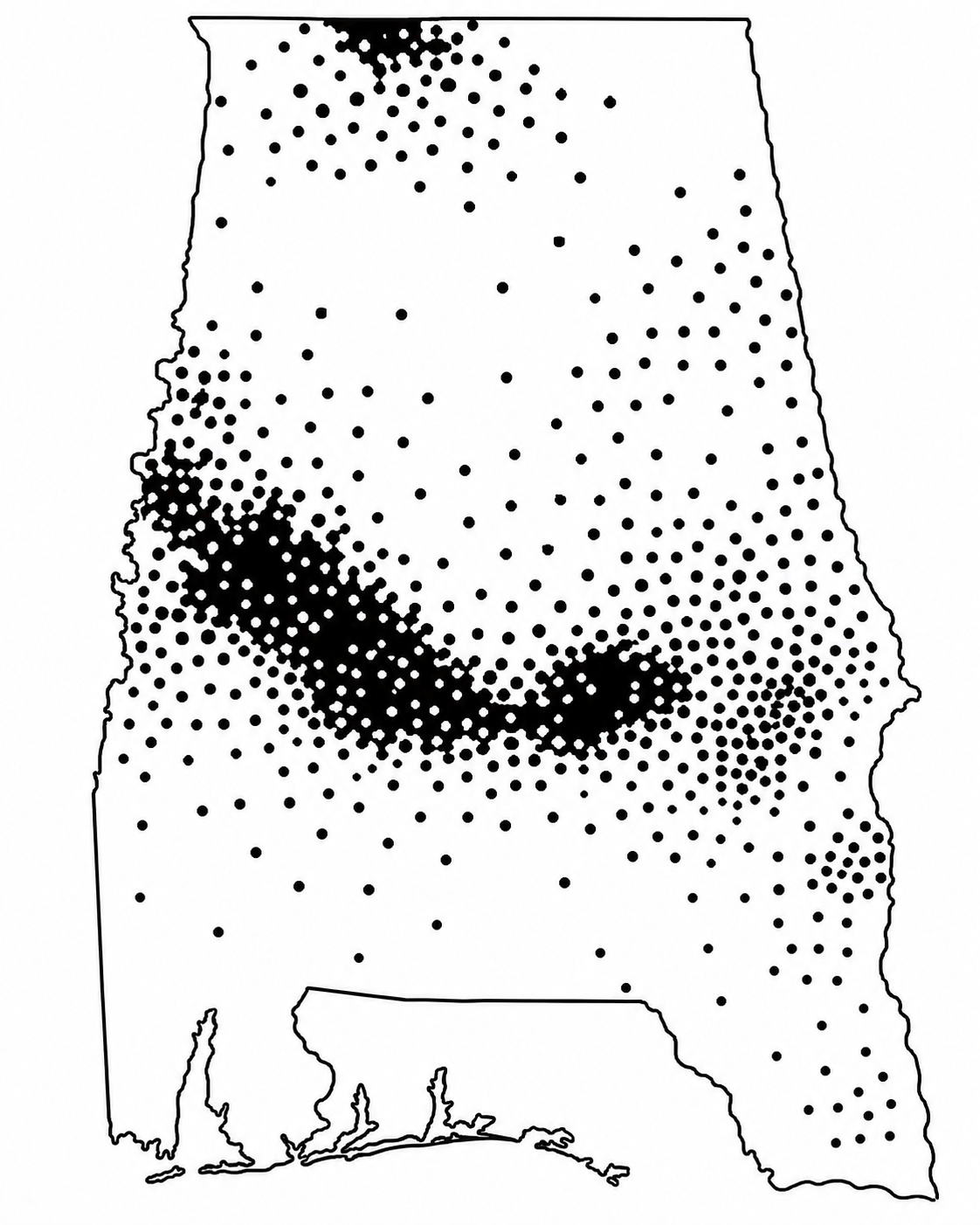
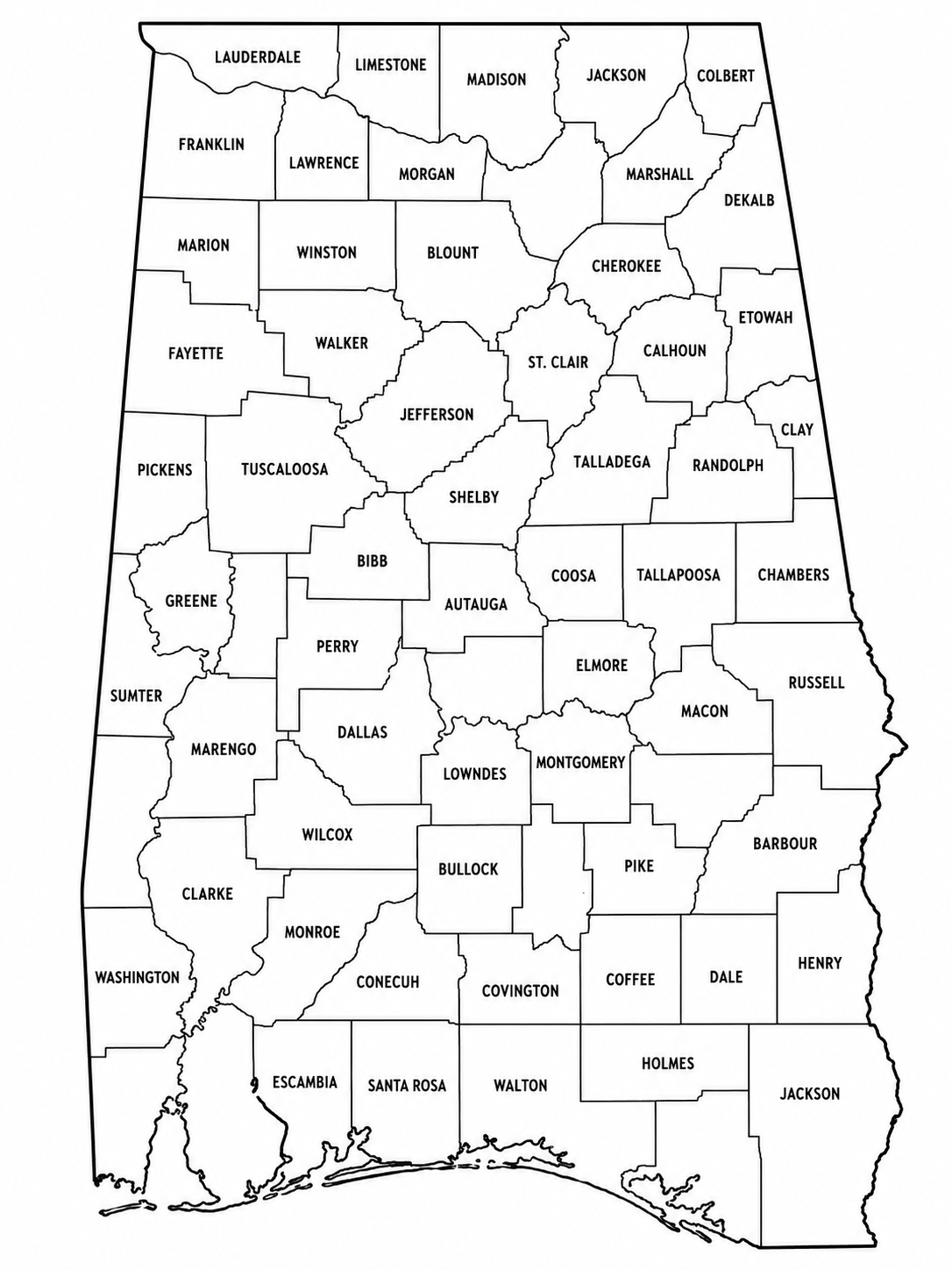
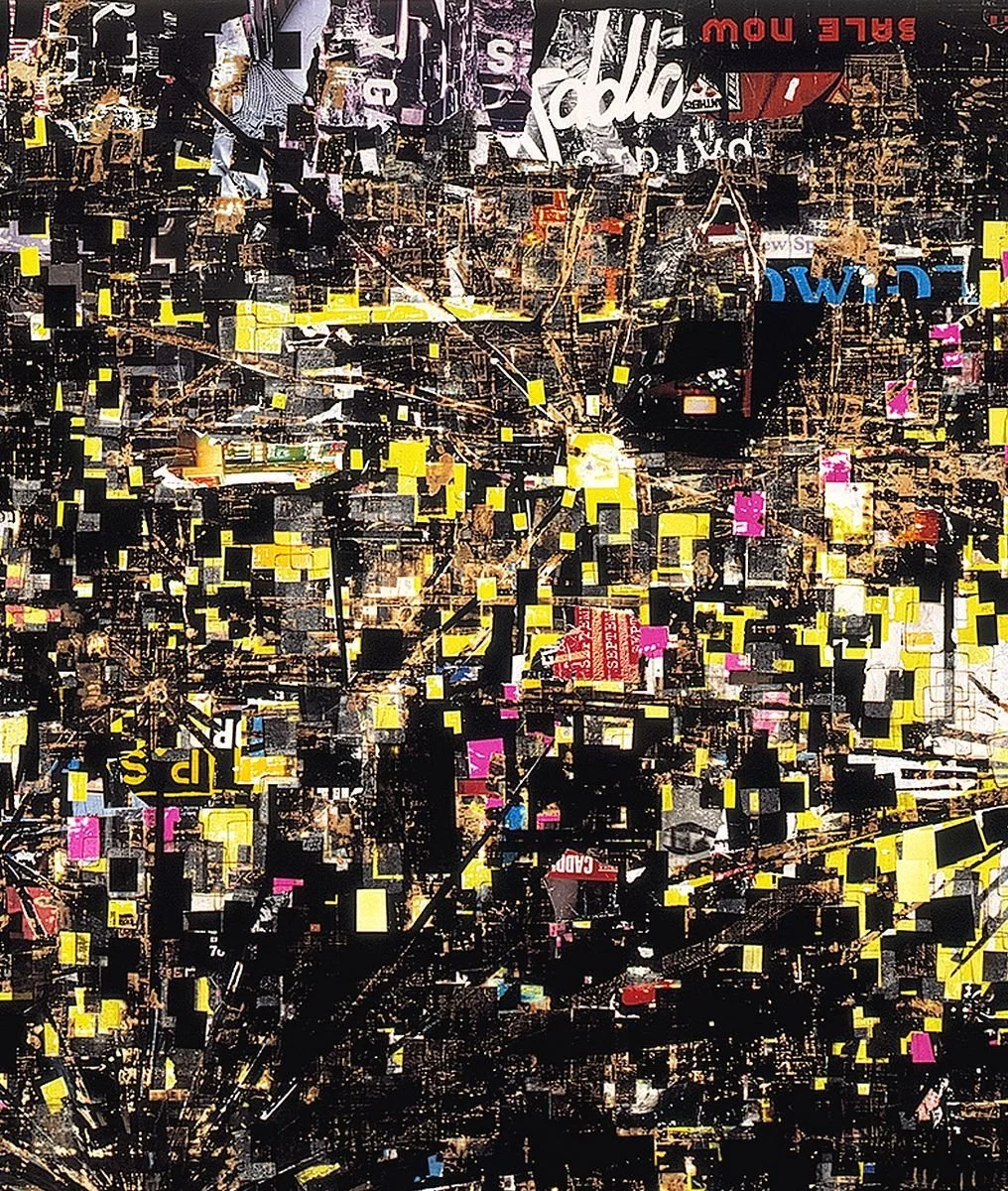
A nineteenth-century map of county-level cotton production in Alabama became one of the project's primary points of departure. Rather than reproducing the map as an image, I became interested in what it could reveal about the historical forces that shaped the landscape. I translated its underlying data into the physical structure of the work. Counties associated with greater cotton production received additional layers of acrylic paint, creating a subtle topography of accumulation that speaks to the scale of the plantation economy without reproducing its visual logic. In this approach, I found an important precedent in the work of Mark Bradford, whose use of maps and urban histories demonstrated how cartographic information can become a generative material structure.
Yet the Black Belt could not be understood through cotton alone. As the research expanded, so did the work. Maps, photographs, agricultural histories, and other archival sources became material processes rather than subjects to depict. The excavated wood surface, layered black field, and Van Dyke brown photograph each emerged from sustained engagement with different forms of historical evidence, allowing the research itself to shape the physical language of the work.
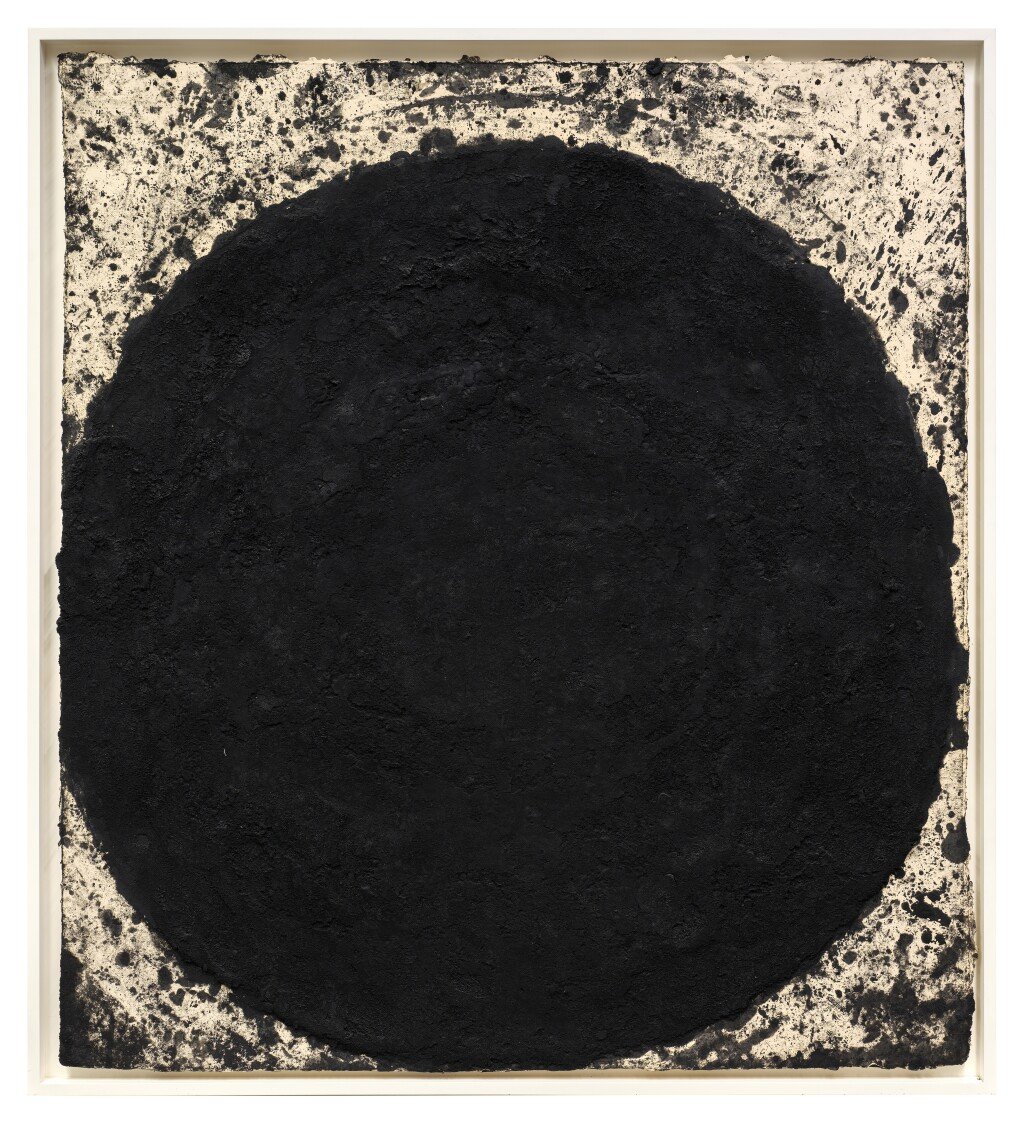
This approach grew out of a broader interest in translation as an artistic methodology. While developing What the Black Belt Carries, I was simultaneously creating Laughin' & Talkin': A Study in Translating Line Into Space during an artist residency at the Eames Ranch. That project explored how the underlying structure of a drawing might move from one medium to another without becoming a literal copy. The same question carried into this work. Rather than asking how to represent history, I became interested in how historical knowledge might become material. I was also influenced by the drawings of Richard Serra, whose use of drawing as a process of accumulation and material thinking reinforced my interest in allowing form to emerge through making rather than illustration.
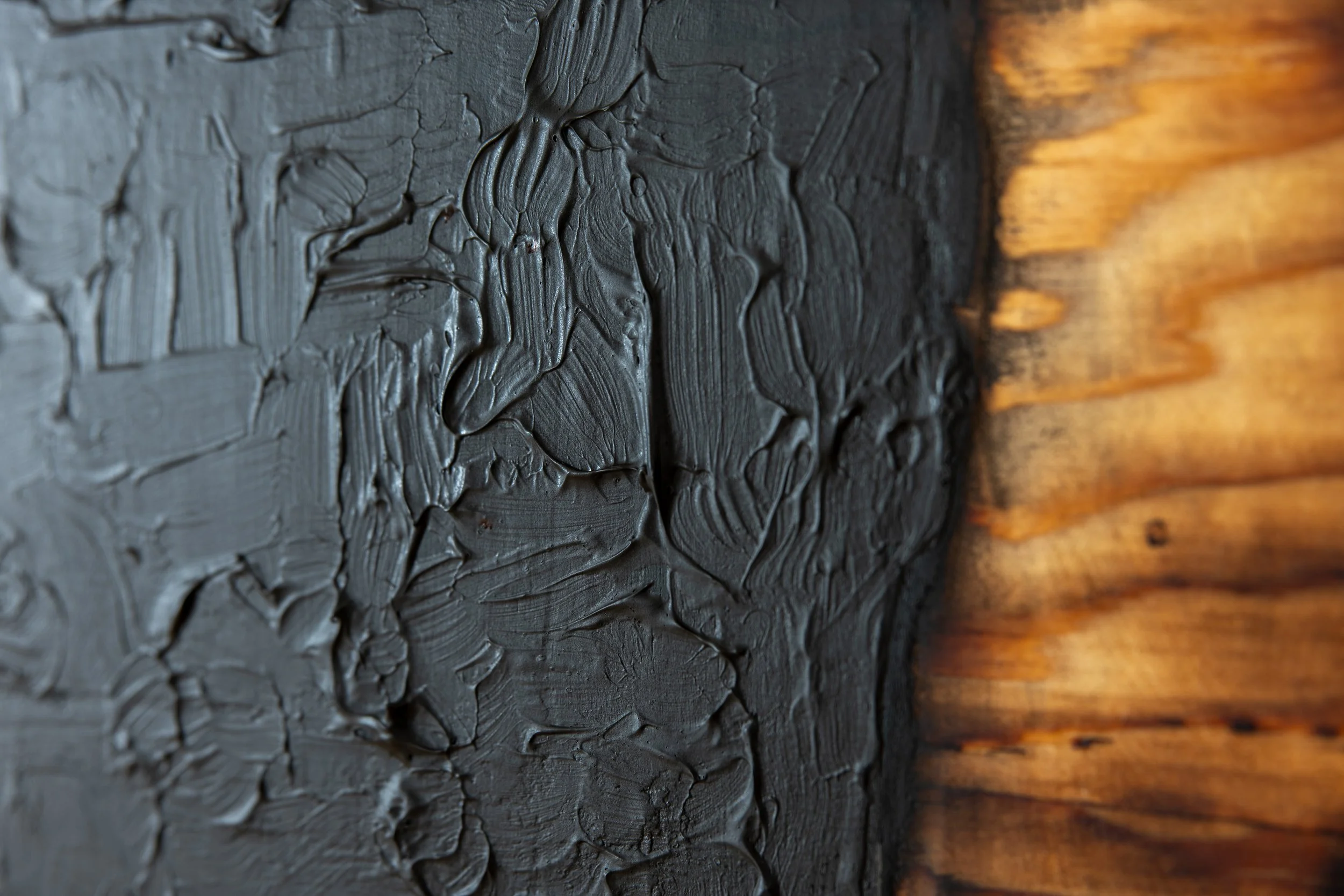
The work asks what becomes possible when history is encountered through texture, weight, accumulation, light, and absence instead of illustration alone.
material continuities
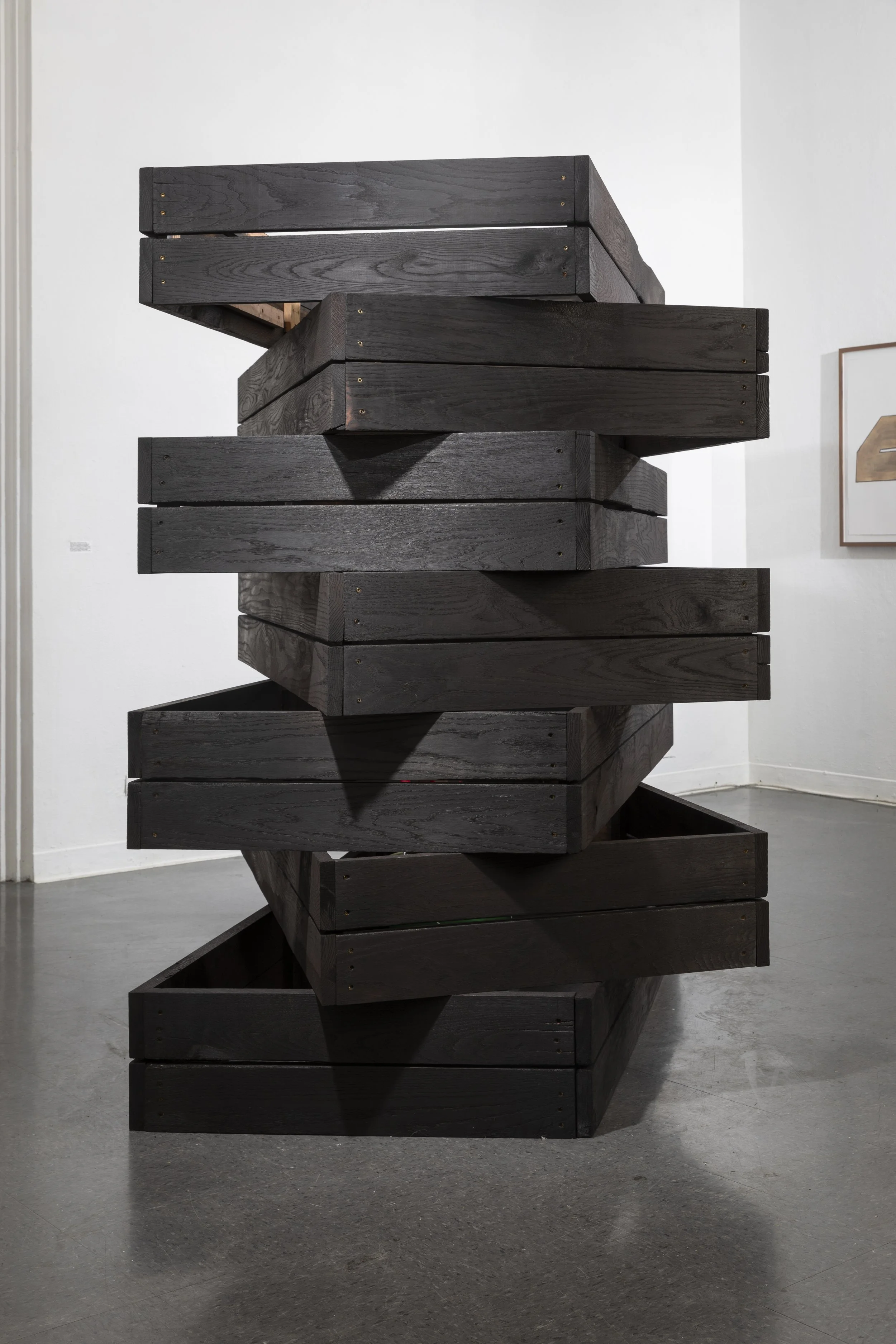
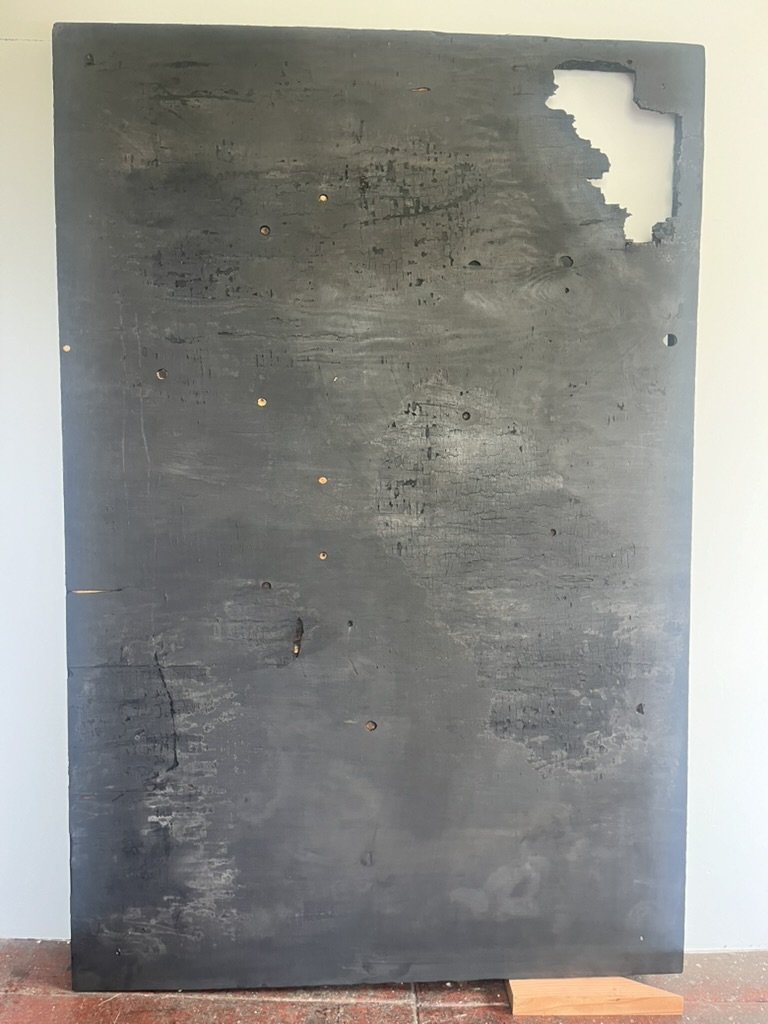
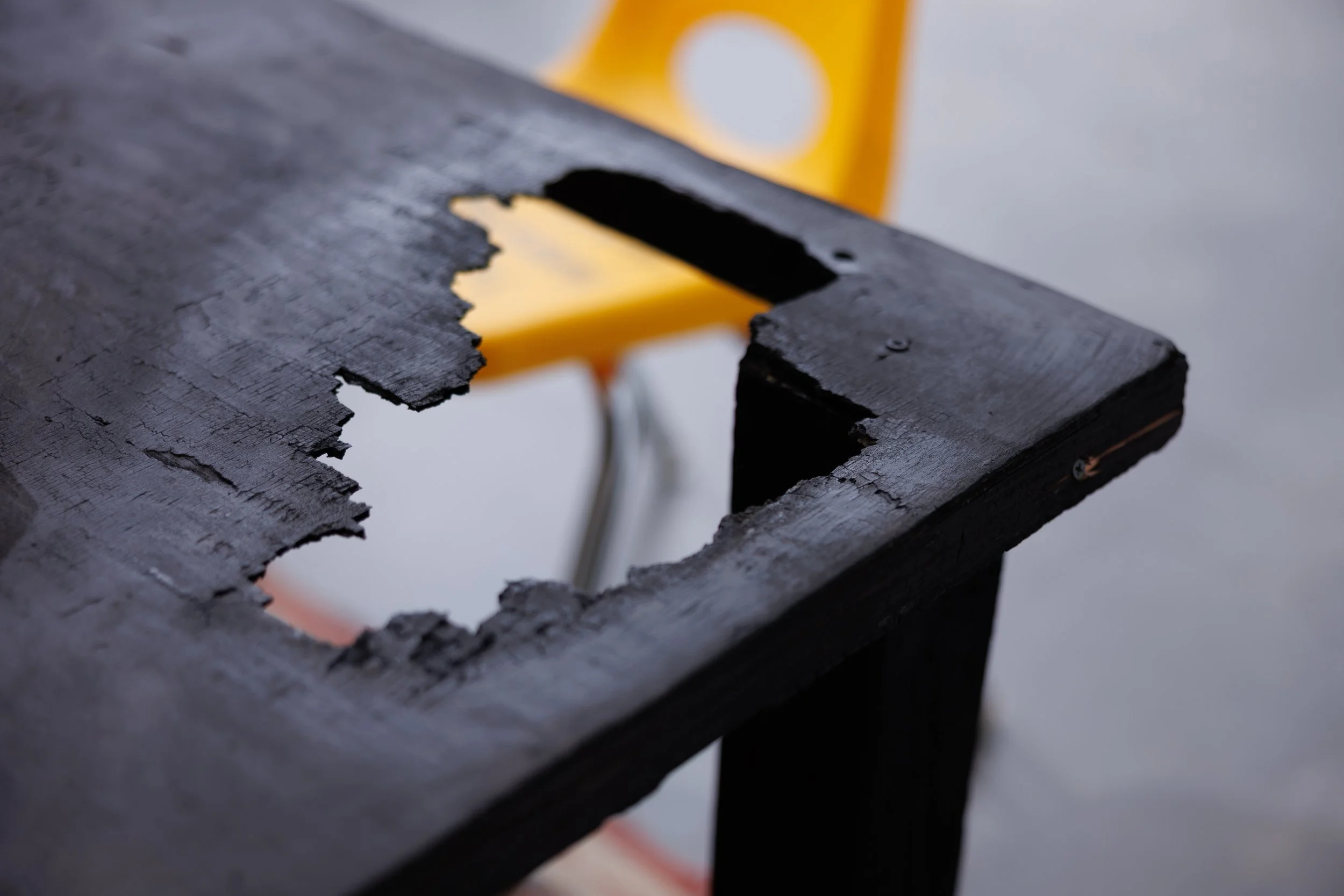
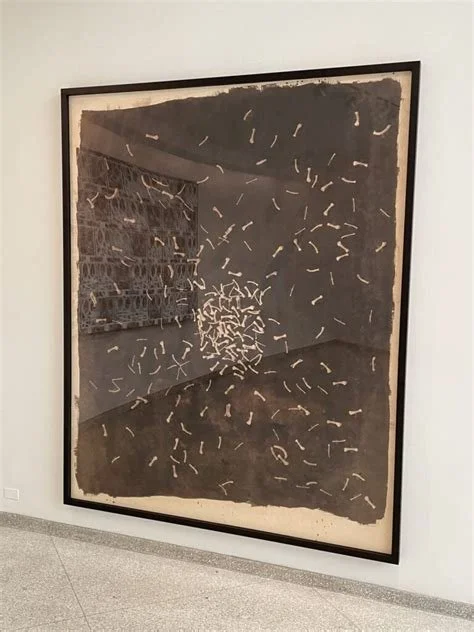
Although the subject shifted from domestic space to landscape, I found myself returning to materials and processes I had developed during my MFA in Art Practice at UC Berkeley. In Razed Bed #2, techniques such as ebonization and yakisugi became more than methods of construction. They established a way of thinking through material process, in which burning, carbonization, and hand finishing became tools for exploring transformation, cultivation, memory, and repair.
I carried these processes into The Table and the Larder and, ultimately, What the Black Belt Carries. Across the three works, the materials became a throughline, allowing me to investigate different dimensions of Black life—from domestic space and foodways to land, labor, and collective memory—through a shared language of material transformation.
Rather than beginning anew with each project, I have come to understand these materials and processes as an evolving vocabulary. As the questions change, they continue to accumulate meaning, carrying earlier investigations into new contexts while opening new possibilities for making.
photography as material
Having established wood, fire, and paint as the project's primary material vocabulary, I found myself needing another material that could carry a different dimension of the research. While historical maps shaped the work's overall structure, I began searching for a photographic process that could embody the same sense of material and historical depth. Rather than producing a conventional digital photograph, I wanted the image itself to emerge through a process that was physical, time-based, and historically situated.
Rashid Johnson's use of the nineteenth-century Van Dyke brown printing process demonstrated how historical photographic techniques could remain active within contemporary practice. His work encouraged me to think of photography not simply as a means of representation, but as a material language capable of carrying memory, labor, and time.
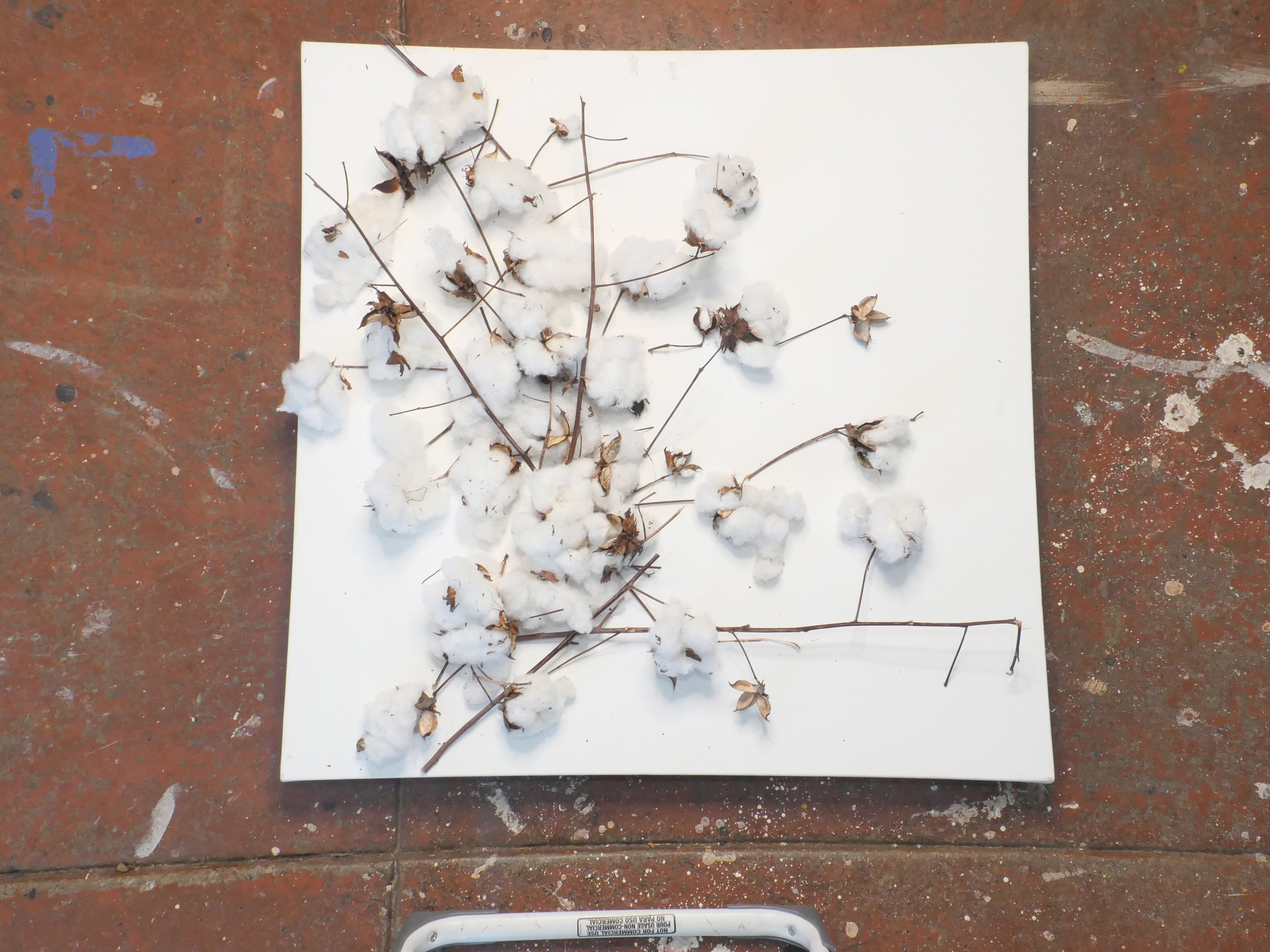
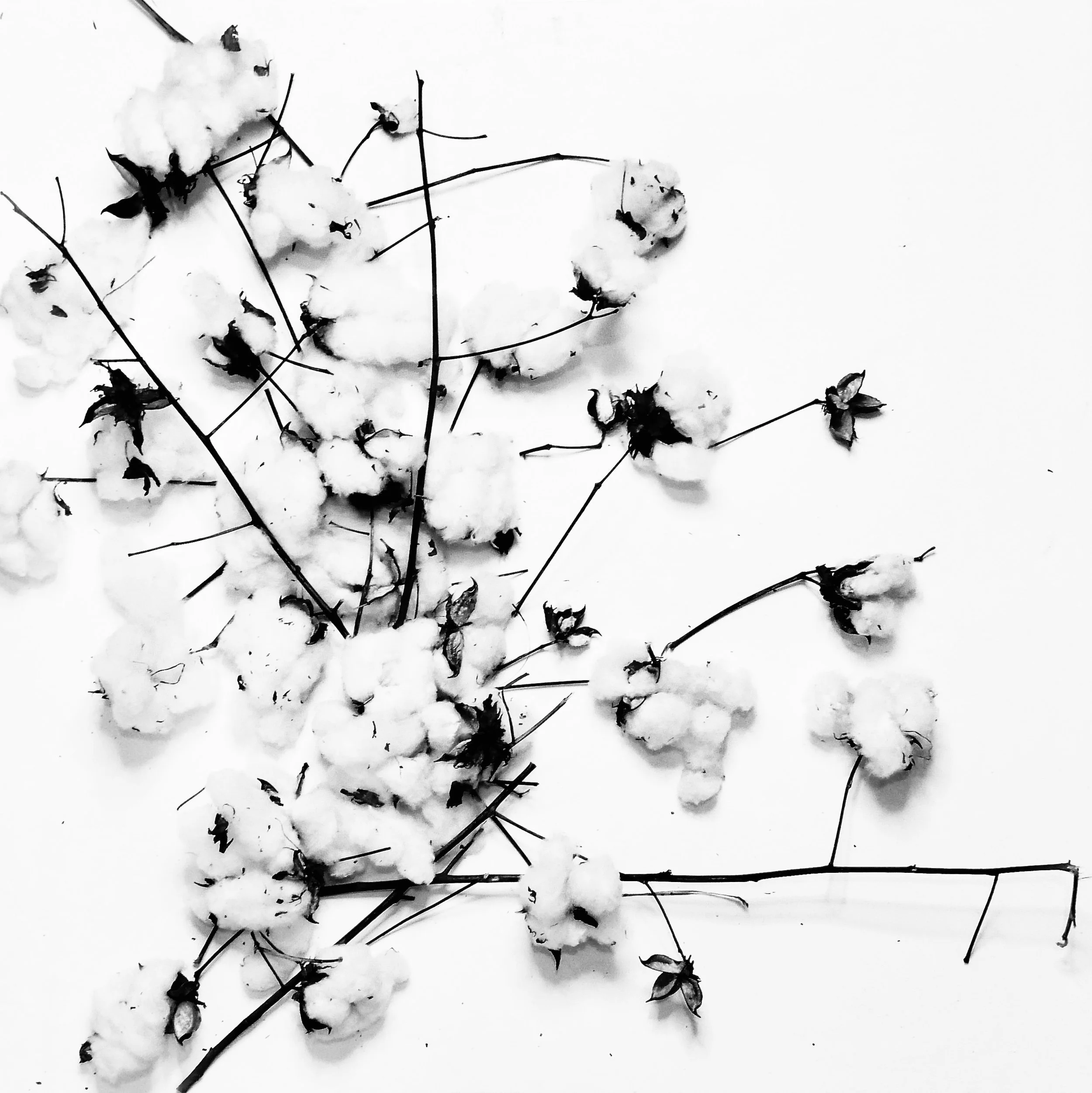
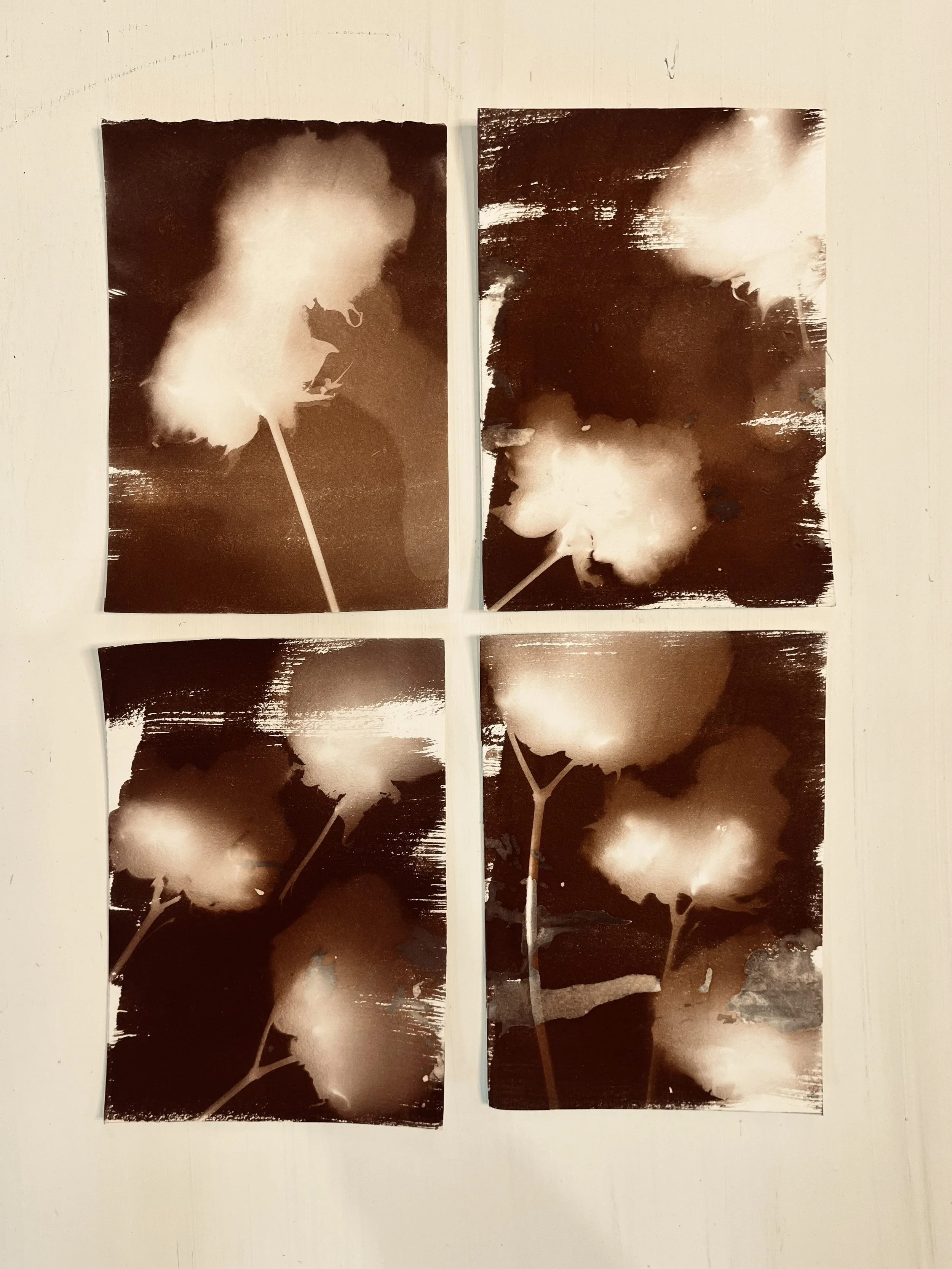
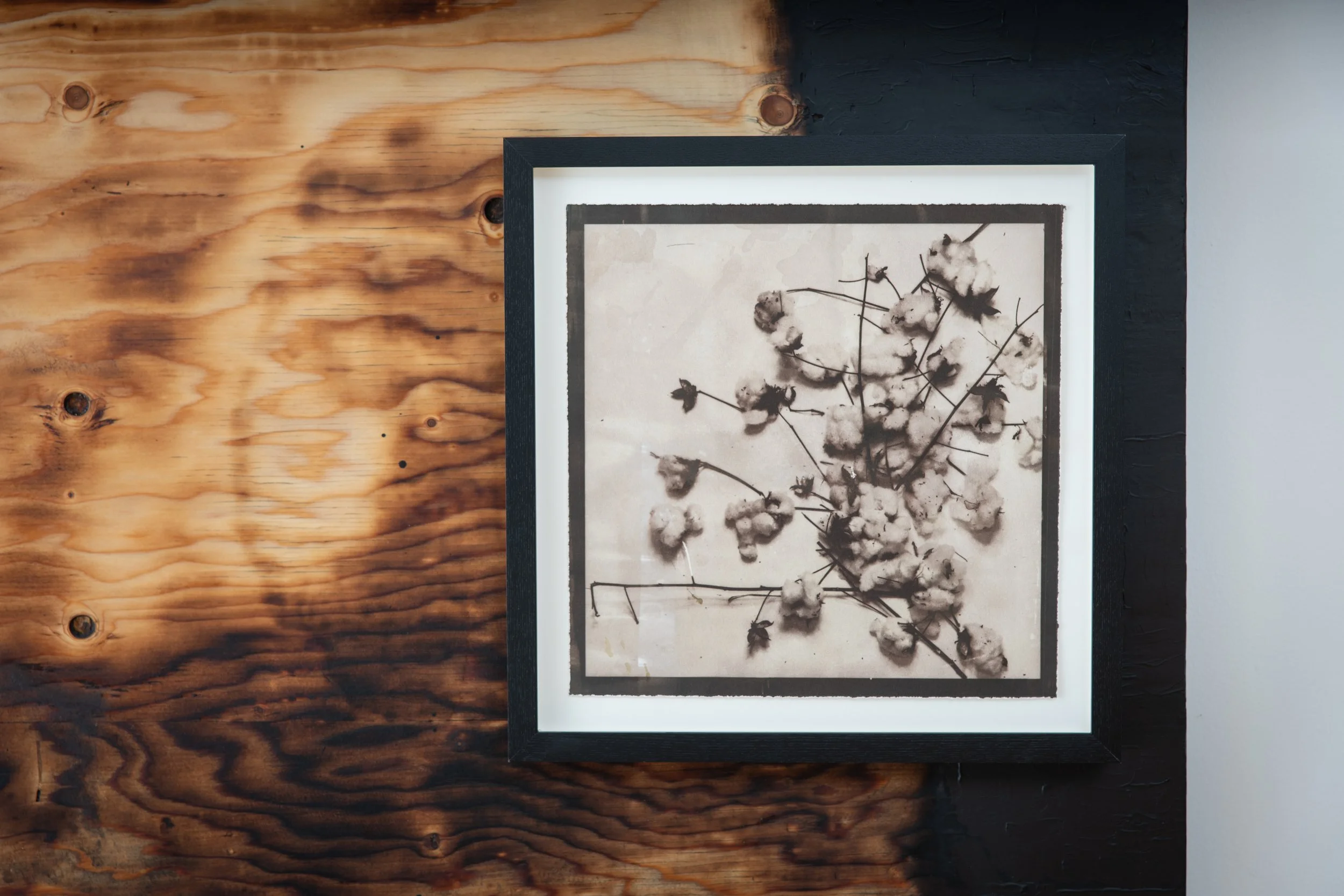
That realization led me to learn the Van Dyke process through a series of experiments, beginning with abstract photograms of cotton that showed me how light and chemistry could become image. I ultimately photographed a cotton plant grown by fifth-generation Black farmer Julius Tillery in North Carolina. Rather than presenting cotton as a harvested commodity, I wanted to encounter it as a living organism, one whose form carries intertwined histories of agriculture, labor, ecological knowledge, and Black land stewardship.
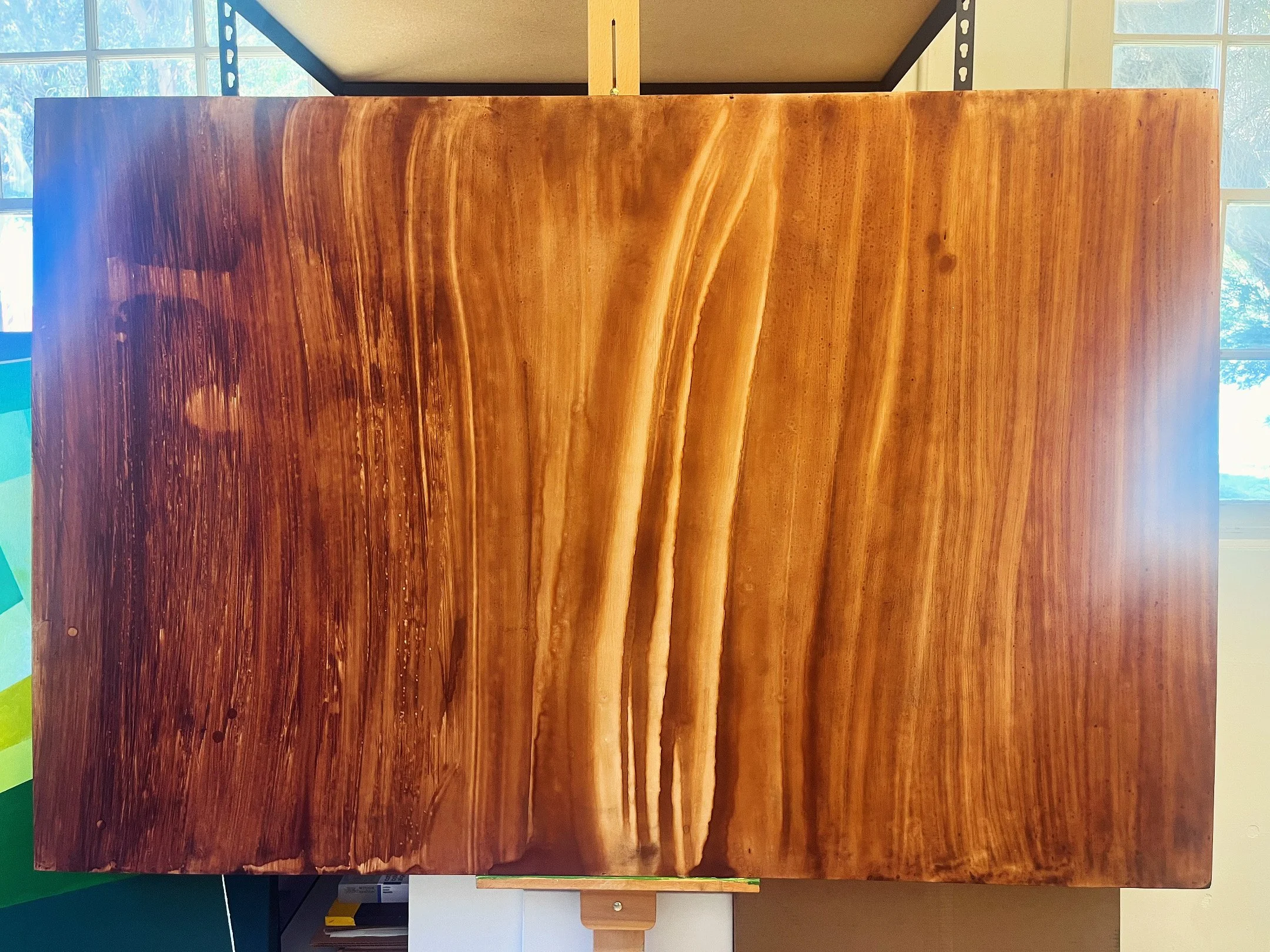
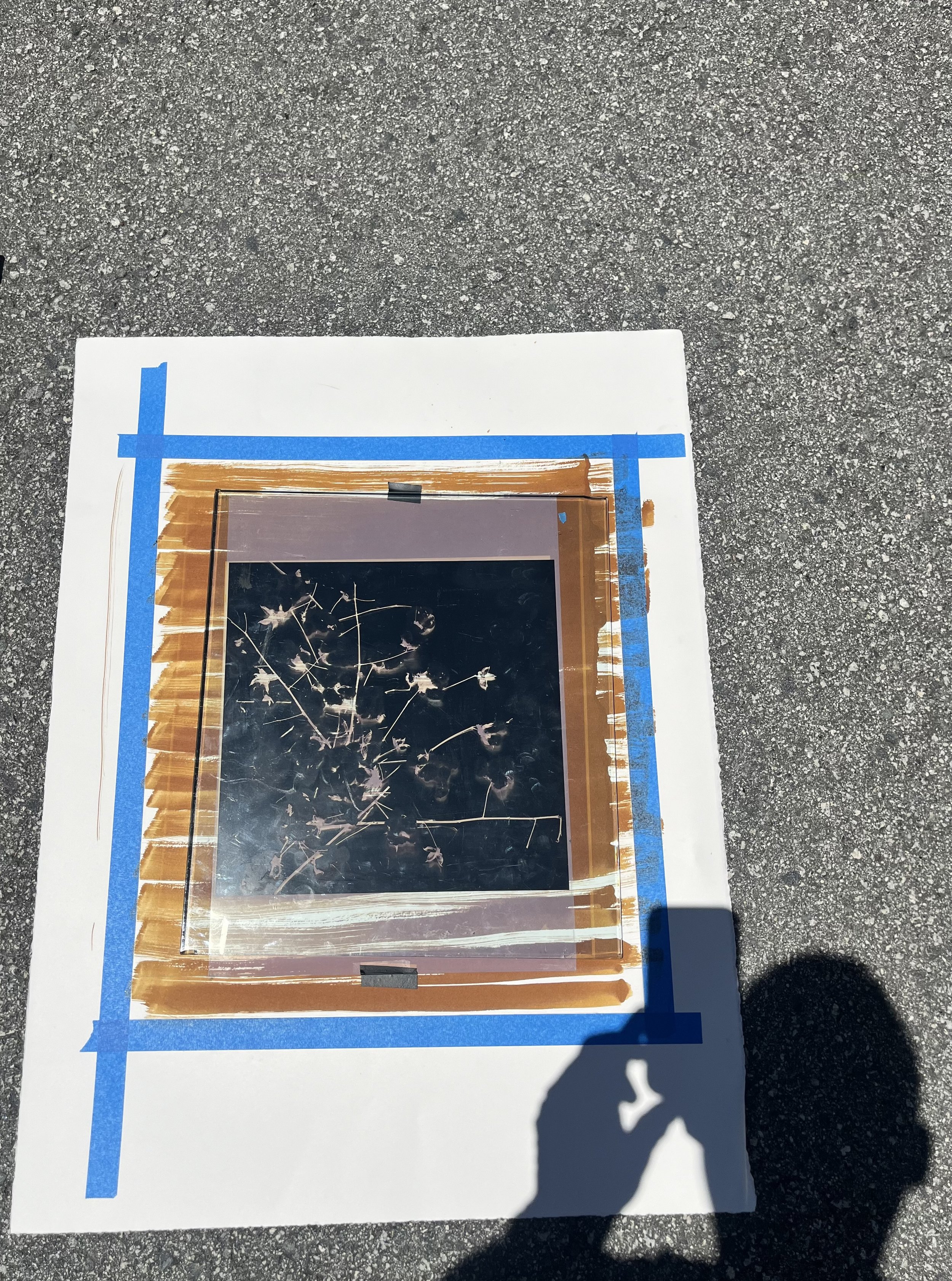
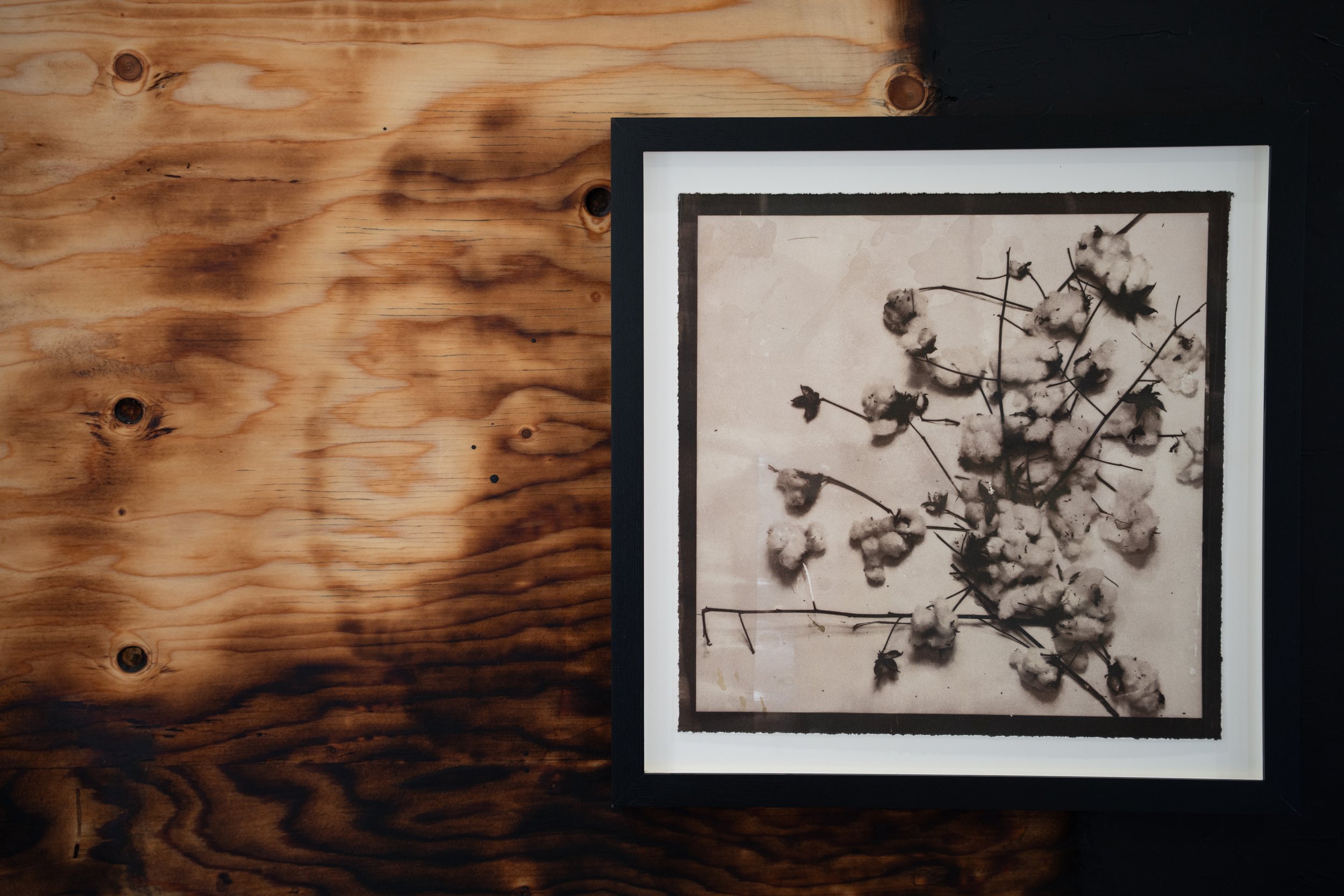
The final print intentionally moves across multiple technologies and temporalities. I began by creating a contemporary digital photograph, refined the image digitally, and produced a digital contact negative. That negative was then placed on hand-coated cotton rag paper and exposed under ultraviolet light using the nineteenth-century Van Dyke brown process. Rather than treating historical and digital technologies as opposites, I approached them as complementary stages within a single act of making.
This intensive process transformed photography into a practice of sustained attention, requiring more than twenty hours in the darkroom to produce the final print. The resulting image functions less as documentary evidence than as a material presence within the sculpture, connecting the histories embedded in the landscape to the living plant itself.
In this way, photography expanded the project's material vocabulary. Like the historical maps that shaped the black field, the Van Dyke print allowed archival research to assume physical form. Rather than illustrating the work's ideas, it became another material through which those ideas could be thought, tested, and carried.
“Rather than treating historical and digital technologies as opposites, I approached them as complementary stages within a single act of translation.”
fire and excavation
If the black field records historical accumulation, Alabama emerged through excavation.
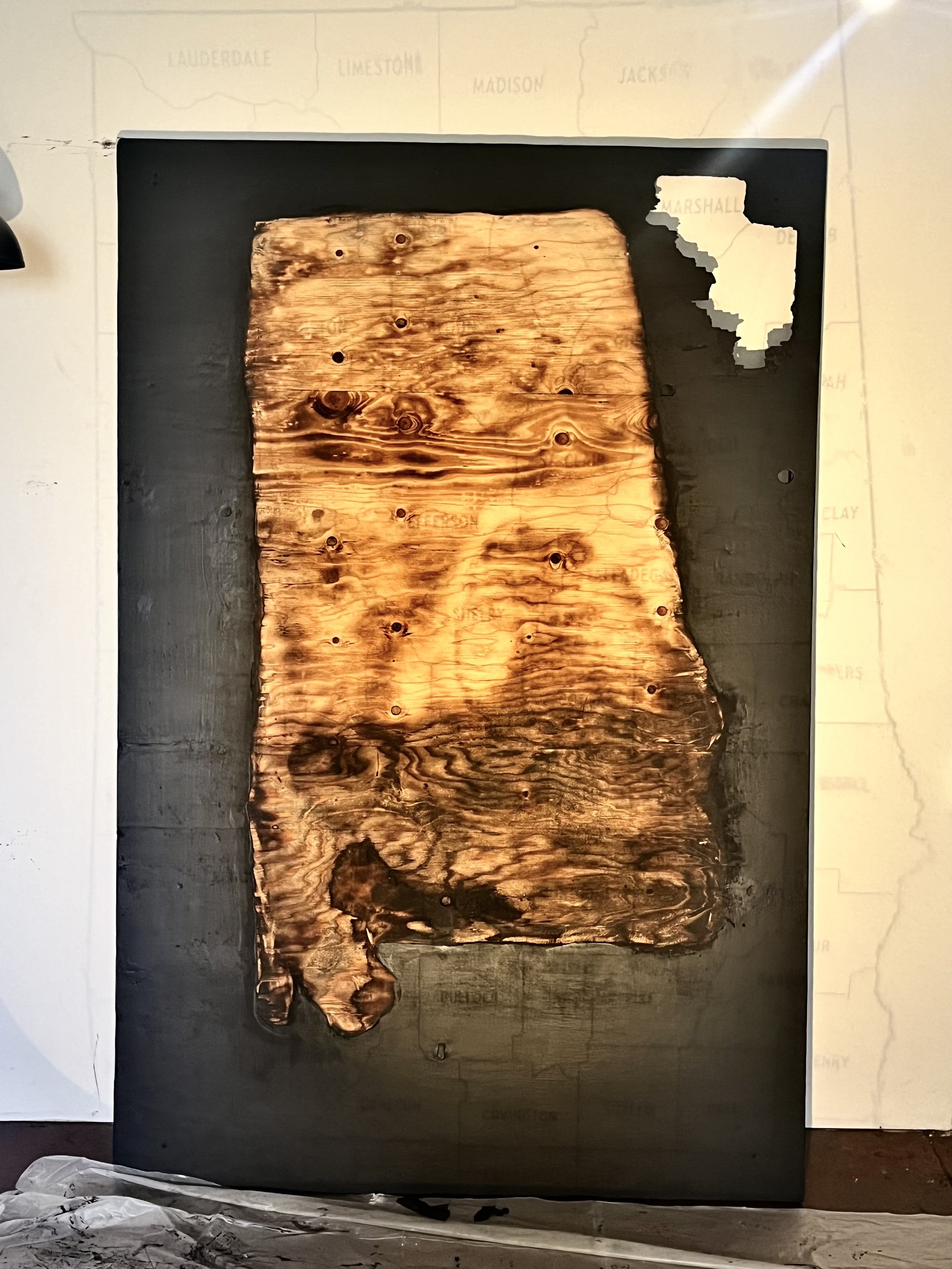
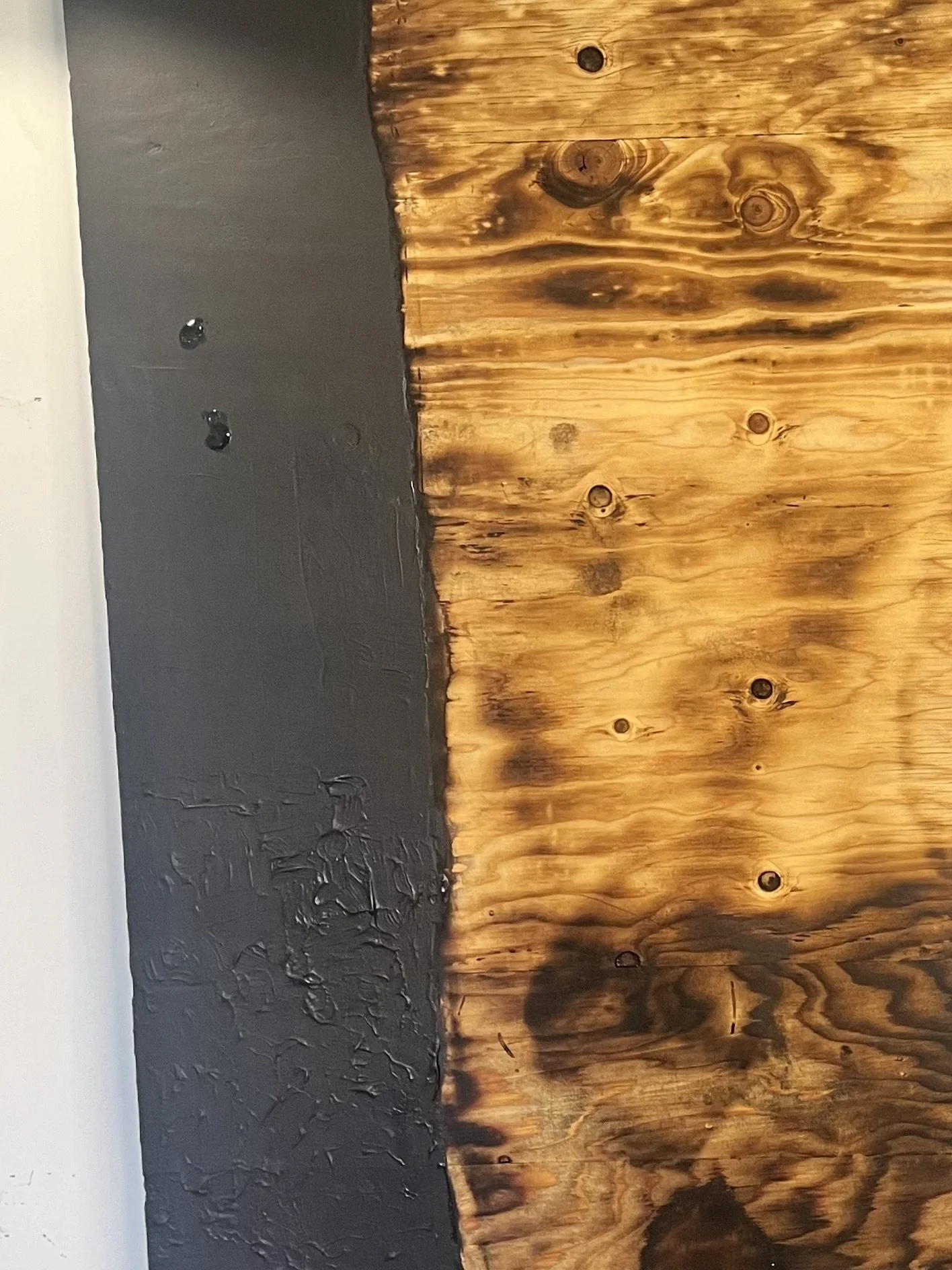
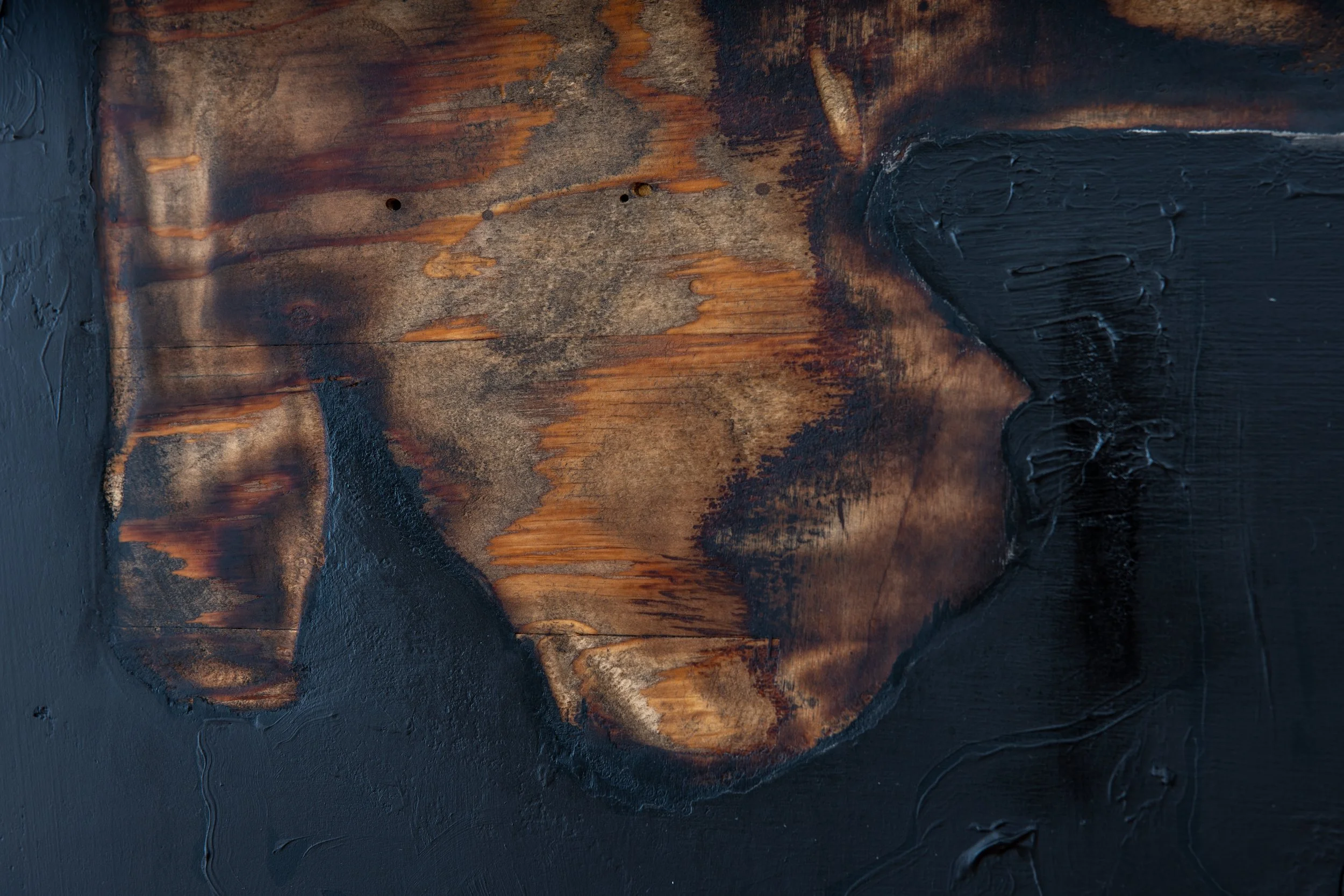
The panel already carried the material history of The Table and the Larder, where it had been ebonized and burned by hand. Rather than beginning with a new panel, I chose to work with one that already bore the traces of an earlier project. Excavating Alabama became an act of both continuity and renewal, allowing one work's material history to become the foundation for the next.
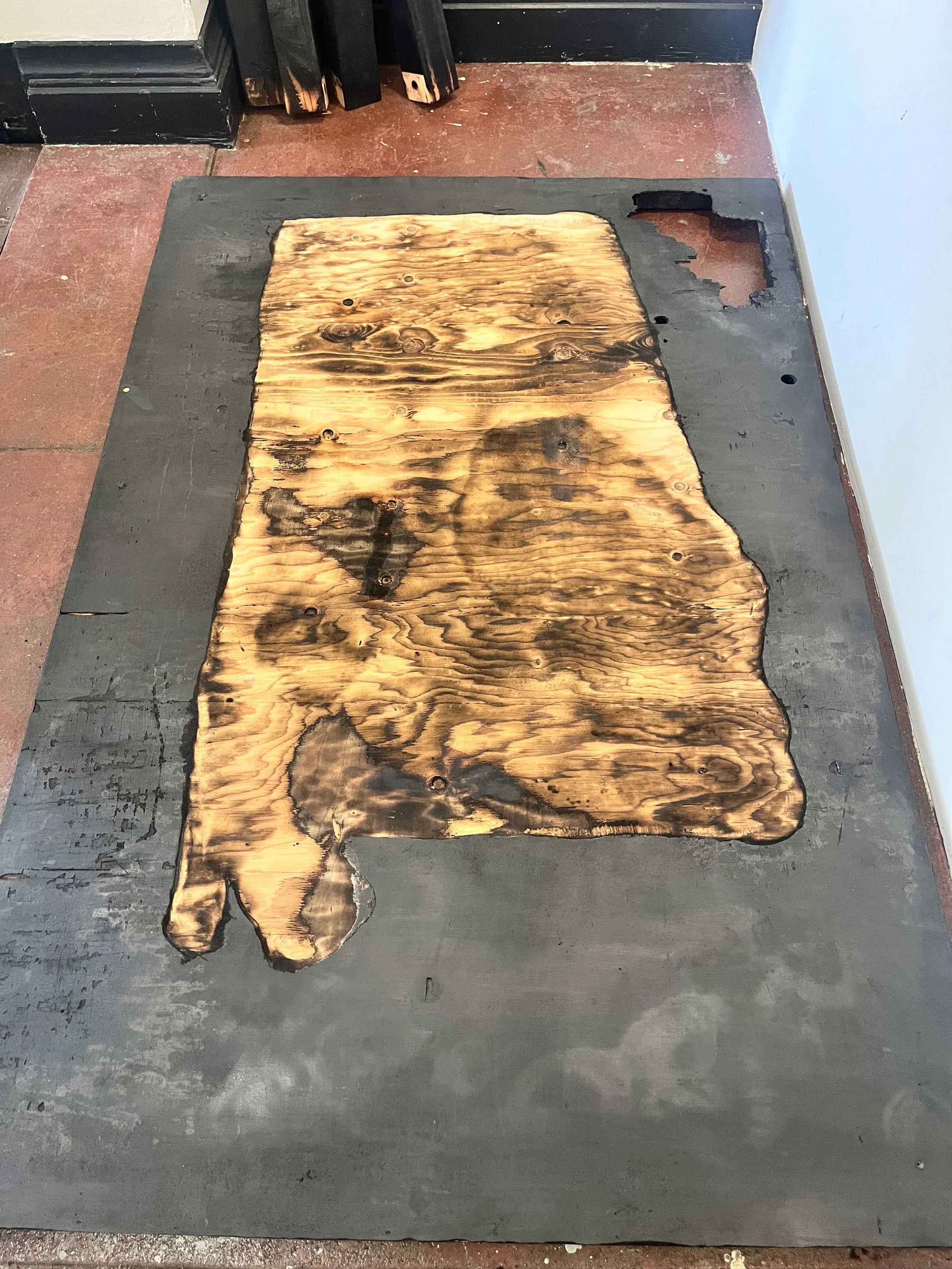
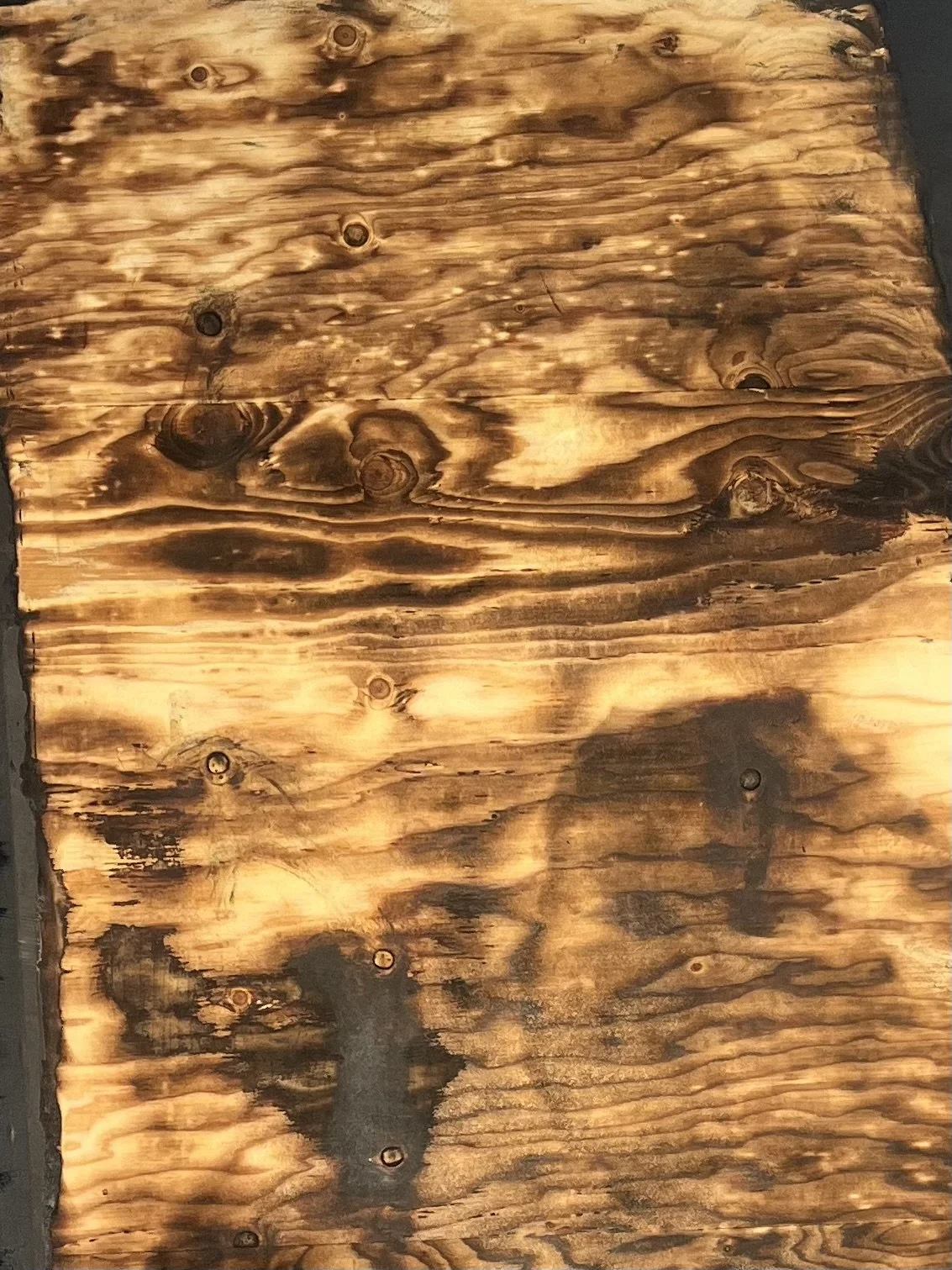
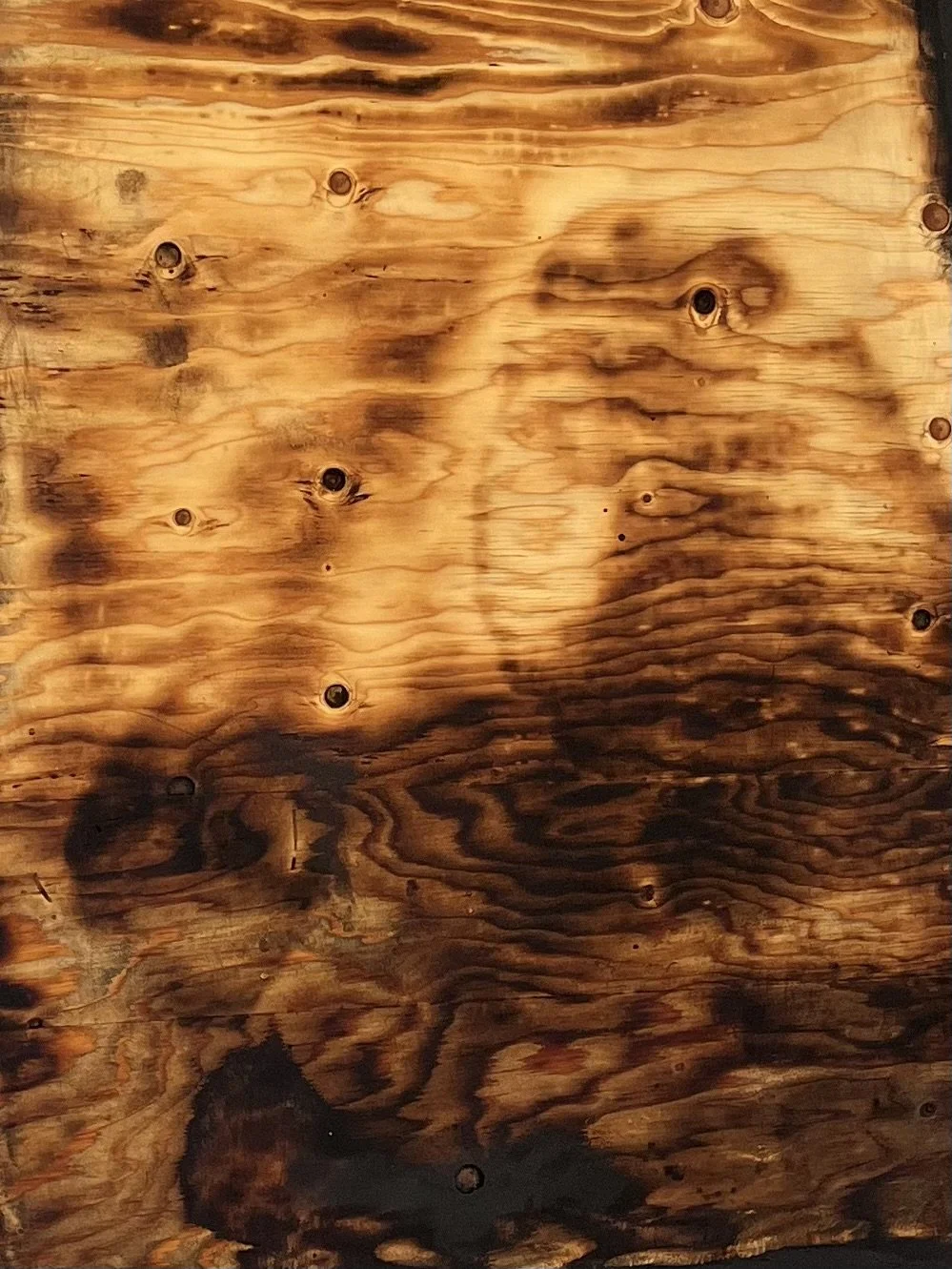
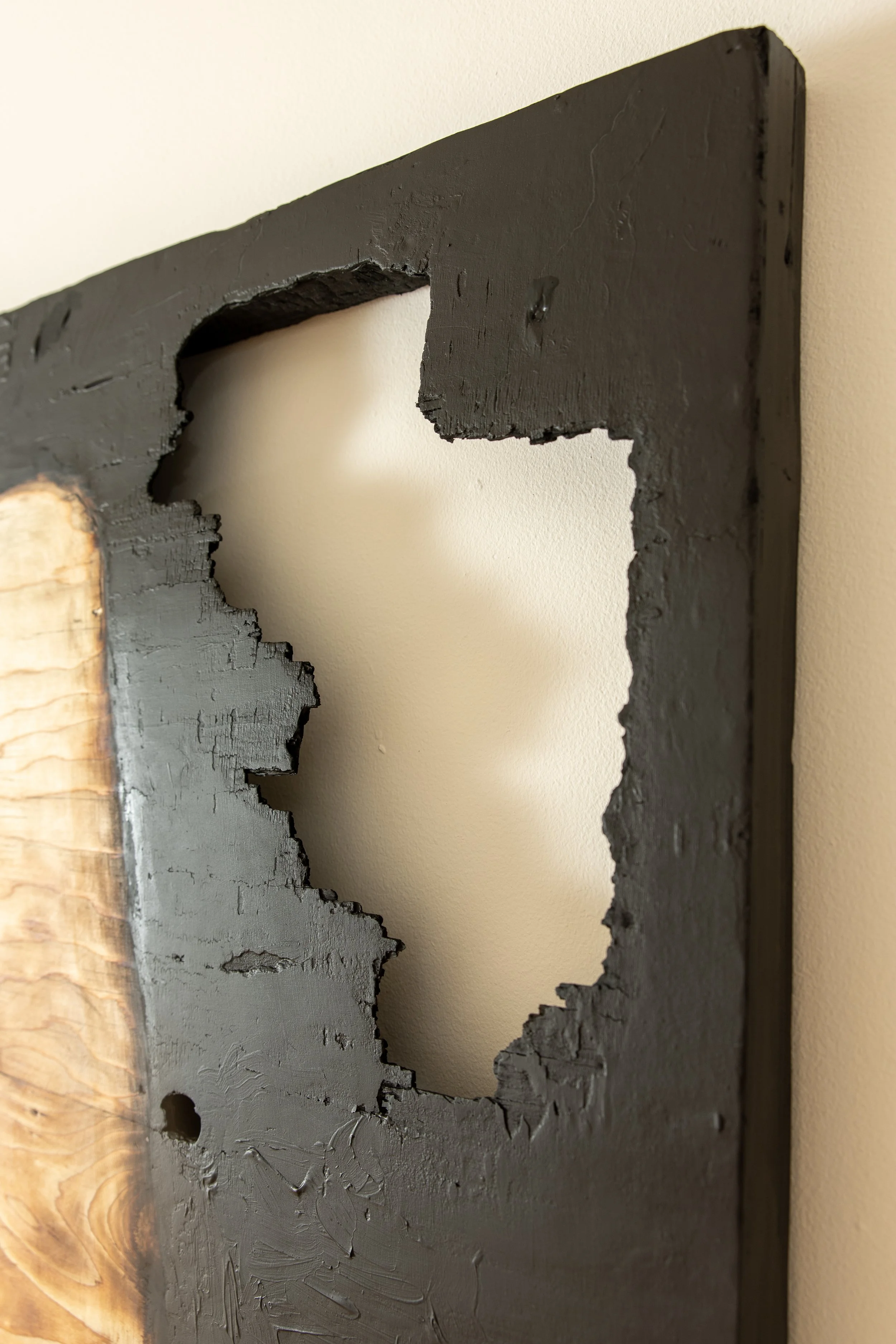
Influenced in part by Michael Heizer's conception of negative sculpture, I approached excavation as a constructive act. By repeatedly sanding back layers of carbonized wood, Alabama emerged not as a shape placed upon the surface, but as something uncovered from within it. The image reveals itself through removal rather than addition, making absence an active force in the work's construction.
Excavating the Alabama form by hand. Influenced in part by Michael Heizer's conception of negative sculpture, I approached excavation as a constructive act, allowing the state to emerge through repeated acts of removal rather than being applied to the surface.
building the black field
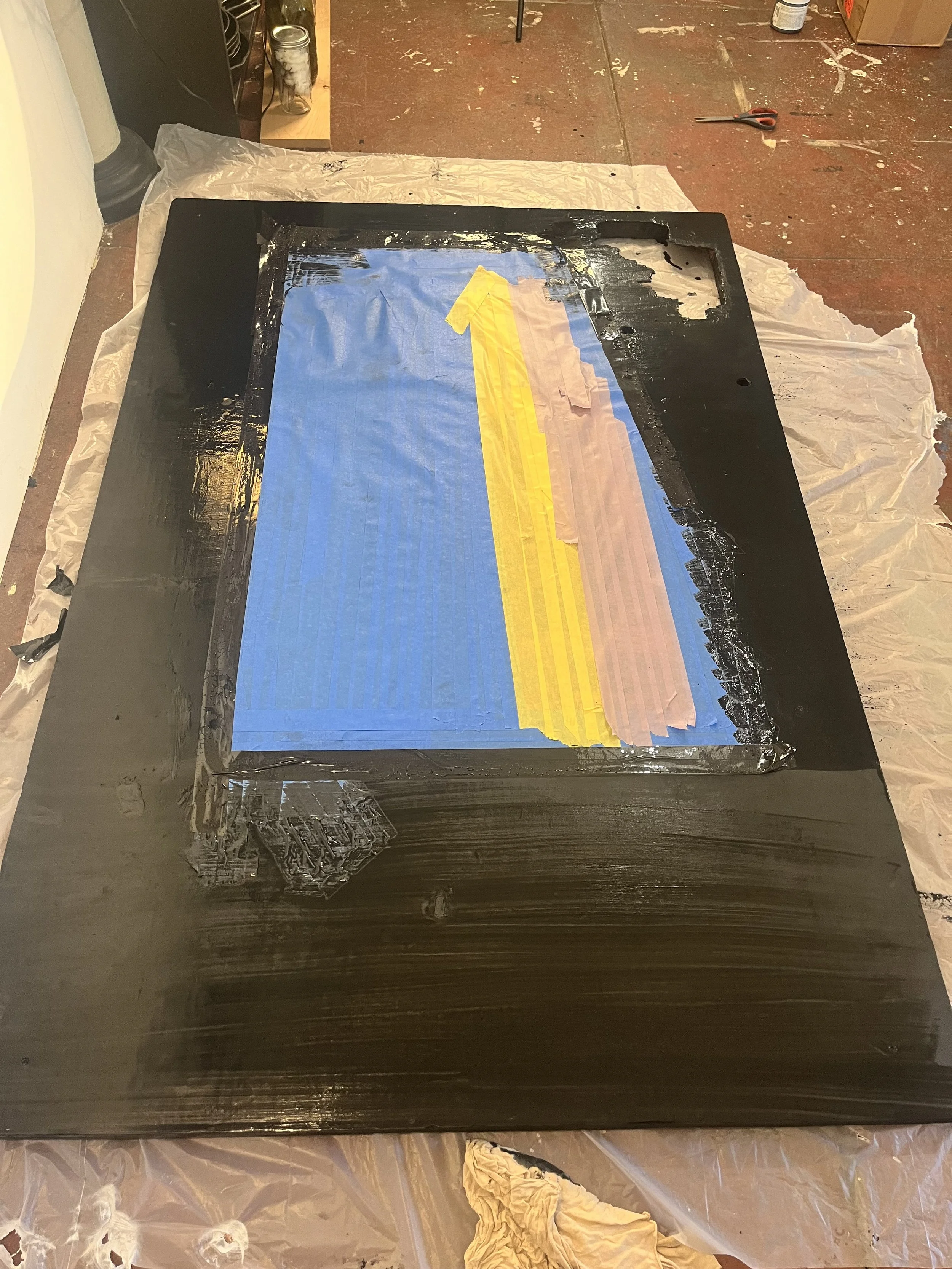
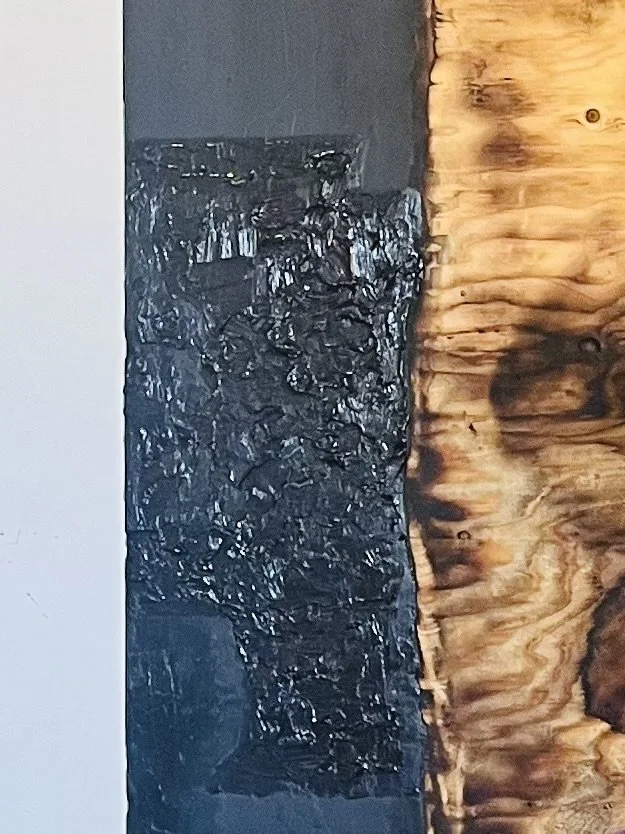
Although Alabama serves as the work's geographic anchor, the black field surrounding it became the painting's primary material site of inquiry. Rather than functioning as a background, it operates as a material record of accumulation: labor, extraction, memory, and time.
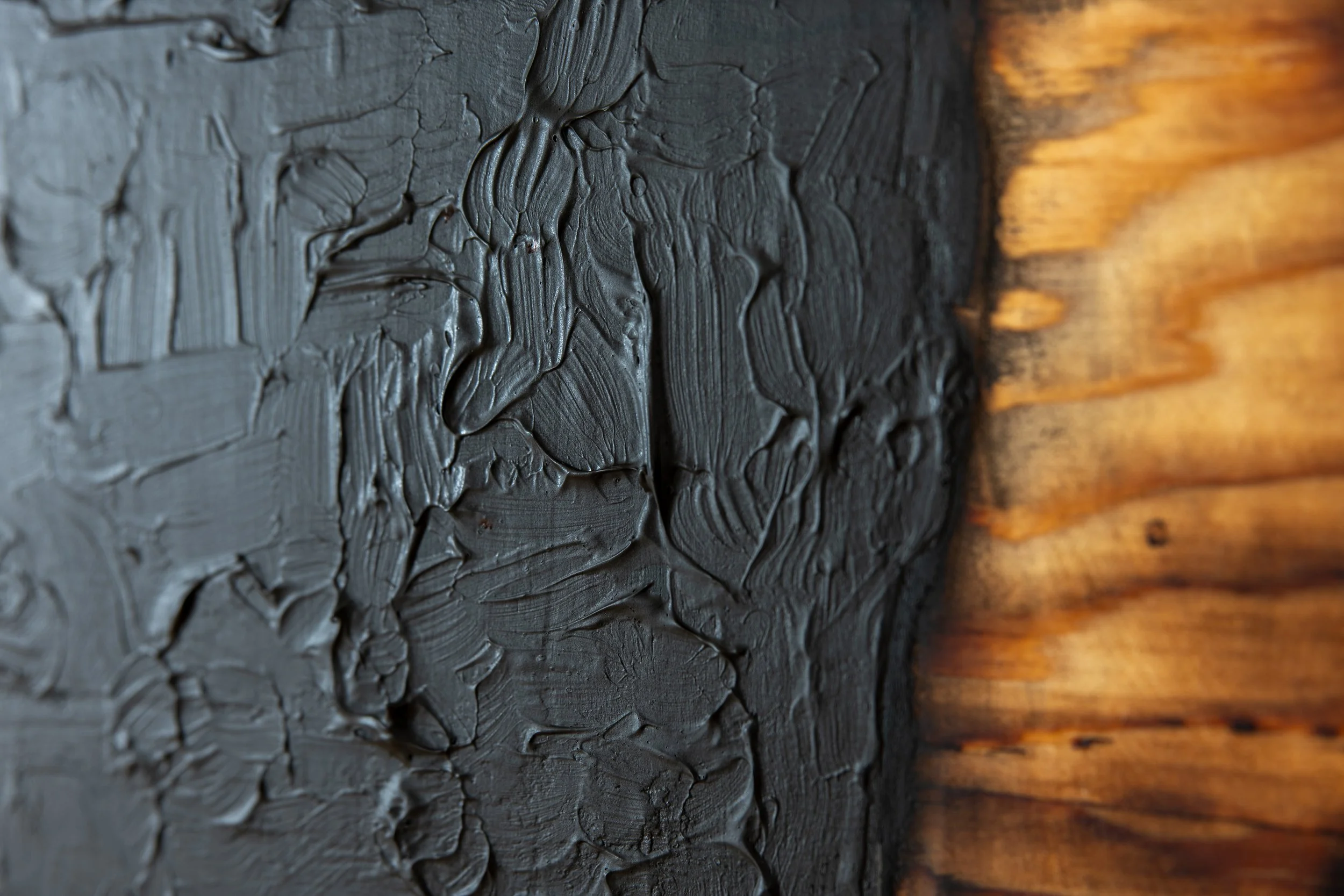
Its structure is informed by a nineteenth-century map of county-level cotton production in Alabama. Rather than reproducing the map visually, I translated its data into layers of acrylic, allowing counties that produced more cotton to accumulate additional paint. The resulting surface forms a subtle topography whose variations emerge gradually through shifts in light rather than explicit representation.
As the painting developed, I became increasingly interested in the expressive possibilities of black itself. Thinking with Theaster Gates' sustained engagement with blackness as both material and cultural presence encouraged me to move beyond black as a neutral ground. Mark Bradford's transformation of cartographic information into layered abstraction likewise demonstrated how historical systems could shape a painting's structure without becoming its image.
I chose to leave evidence of layering, buildup, and process visible within the field. These traces allow the painting's own history of making to remain present, transforming the surface into an archive where material history, artistic labor, and accumulated decisions become inseparable.
Early in the process, I considered making the county boundaries visible. Ultimately, I realized that doing so would return the work to illustration. Allowing the map to remain embedded rather than visible asks viewers to encounter history materially rather than diagrammatically.
The black field operates on multiple registers at once. It recalls the fertile prairie soils that give the Black Belt its name while recording the historical accumulation of cotton production across the landscape. Read alongside the excavated Alabama, it completes a dialogue between subtraction and accumulation, revealing two distinct yet interconnected ways history becomes material.
in the gallery
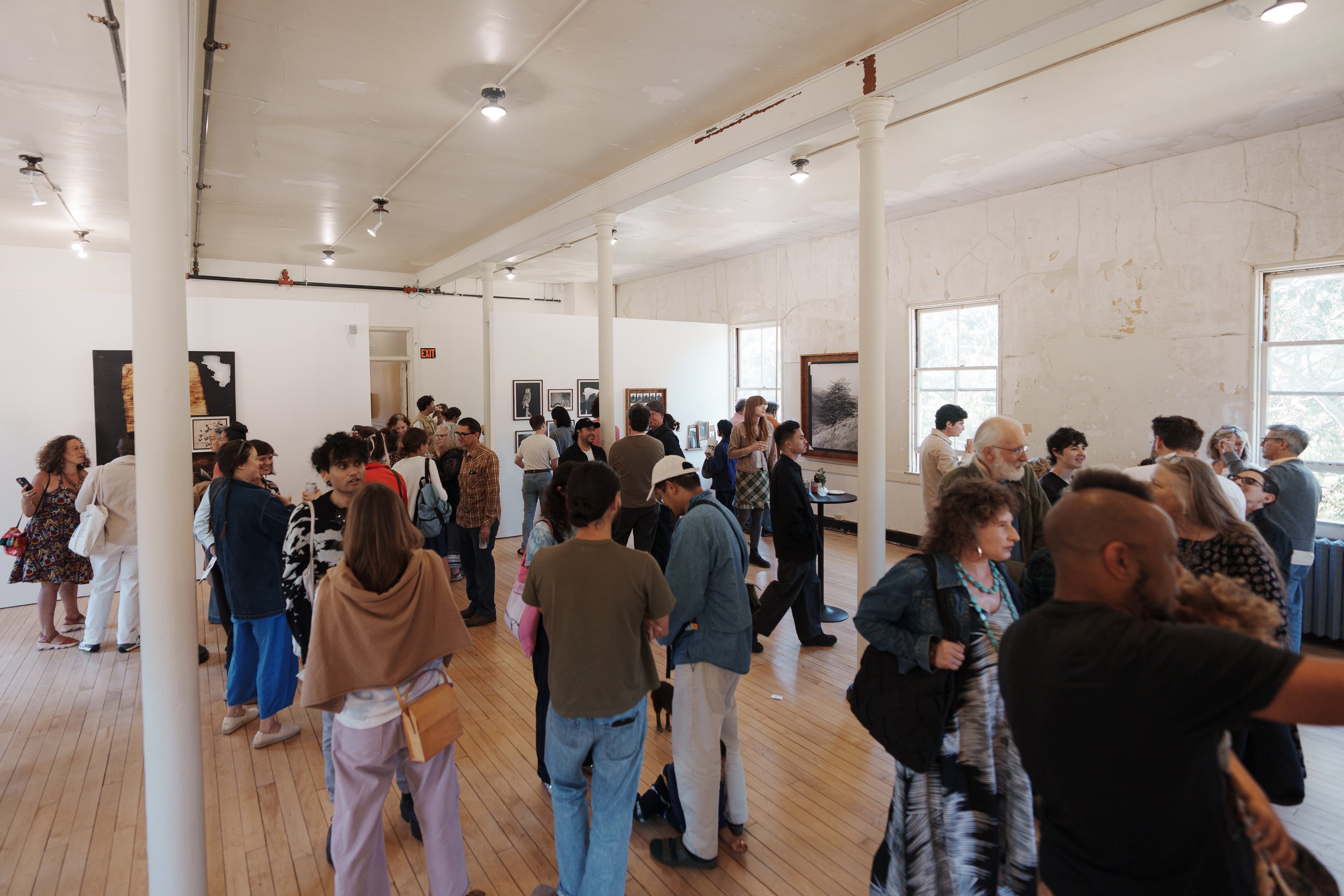
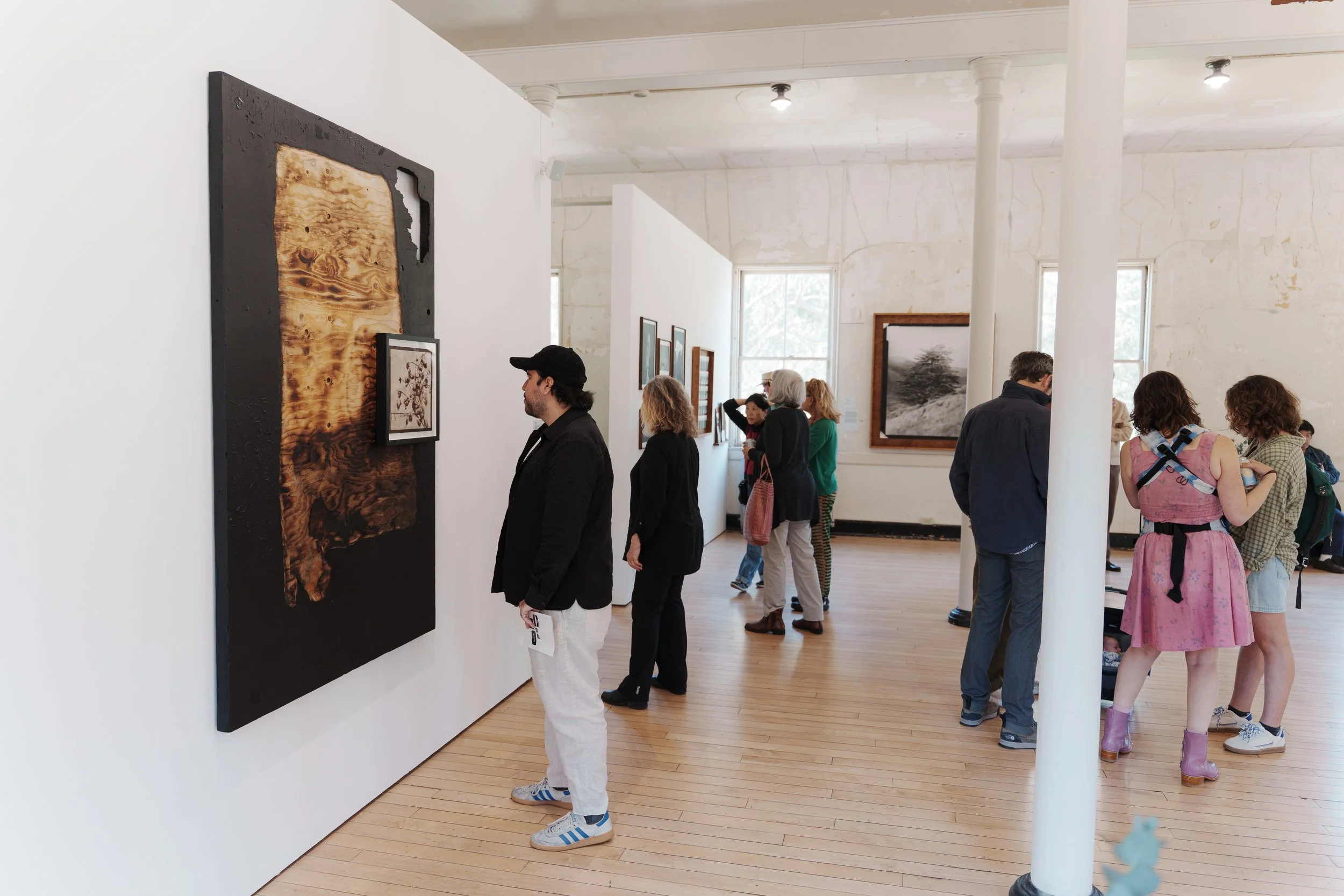
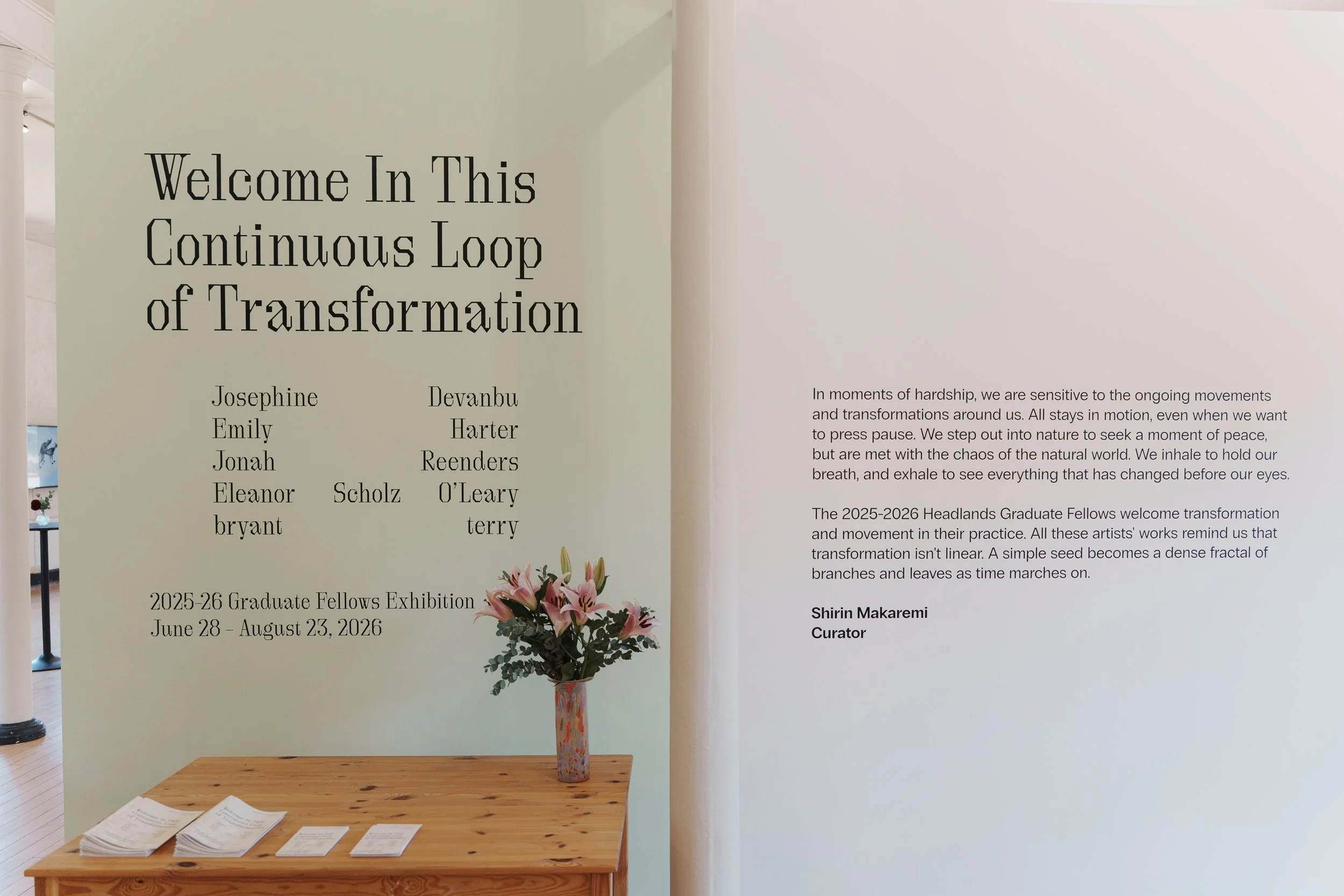
Created during my 2025–26 Graduate Fellowship at the Headlands Center for the Arts, What the Black Belt Carries was first presented in Welcome in This Continuous Loop of Transformation, the Graduate Fellows Exhibition.
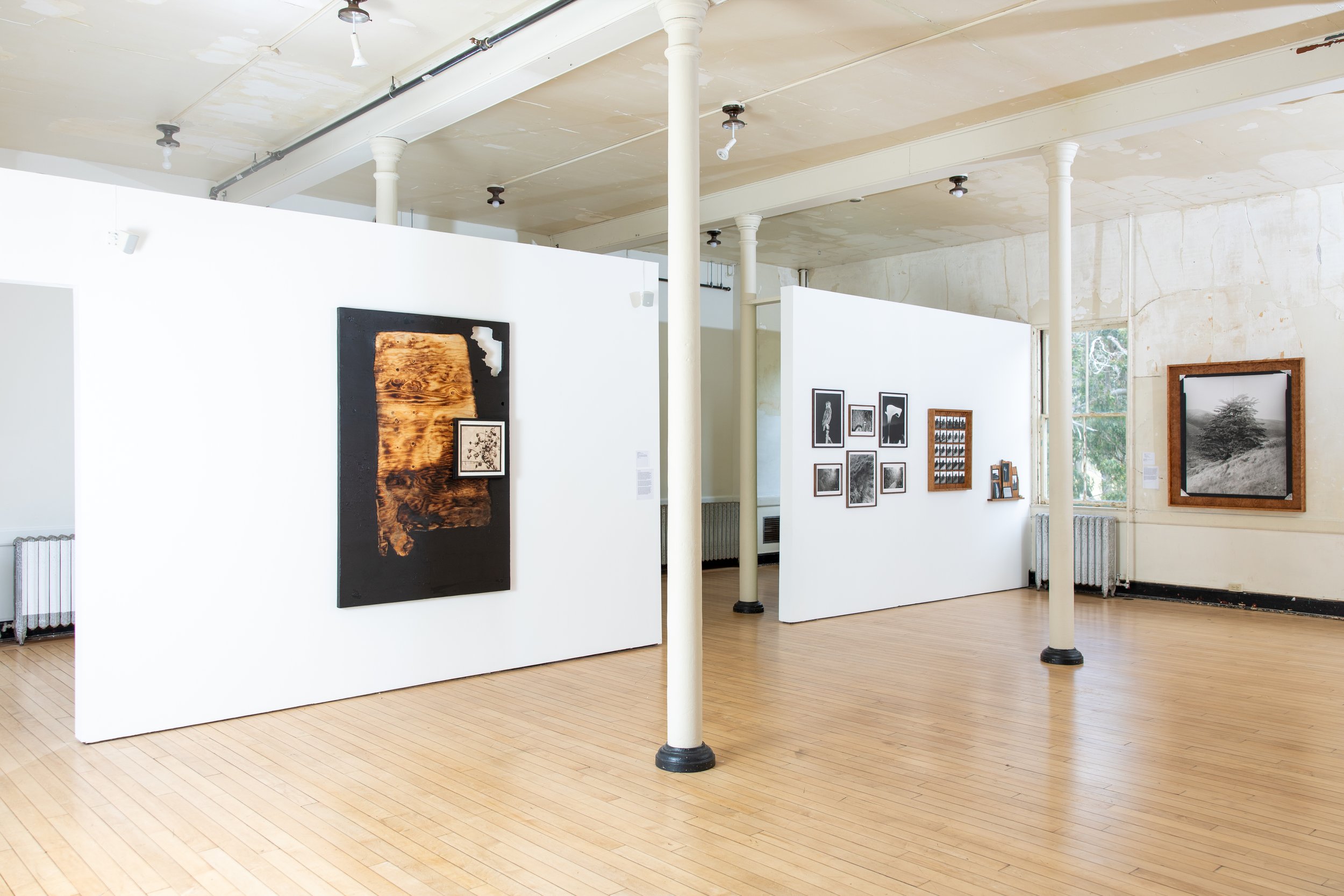
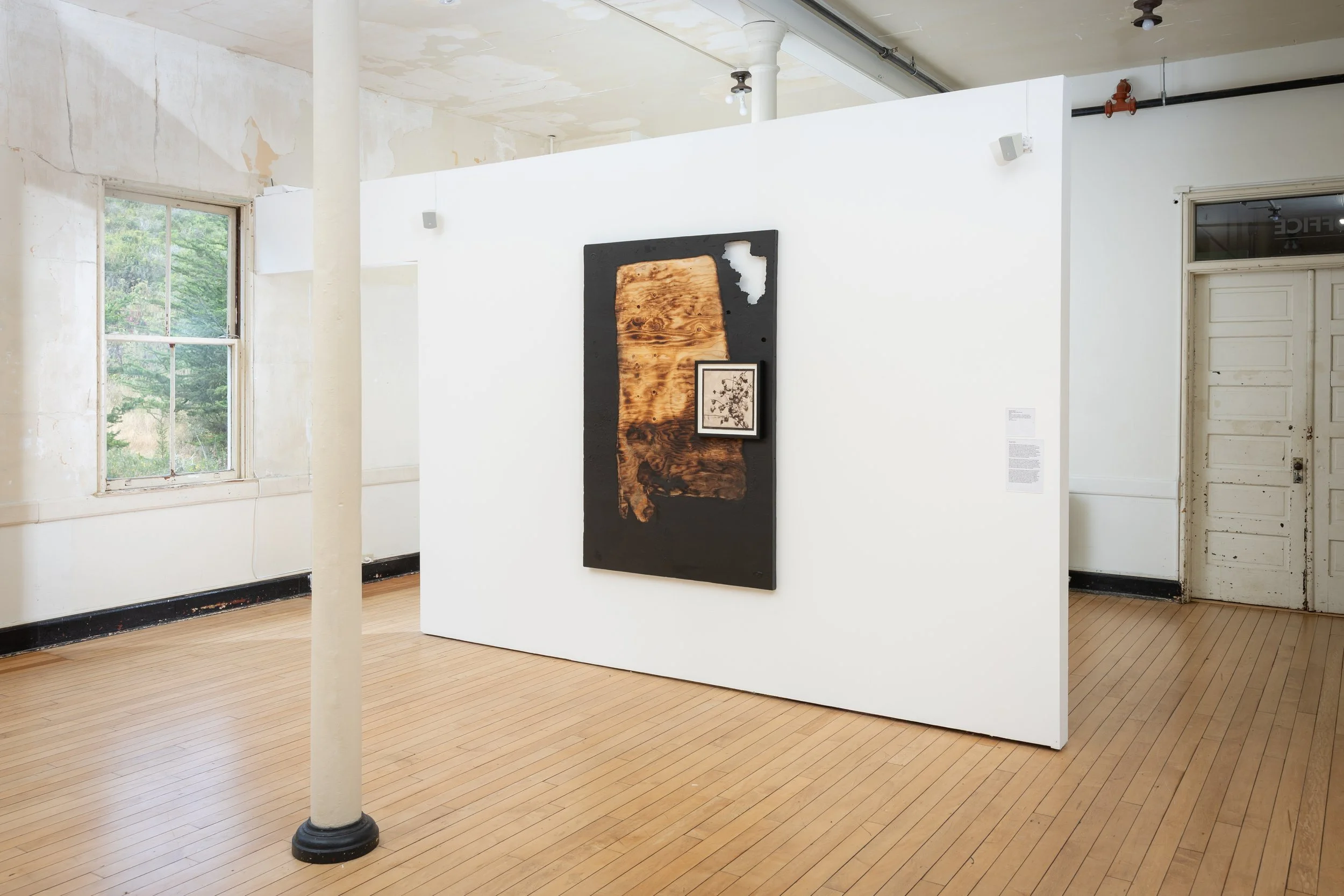
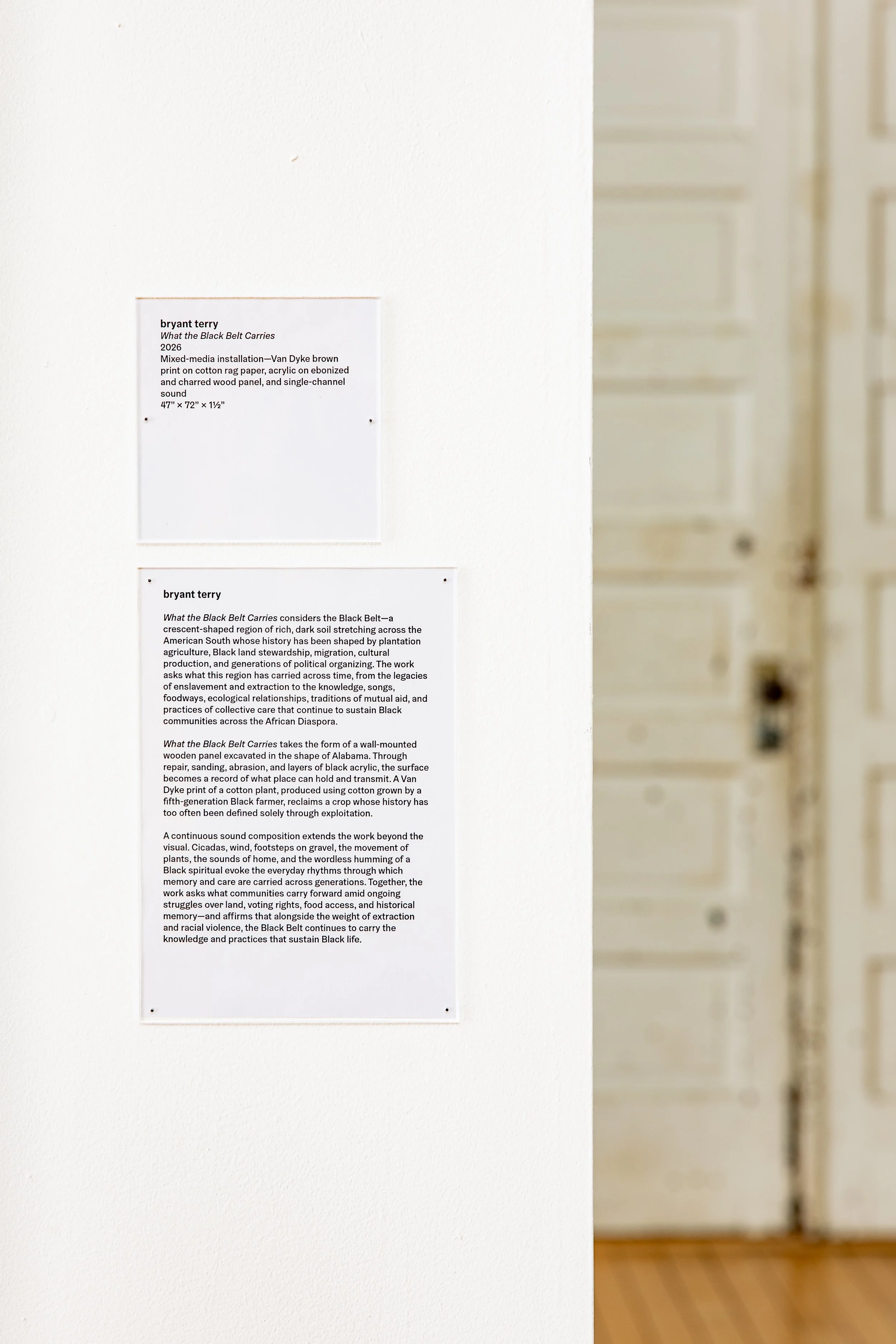
The sculptural painting is accompanied by a single-channel sound installation that extends the work's engagement with landscape, memory, and lived experience. Rather than illustrating the image, the composition creates an atmospheric sense of place through environmental sounds, pauses, and traces of everyday life. Together, the sculpture and sound invite viewers to encounter the Black Belt not simply as a historical landscape, but as a living one.
opening
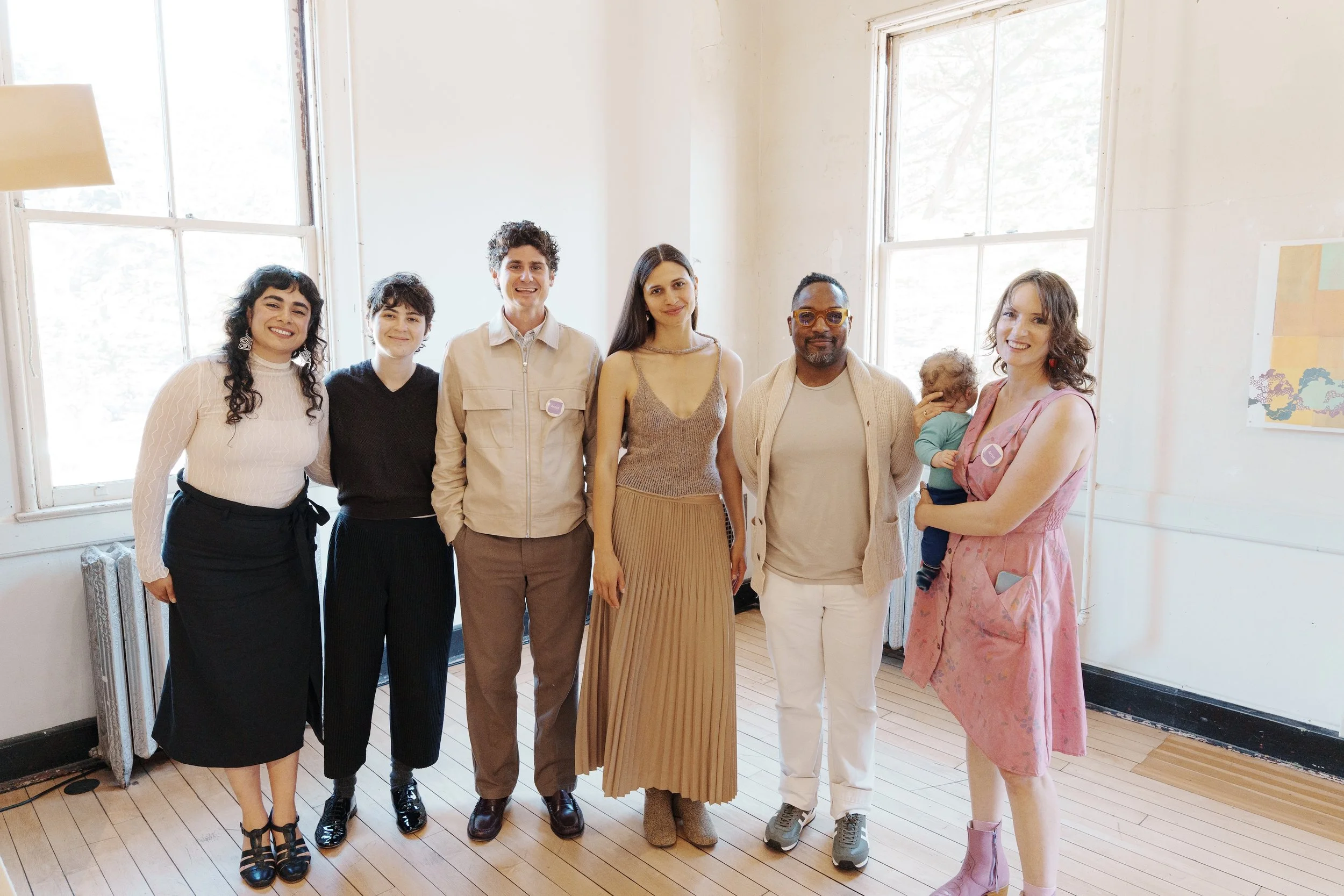
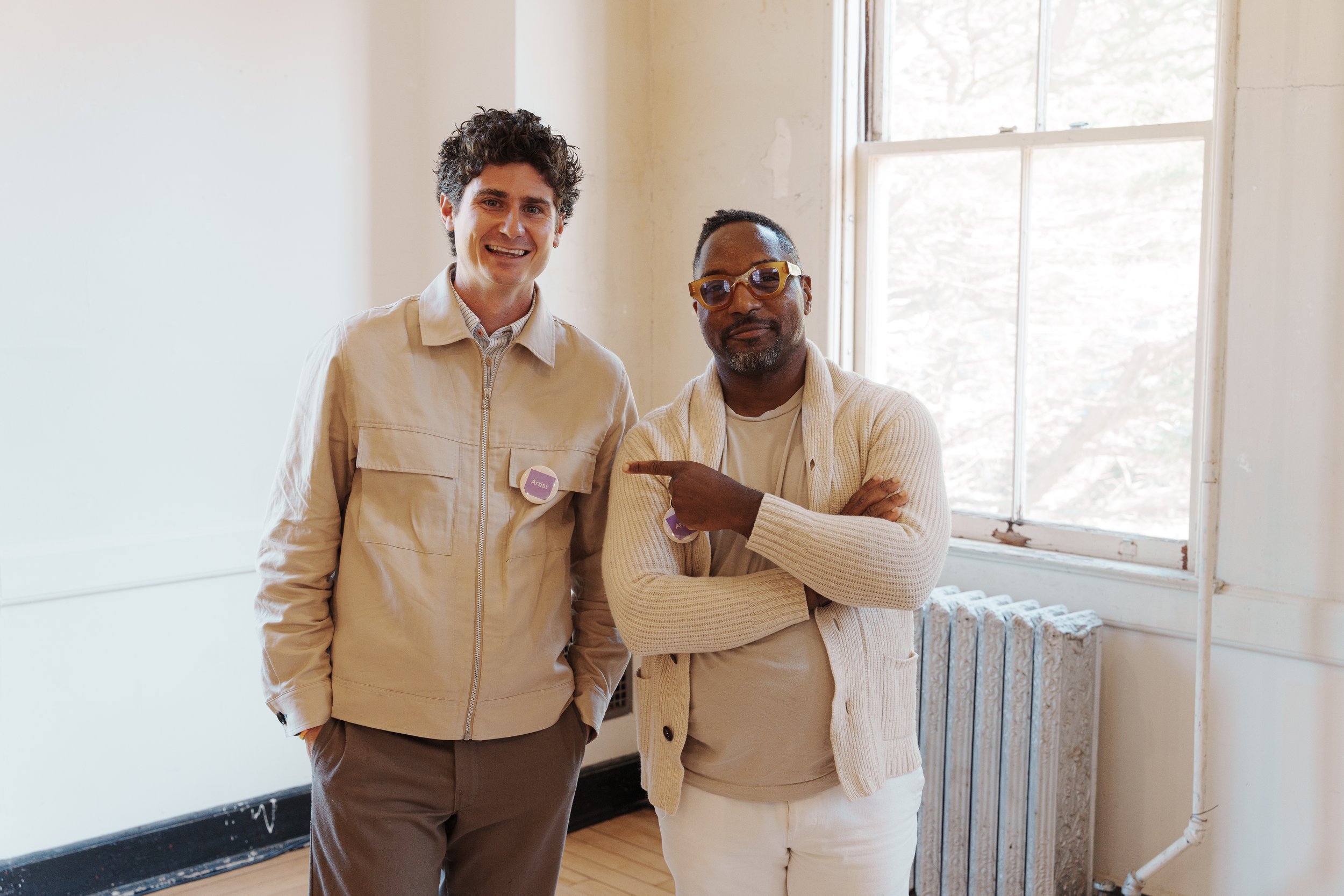
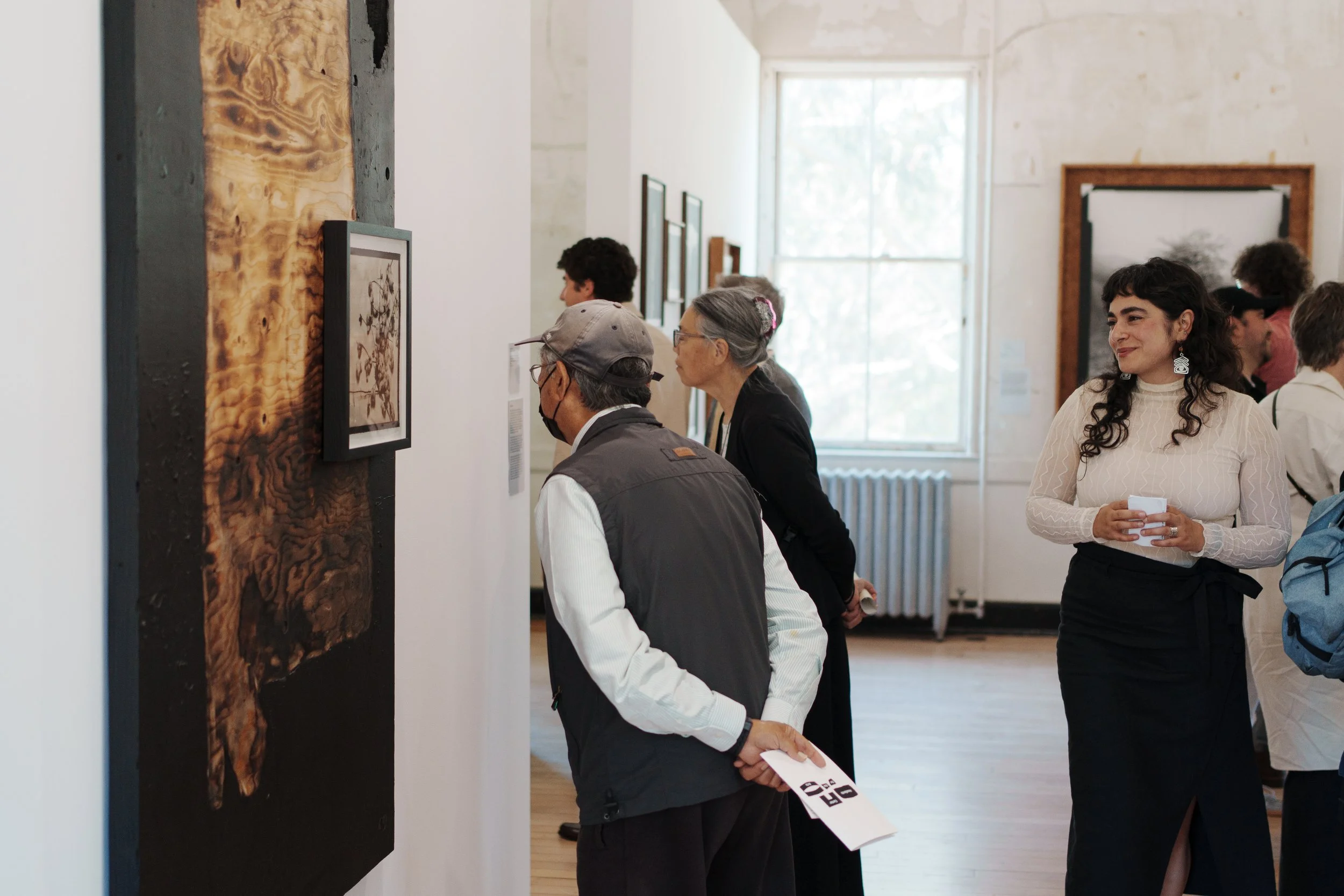
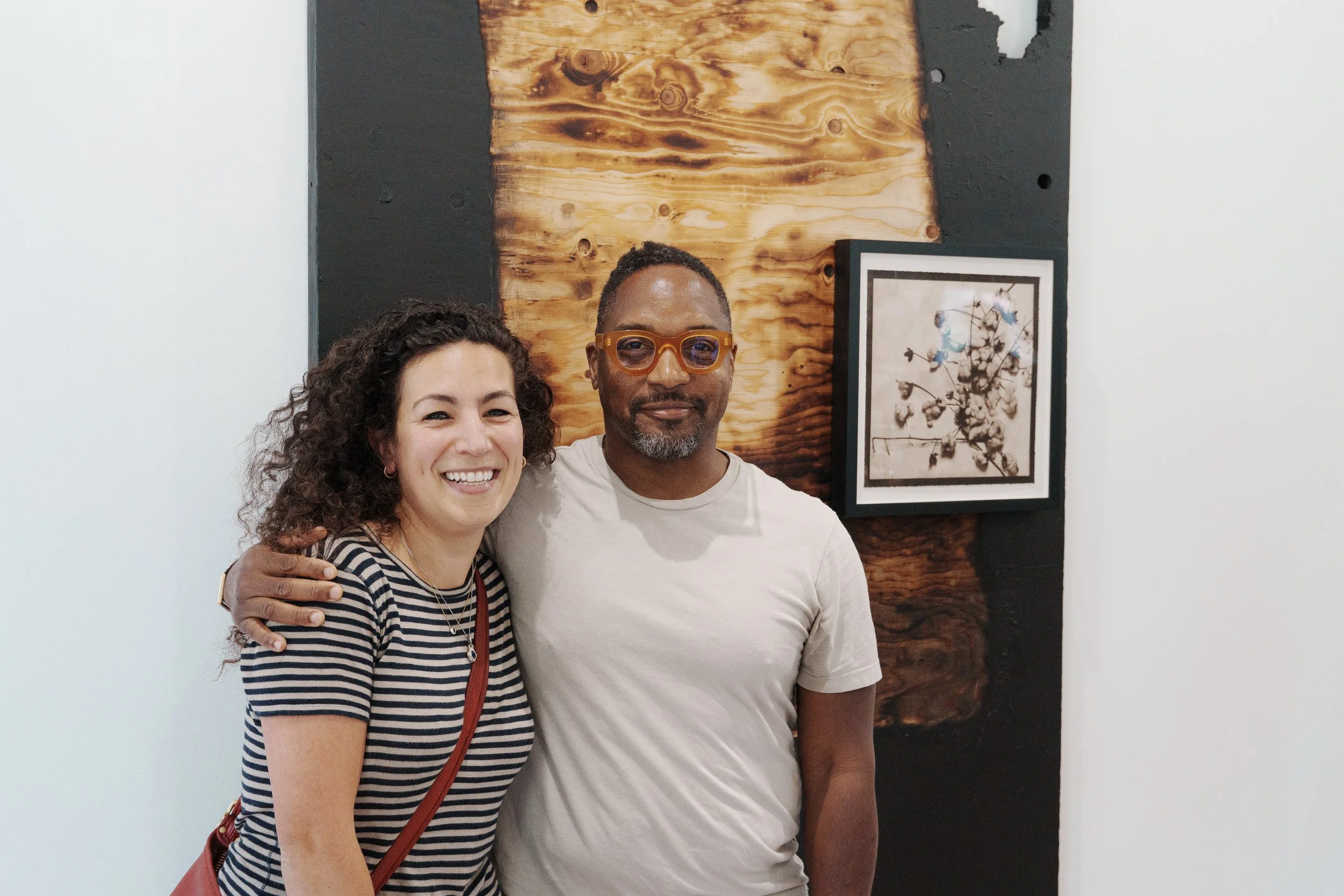
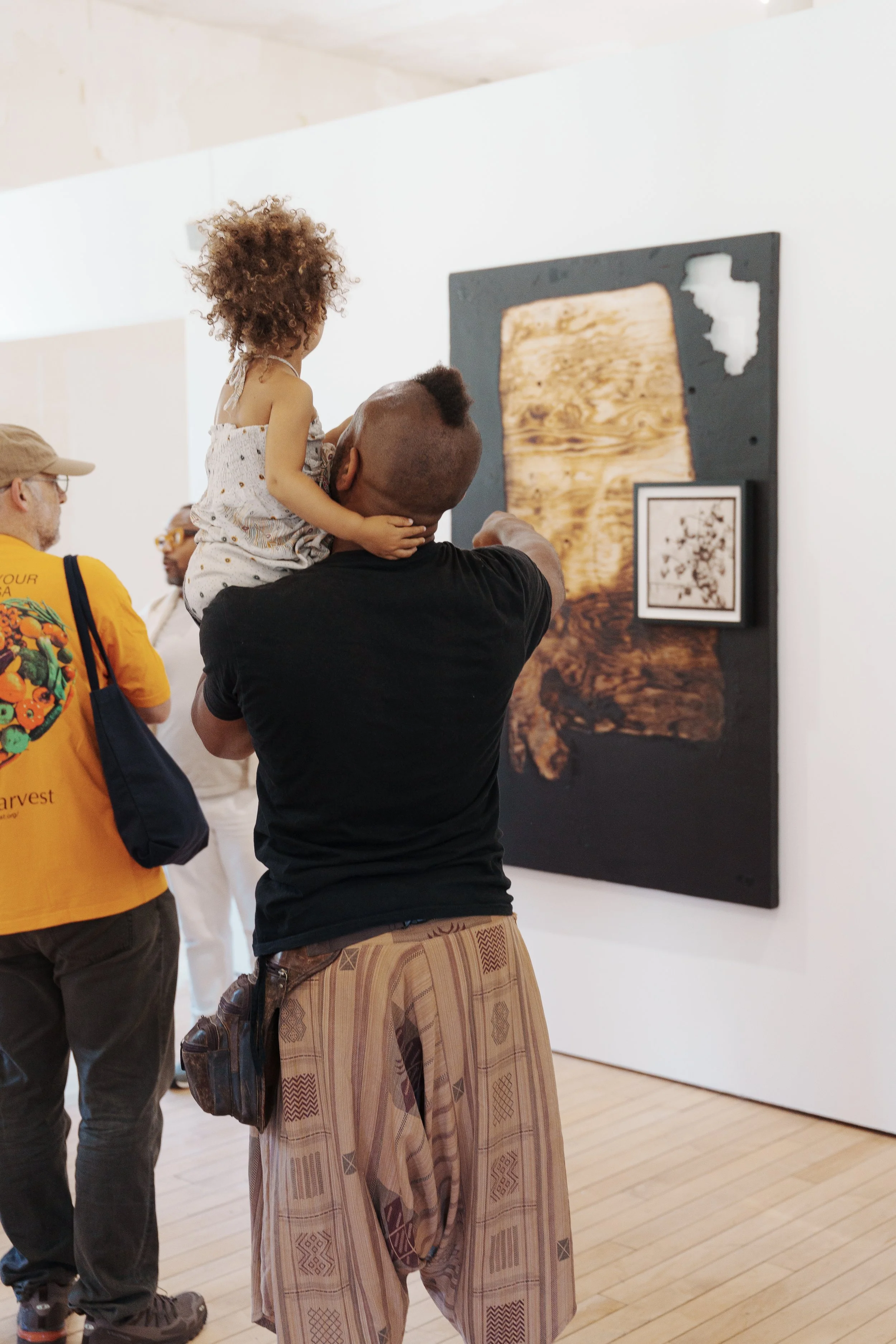
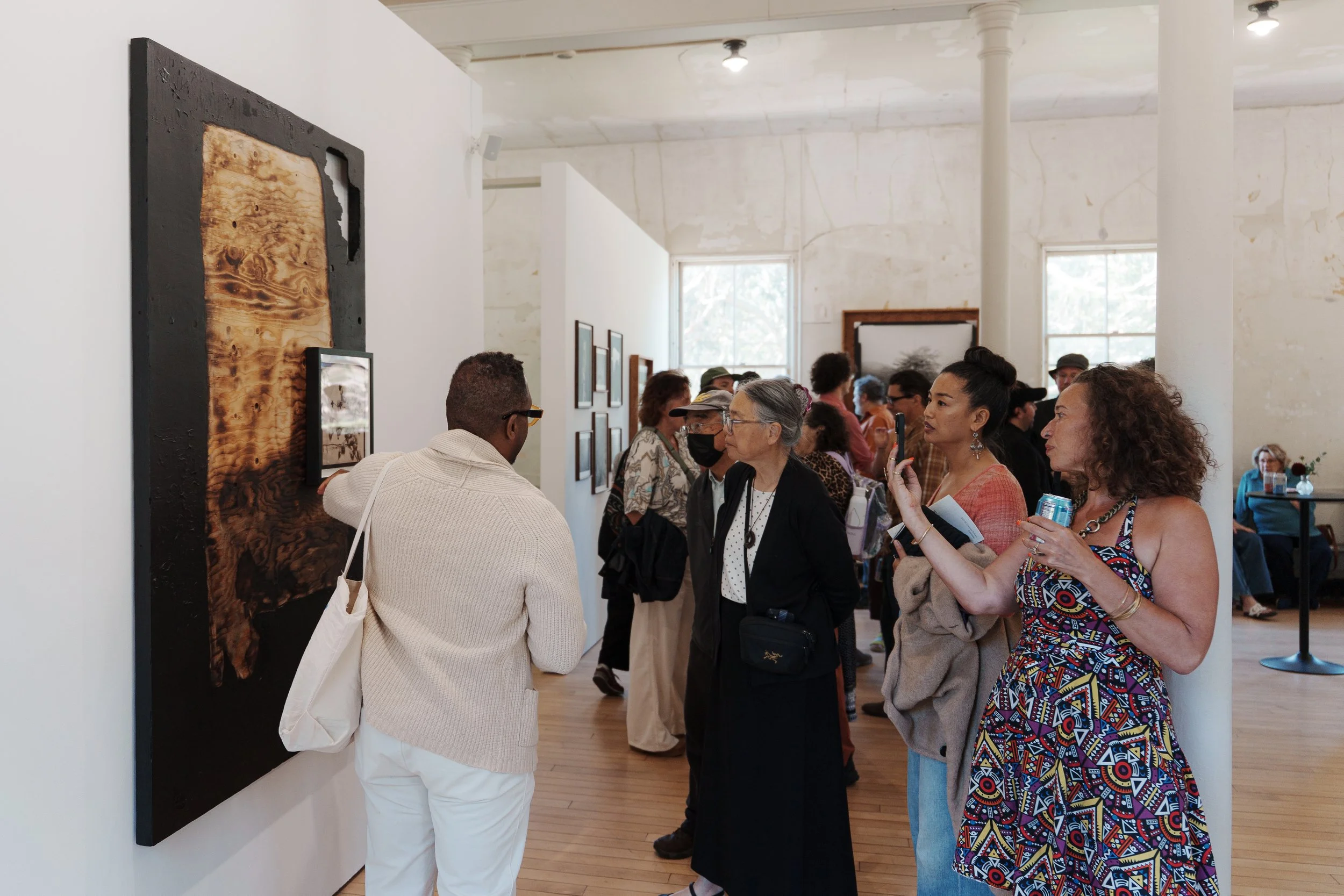
Every artwork changes once it leaves the studio. The opening reception marked the first opportunity to experience What the Black Belt Carries in conversation with others, as visitors brought their own histories, questions, and interpretations to the work. Those conversations became an extension of the project's ongoing inquiry into memory, landscape, and collective care.